Streeting Stands Firm as Resident Doctors' Strike Nears Its End
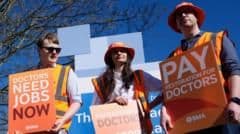
Health Secretary Wes Streeting flatly denies altering the pay offer for resident doctors, as a six-day strike in England prepares to conclude Monday morning.

Government and BMA Trade Blame Over Collapsed Pay Talks
With a six-day walkout by resident doctors in England scheduled to conclude at 06:59 on Monday, the dispute between the government and the British Medical Association (BMA) shows little sign of cooling — despite both sides claiming a willingness to negotiate.
Health Secretary Wes Streeting appeared on the BBC's Sunday with Laura Kuenssberg to firmly reject claims that the government had altered the terms of its pay agreement at the eleventh hour. Streeting stated "categorically" that no changes had been made to the deal, pushing back against accusations from the BMA's resident doctors' committee.
Streeting Calls on BMA Leadership to Come to the Table
The Health Secretary expressed a desire to sit down directly with what he described as the "organ grinders" within the BMA's resident doctors' committee, but alleged that senior figures had "point blank refused" his invitation to hold further talks.
In response, Dr Jack Fletcher, who chairs the BMA's resident doctors' committee, offered a starkly different account. He stated that during negotiations, both one- and two-year settlement options were actively on the table — only for the government to insist "at the very last minute" that a three-year deal was the sole acceptable outcome, and one that came with reduced financial investment.
Despite the tension, Fletcher confirmed in a statement to the BBC that the committee remained "open and willing to meet with the health secretary", adding that the BMA had "negotiated in good faith with a genuine desire to reach a resolution" throughout the ongoing dispute.
The Pay Gap Debate: Figures From Both Sides
Streeting pointed to what he described as a significant pay improvement already delivered under the current Labour government, noting that resident doctors had received a 28.9% pay rise shortly after the party came to power.
"There's a deal on the table that would have given them an average 4.9% more for this year, and 7.1% for some of the lowest-paid doctors," the Health Secretary said.
However, the BMA has pushed back on this framing. Despite cumulative pay rises totalling around 33% over the past four years, the union argues that when inflation is factored in, doctors are still earning approximately 20% less in real terms than they were back in 2008.
Streeting Dismisses Claims of Last-Minute Deal Changes
Addressing the BMA's central accusation directly, Streeting told presenter Victoria Derbyshire — filling in for Laura Kuenssberg — that changing the deal at the last minute would not have served his or the government's interests. He suggested the union either failed to read the fine print of the agreement or found it "more convenient to blame the government" when presenting the outcome to its wider committee.
"We've gone as far as we can," Streeting said. "I'm never going to shut the door to the BMA, but there has to be some give and take."
Training Places Withdrawn Following Latest Strike Action
The interview followed the Health Secretary's publication of an open letter to the BMA on X, in which he described feeling "disappointment and frustration" over the latest industrial action. While Streeting confirmed that "most of the deal remains on the table", he warned that the financial and operational disruption caused by the strikes had forced the government to pull back 1,000 of the 4,500 additional medical training places that had been earmarked for the current year.
As the immediate strike comes to a close, both parties appear to remain at an impasse, with the broader question of doctors' pay and working conditions yet to find a lasting resolution.

