States Begin Slashing Medicaid Benefits as Federal Cuts Loom Large
Montana halted plans to fund doula services through Medicaid, leaving rural mothers in maternity care deserts without critical support as federal cuts reshape healthcare.

States Move to Cut Medicaid Before Federal Reductions Even Arrive
Across the United States, states are not waiting for federal Medicaid funding cuts to take effect before tightening their own budgets. Anticipating massive reductions tied to the Republican-backed spending legislation, several states have already begun scaling back optional Medicaid services — and communities that can least afford it are bearing the brunt.
In Montana, that reality is playing out in one of the state's most remote corners, where a volunteer doula is doing the work the system was finally supposed to start paying for.
A Promise Made — and Quickly Broken — in Lame Deer, Montana
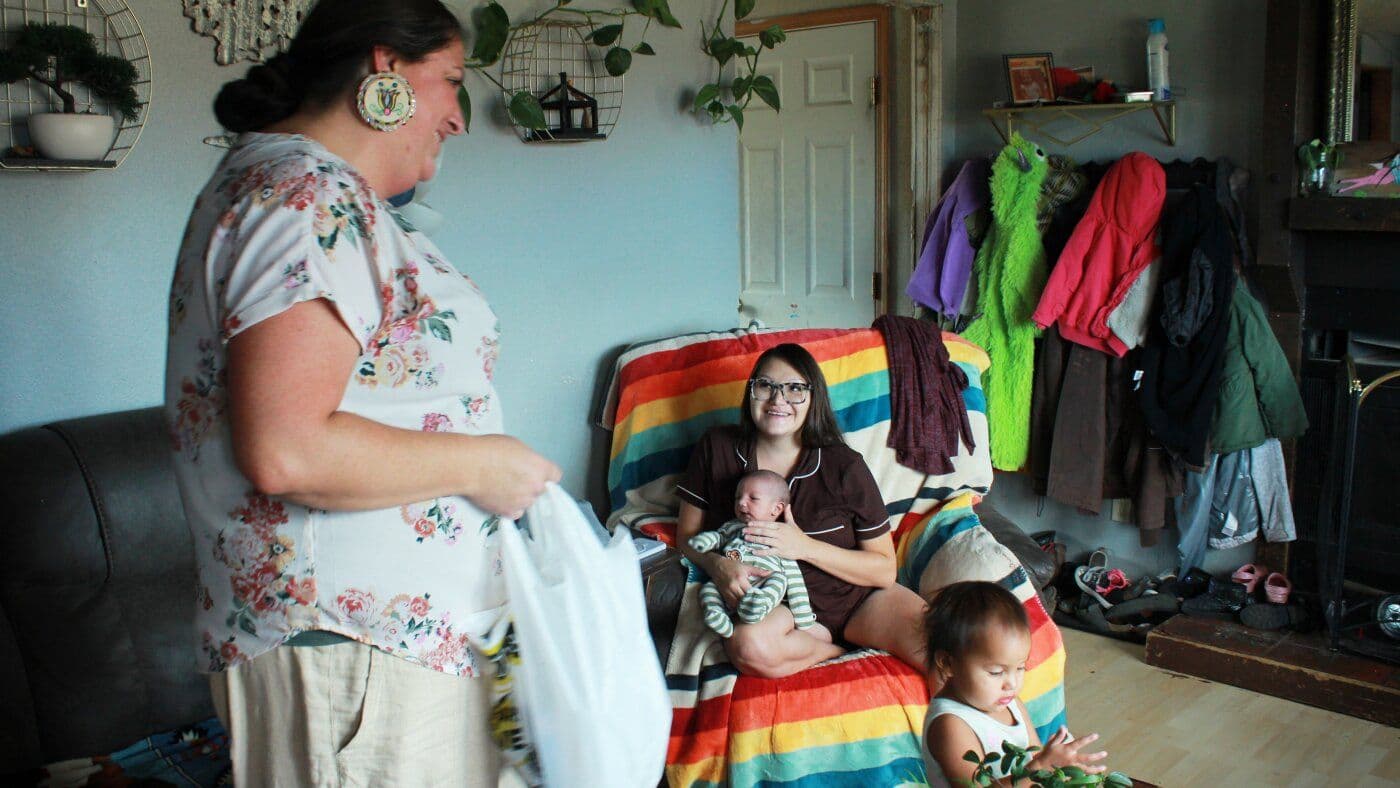
Misty Pipe squeezes in her doula work between shifts at the post office. A mother of seven living in Lame Deer — a small town of roughly 2,000 people at the center of the Northern Cheyenne Indian Reservation — she has spent years supporting expectant and new mothers entirely without pay. The reason is straightforward: the nearest hospital with labor and delivery services sits 100 miles away, and the families she serves simply cannot afford to pay for doula care.
"Doula doesn't pay the bills around here," Pipe said plainly.
Doulas play a vital role in maternal health. They prepare families for childbirth, provide hands-on support during delivery, and remain a consistent presence during the critical postpartum period. Research consistently connects doula care with reduced rates of costly birth complications — a benefit that carries particular weight in geographically isolated communities like Lame Deer.
Change appeared to be on the horizon. Montana had joined at least 25 other states in working to reimburse doulas through Medicaid, with state lawmakers authorizing payments of up to $1,600 per pregnancy. For Pipe, it represented more than extra income — it was a path toward eventually leaving her post office job to focus entirely on supporting mothers in her community.
That hope was shelved in late March, when the Montana Department of Public Health and Human Services announced it was postponing the addition of doula services to the state's Medicaid program.
"DPHHS will not be moving forward with the implementation of doula services in the Montana Medicaid benefit package at this time," said department spokesperson Holly Matkin.
The announcement blindsided Pipe. The state had finalized its doula licensing rules just months earlier, in January. Last year, she managed to support three women through their deliveries — a number she had hoped to grow significantly with Medicaid reimbursement finally in place.
"I was looking forward to serving more people," she said. "Now that's not going to happen anytime soon."
A Budget Crisis Driven by Federal Uncertainty
The decision reflects a deepening financial strain in Montana's Medicaid program. State health department director Charlie Brereton informed lawmakers in March that the agency was projecting a $146.3 million shortfall in federal Medicaid funds for the current year — with another deficit anticipated in the year ahead.
Much of that uncertainty stems from the One Big Beautiful Bill Act, the sweeping Republican tax-and-spending legislation that is expected to slash nearly $1 trillion in federal Medicaid funding over the next decade. States are now left scrambling to adjust their budgets well before those reductions formally take hold.
Matkin acknowledged it remains "unclear" whether the agency can authorize doula coverage at any point this year. Montana law requires state agencies seeking supplemental funding to simultaneously submit a plan for spending reductions — meaning further Medicaid cutbacks are likely unavoidable.
"All options are on the table," Brereton told state lawmakers.
Vulnerable Communities Face the Steepest Consequences
Doula services are unlikely to be the only casualty. Across the country, optional Medicaid benefits — including home health care, dental services, and disability support — are increasingly vulnerable as states attempt to balance their books. Idaho lawmakers are weighing their own Medicaid reductions, while Missouri officials have proposed cutting tens of millions of dollars in services for people with disabilities.
In Montana, more than half of the state's counties have been designated as maternity care deserts, according to Stephanie Morton, executive director of Healthy Mothers, Healthy Babies — The Montana Coalition.
"Budget cuts will continue to diminish the limited services families rely upon in these counties," Morton said. "This decision feels like the first of many rollbacks and cuts Montanans will face."
Nationally, more than 35% of counties lack a single birthing facility or obstetric clinician, according to a 2024 March of Dimes report. The crisis falls hardest on Native American communities, which face longer distances to obstetric care than any other racial or ethnic group in the country. Indigenous women are significantly more likely to experience serious pregnancy-related illness and are at least twice as likely to die in childbirth compared with white women.
One Doula, One Hundred Miles, and a Community Depending on Her
For Pipe, these are not statistics — they are the lived experiences of her neighbors, her clients, and herself. She has made that 100-mile drive in labor. Twice, she gave birth in emergency rooms along the route. In one pregnancy, she miscarried at home and waited days before she could see a doctor. Her husband often remained behind to care for their other children, leaving her to labor alone.
"I labored alone so many times," Pipe said. "I just want to make sure no one's alone."
Her support extends well beyond the delivery room. When a client needs a ride to a medical appointment, Pipe takes unpaid leave to drive them. When labor begins during her post office shift, she texts two other volunteer doulas on the reservation — both of whom also hold day jobs — to cover until she is free.
For Britney WolfVoice, one of Pipe's clients, that support has been transformative. Pipe helped WolfVoice plan her deliveries, brought sacred cedar oil during labor to offer calm and comfort, and coached her on how to advocate for herself when hospital delays threatened her health.
"Misty is one person I can count on to be my voice," WolfVoice said.
What Comes Next
As states continue to grapple with looming federal Medicaid cuts, the services most at risk are often the ones designed to fill existing gaps in care — doula support, mental health services, dental coverage. The communities hit first and hardest are those already operating without a safety net.
In Lame Deer, Misty Pipe will keep showing up — between shifts, on weekends, during emergencies — because someone has to. But without Medicaid reimbursement, the number of mothers she can reach will remain painfully limited, and the broader system will continue to fall short of the people counting on it most.