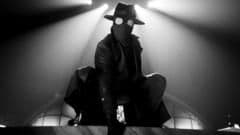
Spider-Noir: The Bold Black-and-White Gamble That's Dividing Audiences
Nicolas Cage's new Prime Video series Spider-Noir offers viewers a rare choice: watch in colour or classic black and white. But is it genius or gimmick?

Spider-Noir Brings a Dark Twist to the Spider-Man Universe
When most people picture the world's most iconic web-slinger, they imagine a vivid red and blue suit swinging through a sun-drenched city skyline. Spider-Noir throws all of that out the window — and replaces it with shadows, mystery, and a 1930s New York underworld dripping in noir atmosphere.
The new live-action Prime Video series is based on the Marvel comic Spider-Man Noir and follows Ben Reilly, a battle-worn private investigator navigating a city full of secrets and moral ambiguity. The role is brought to life by none other than Nicolas Cage, lending the character a gritty, weathered credibility.
A Unique Viewing Choice: Colour or Black and White?
One of the most talked-about features of Spider-Noir is its dual viewing format. Unlike virtually any other streaming series available today, viewers can choose to watch the show either in full colour or classic black and white — a deliberate creative decision designed to honour the film noir tradition that dominated Hollywood throughout the 1940s and 1950s.
That golden era of cinema was defined by its moody lighting, deep shadows, and morally complex storytelling. Spider-Noir appears to channel that spirit directly.
Karen Rodriguez, who portrays Janet, Ben Reilly's devoted secretary, believes the black-and-white format does far more than simply look stylish. She argues it actively strengthens the narrative.
"Who's in the Shadows, Who's in the Light?"
"We're playing with good and bad, heroes and villains," Rodriguez explained. "This kind of world feels dark, and anybody could walk in at any point. There's mystery to it, there's danger to it."
For Rodriguez, the visual contrast between light and darkness becomes a storytelling tool in itself — one that colour alone cannot replicate with the same impact.
Cast Reactions: An "Unreal" Creative Experience
Lamorne Morris, who plays journalist Robbie Robertson in the series, described the process of filming for black and white as nothing short of "unreal." While he noted that performances themselves don't dramatically shift based on the chosen format, the production process does carry its own unique quirks.
"There are moments when you're doing a scene and they might stop because your pocket square looks a lot better in black and white," Morris revealed — highlighting just how differently a set must be approached when optimising for monochrome visuals.
Critical Reception: Praise and Pushback
Reviews for the series have been largely favourable. Empire magazine called it "an utterly insane stew that somehow makes perfect sense," while Screen Rant suggested the black-and-white option effectively reinforces the show's noir aesthetic.
However, not everyone is convinced. The Hollywood Reporter took a more critical stance, describing the dual-format approach as "at the very least, irritating," arguing that optimising a production for both colour and black and white ultimately means it hasn't been truly optimised for either.
The debate raises a genuine question: in an era of hyper-stimulating, colour-saturated content, will audiences actually embrace a black-and-white option — or will it be left largely ignored?
A Gateway to Classic Cinema for Younger Viewers
Nicolas Cage himself has spoken openly about one of the key ambitions behind the format choice. He hopes that embedding black-and-white viewing into a beloved comic book franchise could serve as a bridge, introducing younger audiences to a style of filmmaking they might otherwise never explore.
"When you have one arm stretched into this world of the comic book franchise that is so loved, and you put that in black and white, hopefully the younger folks can really find a love for the old films and go back and take a deep dive themselves," Cage has said.
Film student Alice Garland, 22, from Fife, Scotland, agrees. A self-described fan of noir aesthetics, she acknowledges that black-and-white productions can sometimes come across as "pretentious and tacky" — but believes Spider-Noir sidesteps that trap entirely.
"It gives a more fatalism vibe," she told BBC Newsbeat, adding that the series is "being so open about being such an homage to film noir." For Garland, the dual-format option represents a genuinely exciting way to draw new audiences into classic cinematic traditions.
More Than a Visual Experiment — A Mature Storytelling Shift
Beyond the visual debate, some cast members point to something deeper running through the show's DNA. Li Jun Li, who plays singer Cat Hardy, believes the writing itself represents an entirely fresh approach to superhero storytelling.
"It's sort of like Spider-Man for adults in a sense," she explained. "We are seeing a side of the story where they're not all just villains. They are nuanced characters with much more complex backstories and anti-heroes that we are seeing for the first time."
In that sense, Spider-Noir may be doing something more ambitious than simply repackaging a familiar franchise in retro clothing. It appears to be making a genuine case for moral complexity, atmospheric depth, and mature storytelling within a genre often associated with straightforward heroics.
Whether audiences ultimately reach for the colour or black-and-white setting, one thing seems clear: Spider-Noir is not content to play it safe.