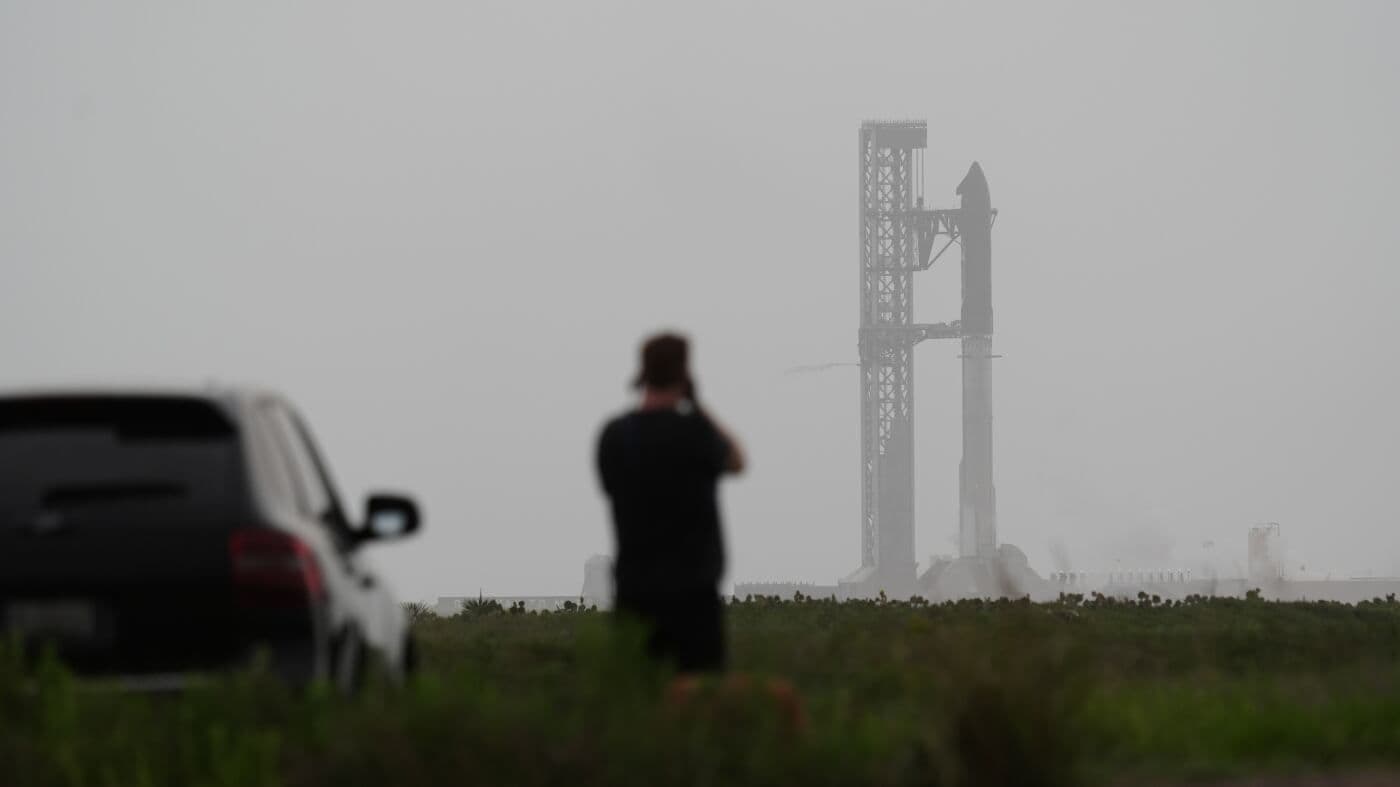
SpaceX's Starship Test Could Make or Break a $1.5 Trillion IPO
With a landmark public offering on the horizon, SpaceX's latest Starship launch is more than a rocket test — it's a financial watershed moment.
SpaceX Bets Big on Starship Ahead of Historic IPO
With one of the most anticipated stock market debuts in history just weeks away, SpaceX is putting its most ambitious engineering project to the ultimate test. The company is preparing to launch a heavily redesigned version of its colossal Starship rocket — a moment that analysts say could significantly shape investor confidence and determine whether the company's blockbuster valuation holds up under scrutiny.
What's New About This Version of Starship
Thursday's planned launch from Starbase, Texas, marks the debut of a substantially overhauled Starship. The updated rocket features dozens of next-generation Raptor 3 engines powered by an entirely new fuel delivery system within the booster. Beyond propulsion, the vehicle also incorporates upgraded avionics, onboard satellites, and prototype ports designed to support future in-orbit refueling — a capability that could eventually enable missions to the Moon and Mars.
Scott Manley, an engineer and popular aerospace commentator, described this third iteration as a genuine leap forward in design maturity. He noted that heat shield tiles appear more precisely installed, and that earlier stopgap solutions — such as the so-called "hot staging ring" that was added as an emergency fix following the rocket's first accident — have now been cleanly integrated into the vehicle's architecture.
"It looks more like a rocket and less like a bunch of grain silos welded together," Manley remarked.
He added that the performance of the new Raptor 3 engines will be closely watched. While the engines have undergone extensive ground testing and promise greater thrust with a simplified design, they have never flown in actual spaceflight conditions. "We don't know how they're going to perform under flight circumstances," he said.
The Stakes: A Trillion-Dollar Valuation on the Line
The timing of this launch is anything but coincidental. SpaceX is expected to go public within a month, with market analysts projecting the company could raise as much as $75 billion in its initial public offering — potentially the largest IPO in history — and achieve a total valuation of up to $1.5 trillion.
Franco Granda, a senior researcher at data analytics firm PitchBook who closely follows SpaceX, said the outcome of Thursday's launch carries enormous weight for the offering.
"The launch is super important for the IPO," Granda said, warning that a poor performance could cause investor enthusiasm to "diminish quite dramatically." He acknowledged that test flights are, by their nature, experimental, but emphasized that SpaceX has every reason to want this one to succeed.
Financial documents released by SpaceX on Wednesday offer a sobering look at the costs involved. The company spent just over $3 billion on Starship development throughout 2025, and burned through an additional $930 million in the first quarter of 2026 alone. That spending has weighed heavily on the company's core launch business, which reported a $662 million operating loss in the same period.
SpaceX's own disclosure language leaves little room for ambiguity: "Any failure or delay in the development of Starship at scale or in achieving the required launch cadence, reusability and capabilities thereafter would delay or limit our ability to execute our growth strategy."
Why Starship Matters Beyond the Launch Pad
Standing approximately 400 feet tall and constructed from heavy-duty stainless steel, Starship is the largest rocket ever built. It launches atop a massive booster called Super Heavy, which harnesses 33 Raptor engines to propel the spacecraft skyward. Once the two stages separate, Starship's six engines carry it to orbit while the booster autonomously returns to its launch pad for recovery.
SpaceX CEO Elon Musk has consistently championed a vision in which both the booster and the spacecraft can be rapidly reused — potentially turning around launches in near-real time. If realized, this could dramatically slash the cost of reaching orbit and unlock an entirely new era of commercial space activity.
The applications are wide-ranging. Starship is slated to deploy larger, more powerful satellites for SpaceX's Starlink broadband network. NASA has contracted it as a lunar lander under the Artemis program. Musk envisions it as the backbone of a future Mars colonization effort. Most recently, he proposed using Starship to place solar-powered data centers in orbit to support the energy-hungry demands of artificial intelligence computing.
"Starship is a critical piece of the puzzle," Musk said at a chip fabrication facility unveiling earlier this year. "To achieve SpaceX's goals, you need massive payload to space, and Starship will enable that."
A Long Road Still Ahead
Despite the optimism, success is far from guaranteed. The original Starship prototype, which flew in April 2023, failed to separate cleanly from its booster and was destroyed. It took three attempts before the vehicle successfully reached space. A second-generation design experienced repeated setbacks throughout 2025, though its final two missions concluded as planned.
Even if Thursday's flight proceeds without issue, significant engineering challenges remain. Starship's thermal protection system has not yet demonstrated the durability needed to withstand multiple atmospheric reentries, and the spacecraft has not yet attempted a pad landing at its Brownsville, Texas facility — a critical milestone for full reusability.
Tim Farrar, president of satellite analytics consultancy TMF Associates, cautioned that Starship represents a problem of extraordinary complexity compared to SpaceX's proven workhorse, the Falcon 9.
"It's a multidimensional problem that they haven't actually solved yet," Farrar said. He was equally direct about the financial picture: "You can't justify a valuation well in excess of a trillion dollars based on what SpaceX is doing today. You've got to believe that Musk will come up with something much bigger than that."