SpaceX's Starship Reusability Dream Faces a Harsh Reality Check
SpaceX's IPO filing and latest Starship test reveal a sobering truth: without full reusability, the rocket's promise may fall short of Musk's bold vision.
SpaceX's Starship Faces an Uncertain Road to Full Reusability
Two recent developments from SpaceX — its initial public offering filing and the latest Starship test flight — have painted a far more sobering picture of the company's near-term future than either its most passionate supporters or harshest critics might have anticipated.
Stripped away from the headline-grabbing promises of AI-powered profits and lunar outposts lies a less glamorous truth: an expendable Starship rocket could sustain SpaceX as a business, but it would fall critically short of delivering the dramatic cost savings and revolutionary business models that CEO Elon Musk has staked so much on.
Starlink Is the Real Money-Maker — But It Comes at a Price
SpaceX operates across multiple business lines, yet only one is generating meaningful revenue today. Starlink, the company's satellite internet network, serves as the financial backbone of its public offering. The numbers are striking — Starlink pulled in $11.4 billion in revenue last year, representing the majority of SpaceX's total earnings.
However, beneath that impressive top line lies a capital-intensive reality that has historically driven entrepreneurs away from the satellite communications industry. SpaceX must replace roughly 20% of its satellite constellation annually just to maintain existing service levels. Notably, the company has poured more capital into its satellite operations — $11.4 billion since early 2023 — than it has into developing Starship and all associated launch infrastructure combined, which totaled $8.4 billion over the same period.
SpaceX's S-1 filing with the Securities and Exchange Commission acknowledges that costs will continue rising, though the company anticipates that technological advances will help shrink those expenses as a proportion of total revenue over time.
Why Full Reusability Is Critical to SpaceX's Survival
Musk has consistently argued that Starship is the linchpin of Starlink's long-term financial health, going so far as to suggest the company could face bankruptcy without the rocket's ability to deploy replacement satellites at dramatically lower cost. Against that backdrop, a particularly telling admission buried in SpaceX's S-1 filing stands out: the company acknowledged for the first time that full Starship reusability is not strictly required to launch its next-generation Starlink satellites.
The catch, of course, is that without full reusability, launch costs rise sharply — eroding the business case considerably.
What the Analysts Are Saying
Satellite market analyst Tim Farrar highlighted the financial implications in a recent note to clients. "If this reusability is not achieved, then the cost of launch on Starship may not be much lower than Falcon 9, even if the full 100-ton payload capability is realized — which is by no means a foregone conclusion," Farrar wrote. He estimated per-launch costs could reach as high as $100 million, or roughly $1,000 per kilogram, while production rates remain limited by how quickly second stages can be built and first stages refurbished.
Latest Test Flight Raises Fresh Doubts
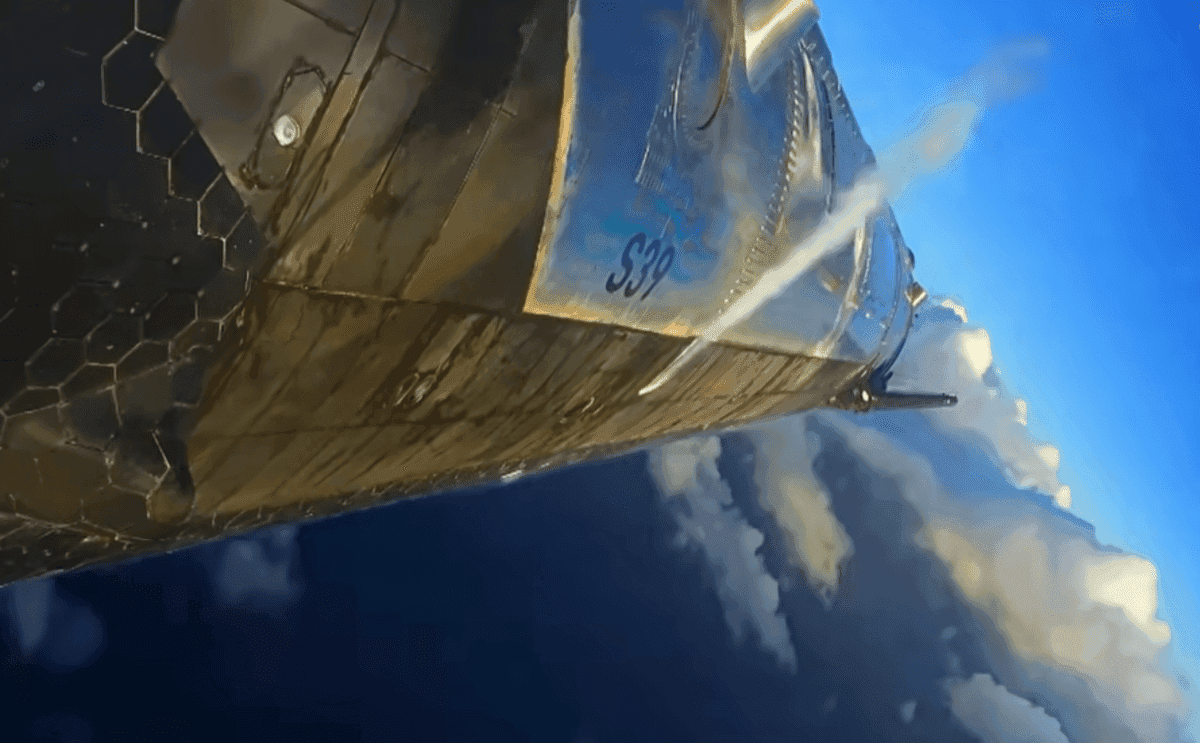
The third version of Starship's maiden flight last week did little to ease those concerns. While the vehicle successfully deployed a set of dummy satellites and two test payloads into space — a meaningful milestone — it encountered significant problems with engine re-ignition, a capability fundamental to controlled booster and spacecraft recovery. Without reliable engine relighting, achieving the full reusability SpaceX depends on remains an open question.
This context reframes SpaceX's stated plan to begin launching 60 next-generation Starlink satellites per Starship mission later this year — a twentyfold capacity increase over a standard Falcon 9 flight. What initially sounds like classic Musk-style optimism may actually reflect an expectation that early Starship launches will be expendable. If that is the case, the economics deteriorate: less free cash flow from satellite operations, and ambitious plans to launch space-based data centers become unrealistic until true reusability is achieved.
Slowing Growth Compounds the Challenge
SpaceX's S-1 also reveals that Starlink's growth trajectory is decelerating. This matters enormously because newer subscribers are paying considerably less than those who signed up earlier. Average revenue per user has declined from $99 in 2023 to $66 in the first quarter of 2026, driven largely by expansion into international markets where pricing power is weaker than in developed economies. A slowing user base combined with shrinking per-user revenue means each newly launched satellite is generating less return on investment.
Competitive pressure is intensifying as well. Amazon's Project Kuiper broadband constellation is approaching the operational scale necessary to mount a genuine challenge to Starlink's dominance, pending a regulatory decision from the Federal Communications Commission on a deadline requiring Amazon to deploy 1,600 satellites by July.
Is the Space Broadband Market Smaller Than Expected?
Perhaps most striking is what the SpaceX data implies for the broader industry. Farrar suggests that if SpaceX — the furthest-ahead player by a wide margin — is already experiencing slowing demand, it may be an early signal that the total addressable market for space-based broadband is considerably smaller than the industry had projected. That would be unwelcome news not just for SpaceX, but for rivals including Blue Origin and any other company banking on satellite internet as a high-growth market.
For SpaceX, the path forward hinges on cracking the reusability challenge it has long promised to solve. Until then, the gap between Musk's transformative ambitions and commercial reality remains wider than the company's most enthusiastic backers might prefer to admit.
