SpaceX Aborts First Starship V3 Launch Seconds Before Liftoff — Next Attempt Set for Friday
SpaceX was within 40 seconds of launching its third-generation Starship rocket before a technical fault forced a scrub. A new attempt is scheduled for Friday.
SpaceX Calls Off Historic Starship V3 Launch at the Last Moment
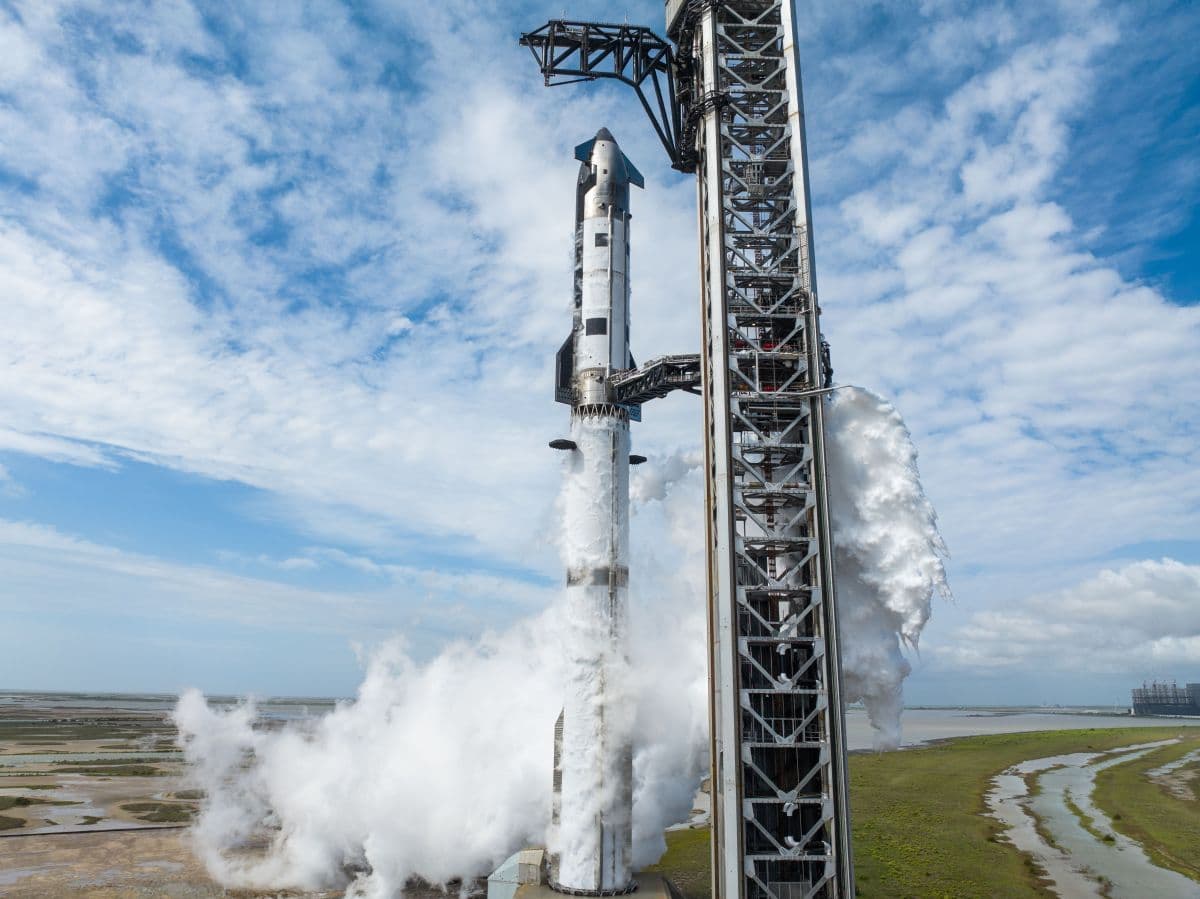
SpaceX came agonizingly close to launching the first flight of its third-generation Starship rocket system on Thursday, only to abort the mission just seconds before liftoff. The attempt took place at the company's Starbase facility in South Texas, and a fresh launch window has been set for Friday at 5:30 p.m. local time — provided engineers can resolve the technical issue overnight.
What Caused the Scrub?
According to SpaceX CEO Elon Musk, the culprit was a mechanical failure on the launch infrastructure itself. In a post shared on X, Musk explained that a hydraulic pin responsible for holding a launch tower arm in position failed to retract as required, preventing the countdown from proceeding.
The scrub did not happen without drama. The massive Starship vehicle and its rocket booster had been fully loaded with propellant, and the countdown had ticked down to under T-40 seconds before controllers were forced to recycle the clock multiple times. After several failed attempts to resolve various technical issues across both the rocket and the launchpad systems, SpaceX ultimately called off the launch altogether.
Why This Launch Matters So Much
This would have been Starship's 12th flight overall and its first since October 2025 — making it a particularly significant milestone for the program. But the stakes extend well beyond technical achievements.
SpaceX recently filed for an initial public offering and is anticipated to go public within weeks. That financial backdrop places enormous pressure on the company to demonstrate that Starship V3 is progressing meaningfully. Investors and the broader aerospace industry are watching closely.
What's New About Starship V3
The third-generation Starship represents one of the most substantial overhauls the program has seen to date. Key upgrades include:
Redesigned Raptor Engines
SpaceX has outfitted the new booster with third-generation Raptor engines that deliver increased thrust through a more compact and efficient design. The overall result is a more powerful vehicle with a leaner engine profile.
Improved Catchability and Structural Changes
The V3 booster has been redesigned to make it easier for the launch tower's mechanical arms to catch it during recovery. It also features one fewer grid fin compared to its predecessor.
Propellant Leak Fixes
A persistent issue across earlier Starship test flights involved propellant leaking into certain sections of the upper stage. The new design directly addresses this problem, with engineering changes intended to prevent dangerous accumulation of fuel vapors — a factor that contributed to anomalies on previous missions.
What This Flight Will and Won't Prove
Even if Friday's launch succeeds, SpaceX has set modest objectives for this particular mission. The company is not planning to recover either the booster or the Starship upper stage. Instead, both are expected to perform controlled splashdowns — the booster targeting the Atlantic Ocean and the Starship upper stage descending into the Indian Ocean.
Notably, Starship will not reach true Earth orbit during this flight. That means SpaceX will need at least one or two additional missions before it can confirm that the rocket is capable of delivering commercial payloads to orbit — a critical benchmark for the program's long-term viability.
The Starlink Connection
The urgency behind getting Starship V3 operational is closely tied to SpaceX's Starlink satellite internet business. According to the company's IPO filing, Starlink generated $11 billion in revenue last year, and scaling that service depends heavily on Starship's ability to deploy next-generation satellites at high volume.
While SpaceX has previously used Starship to release prototype versions of its upgraded Starlink satellites, it has yet to place a functional payload into orbit using the new rocket system. Successfully doing so remains one of the program's most pressing near-term goals.
Looking Ahead
With repairs underway and a launch window confirmed for Friday evening, SpaceX engineers will be working around the clock to ensure the hydraulic issue is fully resolved. If successful, the flight will mark a critical step forward — not just for Starship's development roadmap, but for SpaceX's ambitions as a soon-to-be publicly traded company.