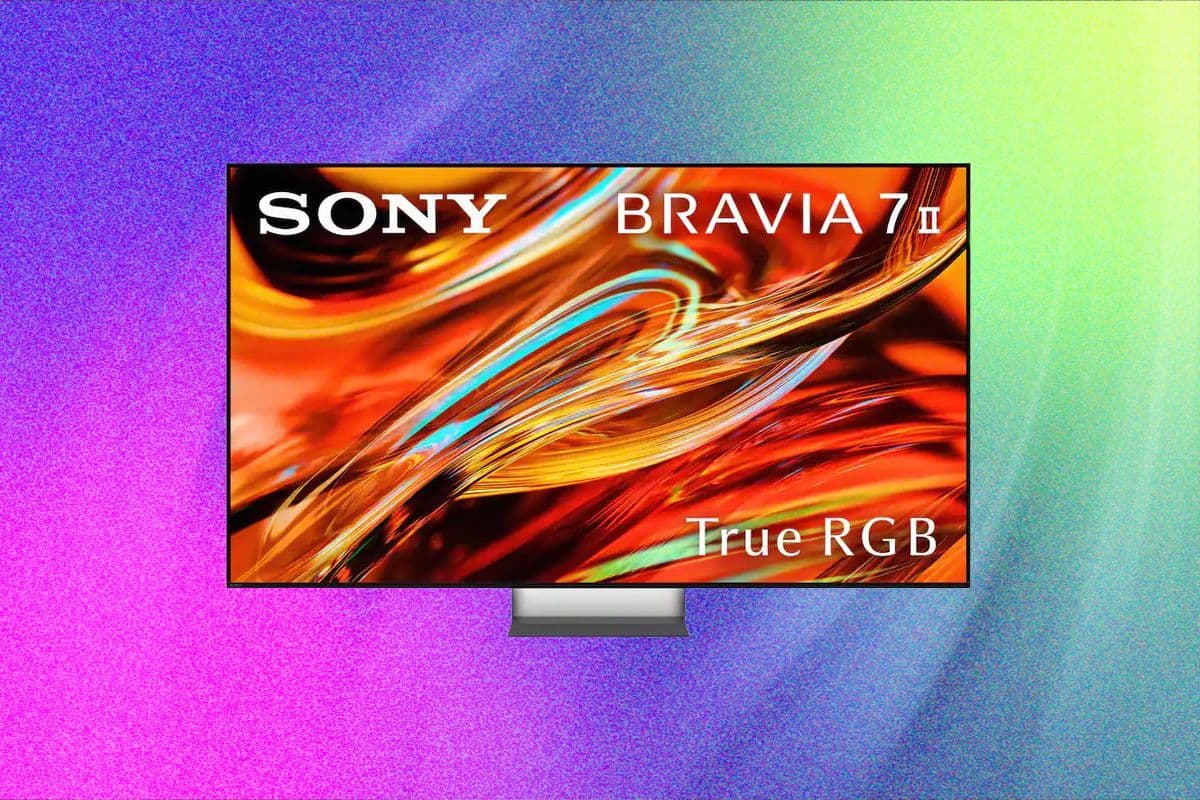
Sony Bravia 7 Mark II Review: Premium Price Tag, Midrange Performance
The Sony Bravia 7 Mark II brings stylish design and Google TV convenience, but its $2,600 price point is hard to justify given its average contrast and brightness.

Sony Bravia 7 Mark II: Is It Worth the Premium Price?
Sony's Bravia lineup has long been a trusted name in home entertainment, but the latest Bravia 7 Mark II raises a serious question: does a midrange television deserve a flagship price? Starting at $1,600 for the 50-inch model and climbing to $2,600 for the 65-inch version, this TV sits in an awkward position — too expensive to be considered a value buy, yet not powerful enough to compete with true high-end alternatives.
Design and Build Quality
At first glance, the Bravia 7 Mark II cuts a sleek figure. Its all-black chassis with a slim 2.25-inch bezel gives it a clean, modern look that closely resembles Sony's own Bravia 5. The most notable design departure is the new Mirage Stand — a single central foot designed to give the TV a floating appearance above your entertainment surface. Unlike traditional dual-foot designs, this stand works well for smaller tables and tight spaces.
Unfortunately, the floating illusion doesn't quite land. The transparent plastic component meant to create the effect appears noticeably foggy, making it clearly visible rather than invisible as intended. It's a creative concept that falls short in execution.
Assembling the stand is another mild frustration. The multi-part leg system requires attaching prongs to a base before mounting the whole assembly onto the TV — a process that feels unnecessarily complex compared to the tool-free snap-on feet found on some Samsung models.
Setup and Software Experience
On the software side, things are largely smooth. The Bravia 7 Mark II runs Google TV as its operating system, which delivers a polished and intuitive interface. However, initial setup hit a small snag — the Google Home app's QR code login method didn't function properly during testing, requiring a manual Gmail sign-in instead. Once past that hurdle, the rest of the onboarding process was quick and painless, taking roughly 10 minutes to complete with apps installed and settings configured.
The included remote is compact and well-organized, with clearly labeled volume and channel controls alongside dedicated shortcut buttons for Sony Pictures Core, Amazon Prime, and Netflix. One layout oddity worth noting: the Home button is positioned on the right side of the remote rather than in the center, breaking from the industry standard that most users will be accustomed to.
Ports and Connectivity
Flipping to the back panel reveals four HDMI ports — but only two of them support the faster HDMI 2.1 standard. There is no DisplayPort connection, which limits the maximum PC refresh rate to 120 Hz. Competitors like the Hisense UR9 offer DisplayPort support with refresh rates up to 180 Hz and a variable 330 Hz mode for smoother, low-latency gaming. The Bravia 7 Mark II also includes a coaxial port for antenna or cable input and two USB ports for storage devices or powering an HD antenna.
Picture Quality and Sony's Enhancements
This is where the Bravia 7 Mark II struggles to justify its cost. Sony's proprietary picture processing tools, including XR Contrast Booster and Reality Creation, promised to elevate the viewing experience but delivered underwhelming results in practice. XR Contrast Booster produced minimal visible improvement, while Reality Creation — designed to sharpen and smooth older standard-definition content — failed to make a meaningful difference on standard YouTube videos.
Color reproduction in high-resolution 4K content is genuinely impressive, particularly in vibrant, well-lit scenes. However, contrast and brightness levels are merely average for a television in this price bracket, which is a significant drawback for a $2,600 purchase.
Gaming Performance
Gaming results were similarly mixed. Testing with the Vietnam level in 007 First Light on PC highlighted the TV's core inconsistency: brilliantly lit outdoor scenes looked sharp and vivid, while darker environments caused contrast to appear washed out and flat. The 120 Hz refresh rate performed adequately but lacked the responsiveness and clarity offered by competing panels like the Hisense UR9 Mini RGB.
Final Verdict
The Sony Bravia 7 Mark II is not a bad television — it offers a clean design, an easy-to-use smart TV platform, and strong color performance in ideal conditions. But at its current price point, it faces stiff competition from displays that deliver superior contrast, brighter panels, and more advanced gaming features. If you're investing $2,600 in a living room centerpiece, there are better options available that deliver more for your money.