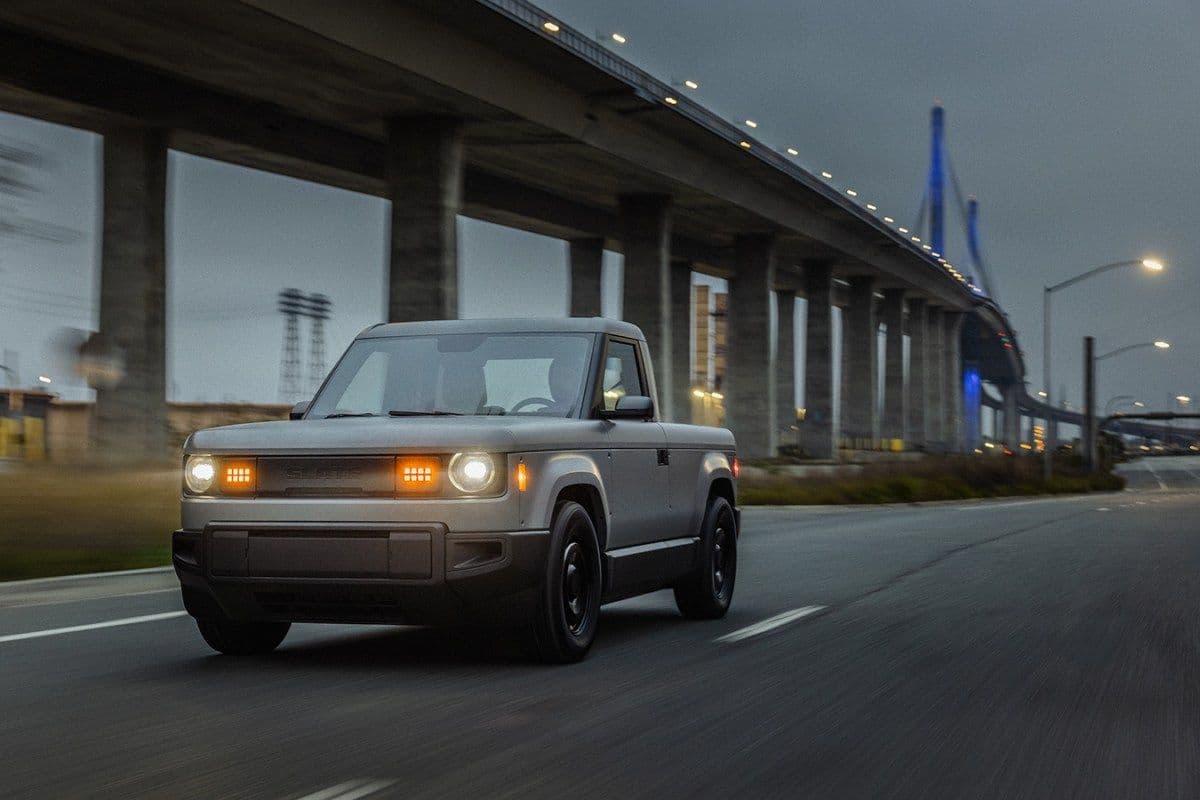
Slate Auto: The Bezos-Backed EV Startup Shaking Up the Electric Truck Market
Slate Auto emerged from three years of secrecy to unveil an ultra-affordable, customizable electric pickup truck backed by Jeff Bezos. Here's everything you need to know.

Slate Auto: The Bezos-Backed EV Startup Changing the Game
When Slate Auto stepped out of the shadows in April 2025, it sent shockwaves through an automotive industry already reeling from EV startup failures, bankruptcies, and stalled launches. Operating quietly for three years in Troy, Michigan — right in the heart of American auto manufacturing territory — this well-funded newcomer arrived with a bold mission: build the most affordable and customizable electric pickup truck on the market.
Backed by Amazon founder Jeff Bezos and Los Angeles Dodgers co-owner Mark Walter, Slate wasn't just another Silicon Valley EV dream. It was a carefully constructed operation with deep ties to veterans from Harley-Davidson and Chrysler, companies long known for their robust accessories and aftermarket ecosystems.
Below is a comprehensive timeline charting the rise of Slate Auto — from its secret origins to its production ambitions and leadership changes.
The Origins: Three Years in Stealth Mode
Slate Auto spent roughly three years developing its product behind closed doors before any public attention came its way. The company quietly assembled a team of experienced automotive engineers and designers, drawing heavily from brands with strong customization cultures. Its base of operations in Troy, Michigan placed it squarely among legacy automakers, yet it managed to stay completely off the radar until investigative reporting finally pulled back the curtain.
April 8 — The Story Breaks
The first major revelation came when TechCrunch published an in-depth investigation exposing Slate Auto's existence. The report confirmed that the startup had been operating in secret for three years, supported financially by Jeff Bezos and Mark Walter. What set Slate apart from other EV ventures was its laser focus on affordability — targeting a starting price of around $25,000 for an electric pickup truck. The startup's deep customization philosophy, influenced by former Harley-Davidson and Chrysler employees, also immediately caught the industry's attention.
April 10 — A Prototype Surfaces Online
Just two days after the initial exposé, a photograph of an unidentified electric truck began circulating on Reddit's r/whatisthiscar community. Redditors quickly speculated it might be the mysterious Slate vehicle, and their instincts proved correct. The image was subsequently confirmed to show a Slate prototype parked outside the company's design center in Long Beach, California.
April 21 — Teasers on Public Streets
With its official launch event just days away, Slate began deploying concept versions of its electric truck on public roads throughout California. Interestingly, several of these vehicles appeared to be configured as SUVs or hatchbacks rather than traditional pickup trucks, sparking considerable curiosity. This was later confirmed to be a deliberate teaser of the truck's "Transformer-like" modular design capabilities — a core feature that would allow buyers to dramatically alter the vehicle's form and function.
April 24 — Official Launch in Long Beach
Slate made its grand public debut at a launch event held in Long Beach, California. The company officially unveiled its customizable electric pickup truck and announced a jaw-dropping starting price of under $20,000 after factoring in the $7,500 federal EV tax credit.
The base model was intentionally stripped down: it offered 150 miles of range, no power windows, no built-in infotainment display, and came without paint. Rather than viewing these omissions as drawbacks, Slate positioned them as a blank canvas. The company promised that virtually every element of the truck — from seating configuration to the vehicle's overall silhouette — could be personalized by the owner.
April 25 — A Factory Location Identified
One day after the launch, Slate revealed plans to convert a former printing plant in Warsaw, Indiana into its manufacturing facility. The sprawling 1.4-million-square-foot building, originally constructed in 1958, had sat idle for approximately two years before Slate identified it as the ideal home for its production operations.
May 12 — Reservations Surpass 100,000
In a sign that Slate's vision had resonated far beyond automotive enthusiasts, the company confirmed it had already collected over 100,000 refundable reservations — each requiring a $50 deposit. The achievement was especially remarkable given that virtually no one had heard of Slate Auto just weeks earlier.
July 3 — Federal Tax Credit Eliminated
A significant obstacle emerged when the Trump administration passed sweeping tax-cut legislation that included an end date of September for the $7,500 federal EV tax credit. This change directly undercut Slate's flagship marketing claim of a sub-$20,000 price point, which had always depended on that credit. Slate promptly removed the "under $20,000" language from its website even before the bill received a presidential signature.
July 8 — Early Investor Details Emerge
More details about Slate's financial backing came to light when it was revealed that the company's 2023 funding round included at least 16 investors, with Jeff Bezos confirmed as one of them. Among those willing to speak publicly was Los Angeles-based venture firm Slauson & Co., which explained its rationale for backing Slate in both the initial round and the subsequent Series B funding.
October 30 — CEO Takes the Stage at TechCrunch Disrupt
Slate Auto CEO Chris Barman appeared at TechCrunch Disrupt 2025, addressing key topics including Jeff Bezos' role in the company, the immense challenges of building an automaker from the ground up, and the startup's vision for creating a thriving marketplace centered around vehicle customization.
December 16 — Reservations Cross 150,000
Despite the loss of the federal EV incentive and a general cooling of EV enthusiasm across the United States, Slate Auto announced that reservations for its truck and SUV had surpassed 150,000. The milestone signaled enduring consumer interest in the brand and suggested that, with fewer affordable EVs entering the U.S. market, Slate would face minimal competition at the budget end of the spectrum.
March 9 — A Leadership Shake-Up
Slate surprised the industry with an unexpected executive change: former Amazon Marketplace Vice President Peter Faricy was appointed as the new CEO. Founding CEO Chris Barman, who had been Slate's very first hire, transitioned into a newly created role as President of Vehicles. The leadership shift was framed as a strategic move to prepare the company for its commercial launch — with the immediate priority being the conversion of existing reservations into confirmed purchase orders ahead of a planned end-of-year rollout.
What Lies Ahead for Slate Auto
Slate Auto's story is one of the most compelling in the modern EV landscape. It has managed to generate massive consumer interest, secure high-profile investment, and build an identifiable brand — all while navigating policy changes, manufacturing challenges, and leadership transitions. With production targeted for late 2026 and over 150,000 reservations already in hand, the startup has laid a credible foundation.
However, the road ahead is far from smooth. Converting reservations into actual sales, ramping up a dormant factory, and delivering on the promise of broad customization at a genuinely low price point are all formidable tasks. Whether Slate Auto can follow through where so many EV startups have stumbled remains the defining question — and one the entire automotive world is watching closely.