Slate Auto Secures $650 Million to Push Forward Its Budget-Friendly Electric Pickup Truck
Slate Auto has closed a massive $650M funding round, bringing its total raised to $1.4B as it gears up to deliver affordable EVs by late 2026.

Slate Auto Lands $650 Million in Fresh Funding for Its Affordable Electric Truck
Electric vehicle startup Slate Auto has successfully closed a $650 million Series C funding round, pushing the company closer to its ambitious goal of delivering an affordable electric pickup truck to American consumers before the end of 2026.
Who Led the Investment?
The latest round was spearheaded by TWG Global, an existing investor and firm helmed by Mark Walter — the chief executive of Guggenheim Partners and owner of the Los Angeles Dodgers — alongside investor Thomas Tull. While Slate Auto's official announcement expressed gratitude toward its "visionary investors," the company stopped short of disclosing the names of additional participants in the round.
With this new injection of capital, Slate Auto has now accumulated approximately $1.4 billion in total funding. Earlier backers include prominent names such as General Catalyst, Jeff Bezos' personal family office, venture capital firm Slauson & Co., and former Amazon executive Diego Piacentini.
A Company Built on Amazon's DNA
Slate Auto carries a remarkably strong connection to Amazon beyond its investor roster. The company was co-founded by Jeff Wilke, who previously served as Amazon's Consumer CEO. Leadership across several key departments — including mobility, user experience, e-commerce, fleet sales, and human resources — is largely composed of former Amazon employees.
More recently, the company appointed Peter Faricy, formerly a Vice President at Amazon Marketplace, as its new Chief Executive Officer. The previous CEO, Chris Barman, a veteran of Chrysler, has transitioned into a newly created role as President of Vehicles.
Navigating a Turbulent EV Market
Slate Auto's funding announcement arrives at a particularly challenging time for the U.S. electric vehicle industry. Established automakers have been scaling back their EV rollout plans, largely in response to the elimination of the $7,500 federal tax credit. Tesla has seen its sales decline for two consecutive years, and emerging players like Rivian and Lucid Motors continue to face significant hurdles in reaching profitable production volumes — though both companies are introducing more competitively priced models this year.
Despite this difficult backdrop, Slate Auto appears to be gaining genuine traction with consumers.
A Stripped-Down Truck Built for the Masses
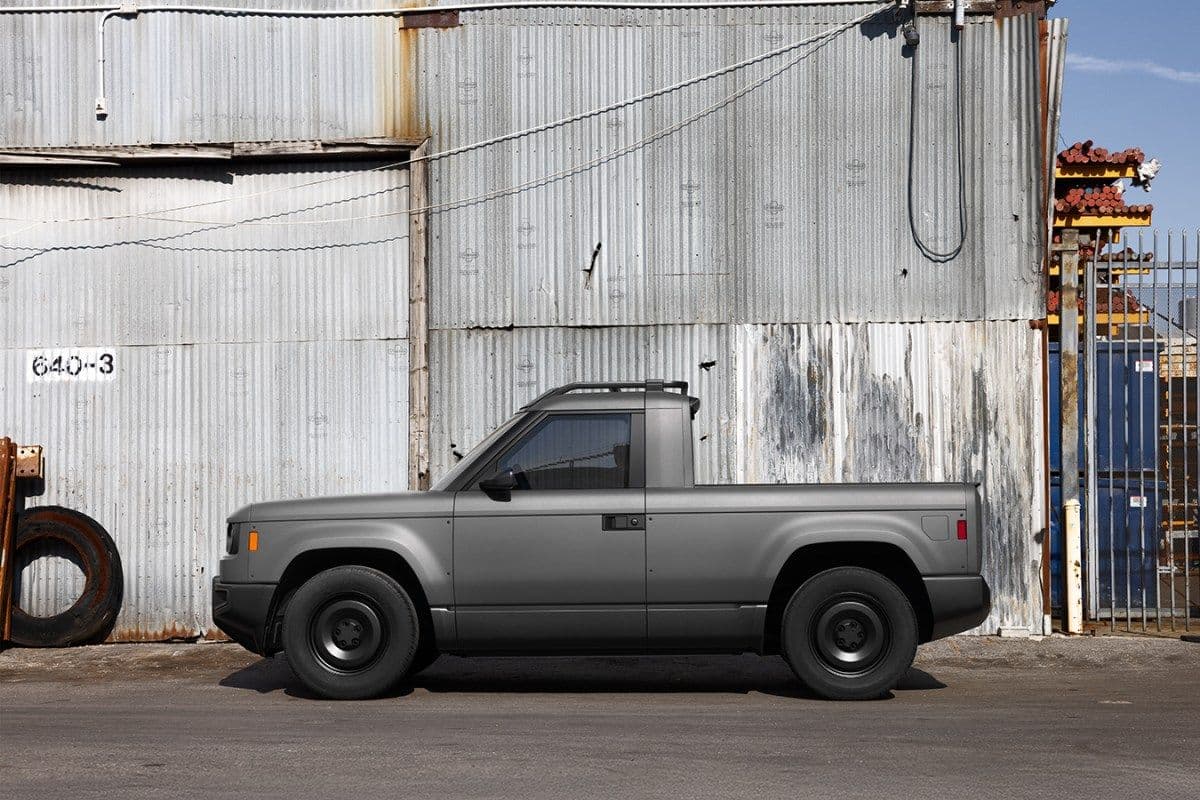
Founded in 2022, Slate Auto is pursuing a distinctly contrarian strategy in the automotive space. Rather than targeting the premium end of the market — a common approach among EV startups — the company is focused squarely on affordability. Its debut electric pickup truck is expected to carry a starting price in the mid-$20,000 range, with a range of customization options available for additional cost. Among those upgrades is an SUV conversion kit priced at approximately $5,000.
The company had originally floated a price point of around $27,000, and briefly promoted a starting figure of "under $20,000" when factoring in the now-defunct federal tax credit. Official final pricing is expected to be announced in June.
Strong Consumer Demand Already Building
Even amid pricing uncertainty and the loss of the federal incentive, Slate Auto has managed to accumulate more than 160,000 refundable reservations for its electric truck. A key part of Faricy's mandate as the incoming CEO is converting that significant pool of reservations into confirmed, paid orders.
To support production, the company is investing several hundred million dollars in the renovation of a former printing facility in Indiana, which will serve as the manufacturing home for its EVs.
With substantial capital now secured, a growing reservation list, and a clear production timeline on the horizon, Slate Auto is positioning itself as a serious disruptor in the electric vehicle space — one that bets the future of EVs lies not in luxury, but in accessibility.