Sigma BF Review (2026): Eccentric but Strangely Lovable
Sigma’s new entry is both a bold design experiment and a pretty decent camera.

Sigma’s new entry is both a bold design experiment and a pretty decent camera.
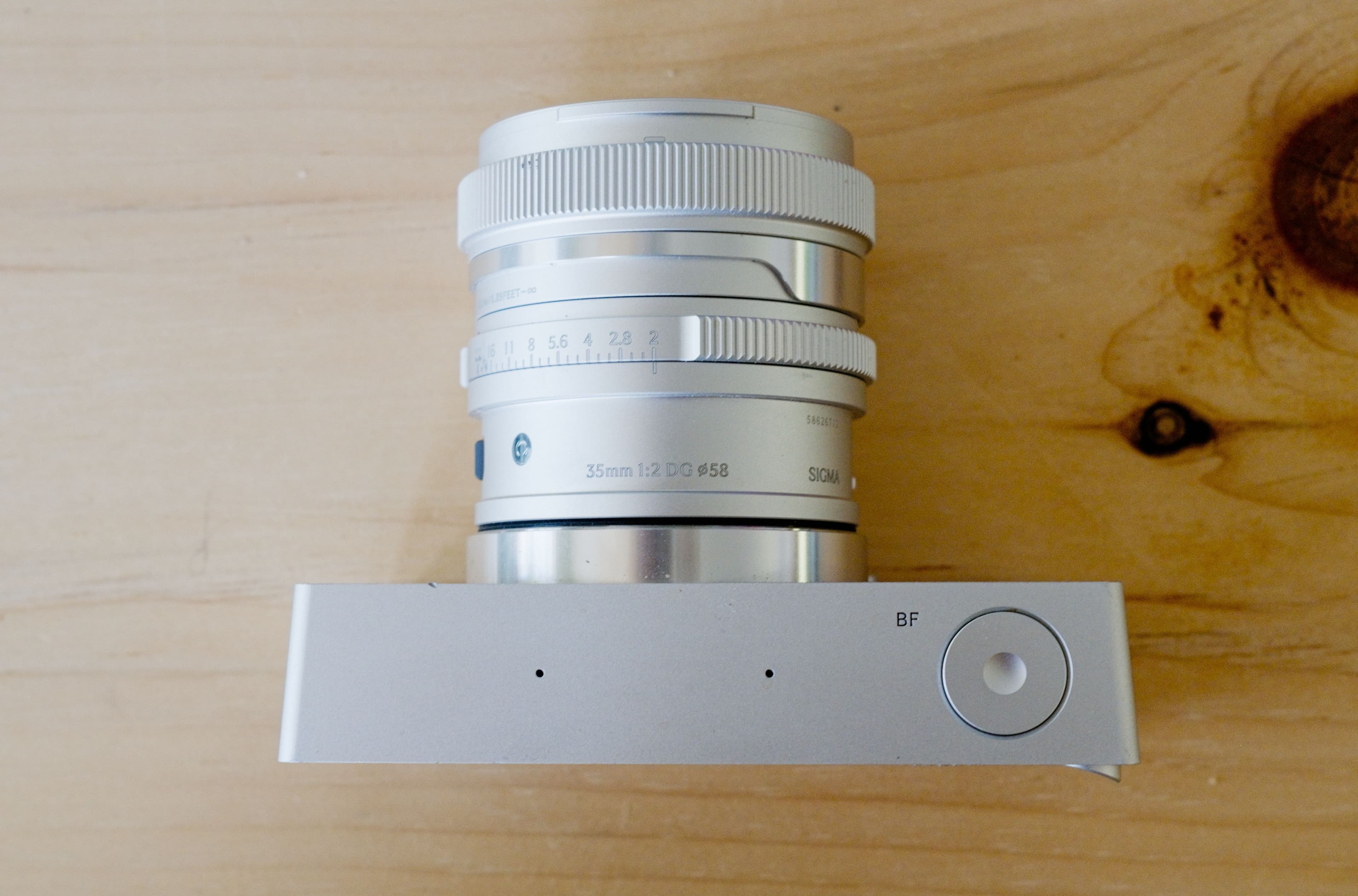
Save Story Save this story Comment Save Story Save this story Design-heavy dramatic aesthetics. A 24-megapixel sensor delivers excellent image quality. Offers 6K video with L-Log support. Surprisingly good autofocus. Limitations abound, know what you’re getting into. Photograph: Scott Gilbertson The Sigma BF takes its name from the phrase “beautiful foolishness,” which Sigma pulled from a poem in The Book of Tea . I mention this because its name neatly sets the stage for what the Sigma BF aims to accomplish. The camera is not trying to compete with high-end, full-frame cameras from Sony, Canon, Nikon, or any other legacy maker. In fact, Sigma seems to have known that it couldn't face off against those heavy hitters, so it built its own playing field. The success or failure of the BF ultimately depends entirely on you and whether you fit on Sigma's beautiful field of (potentially) foolishness.
Surprisingly for a camera that feels very much like a point-and-shoot, the BF is capable of really nice video. The specs aren't top of the line, but it can shoot 6K L-log, which I found has a wonderful, slightly noisy look to it that gives it filmlike quality when color-graded in post. I like it more than what you get with most cameras these days, with an overly sharpened and almost clinical appearance, but that's a matter of personal taste.
The rest of these omissions are not such a big deal to me. Would it be nice to have in-body image stabilization (IBIS)? Sure, but I've shot plenty of cameras without it. Not having IBIS is a limitation to be aware of, but not a constraint you can't work around (as opposed to no mechanical shutter). Fall back to the old rule of keeping your shutter speeds above the focal length of your lens, and you won't have issues with the missing IBIS.
The main deal-breaker for me is the lack of a viewfinder. I still prefer to shoot through a viewfinder. It's just muscle memory—hand me a camera, and I will bring it to my eye. If you love a viewfinder, too, this is not the camera for you.
Another problem with the lack of a viewfinder is that the rear screen is nearly unusable in bright sunlight. It's just too dark to compose accurately. The rear screen also doesn't tilt or move at all, which means if you like to shoot from the hip, you won't be able to use it at all. If you want to get an unusual angle, say from the ground, be prepared to lie down to frame it.
You can crank up the screen brightness all the way, which helps a little when you're in the sun, but it's still difficult to use in bright daylight. Having the screen brightness all the way up also chews through the already paltry battery life. Sigma claims the BF can shoot about 260 images on a single charge, but that drops significantly if you have to crank up the screen in bright daylight. I was finding that in bright sun, I seldom got more than two to three hours of shooting time on a single charge.
It might sound like the Sigma BF has some serious limitations, and it does, especially when you compare the specs to other cameras in the BF's $2,200 price range. However, limitations can be a good thing. Without limitations, you have nothing to build from. This is not a camera for the "spray and pray" style of shooting. This camera requires some thought to use well. It requires keeping in mind its limitations and working within them. If you do that, the BF is capable of making great images.
While I do not recommend the Sigma BF for most people, there are no doubt photographers out there who will love it not despite quirky design choices, but because of them. I fully expect this to be one of those cameras that develops a cult following in 20 years.

