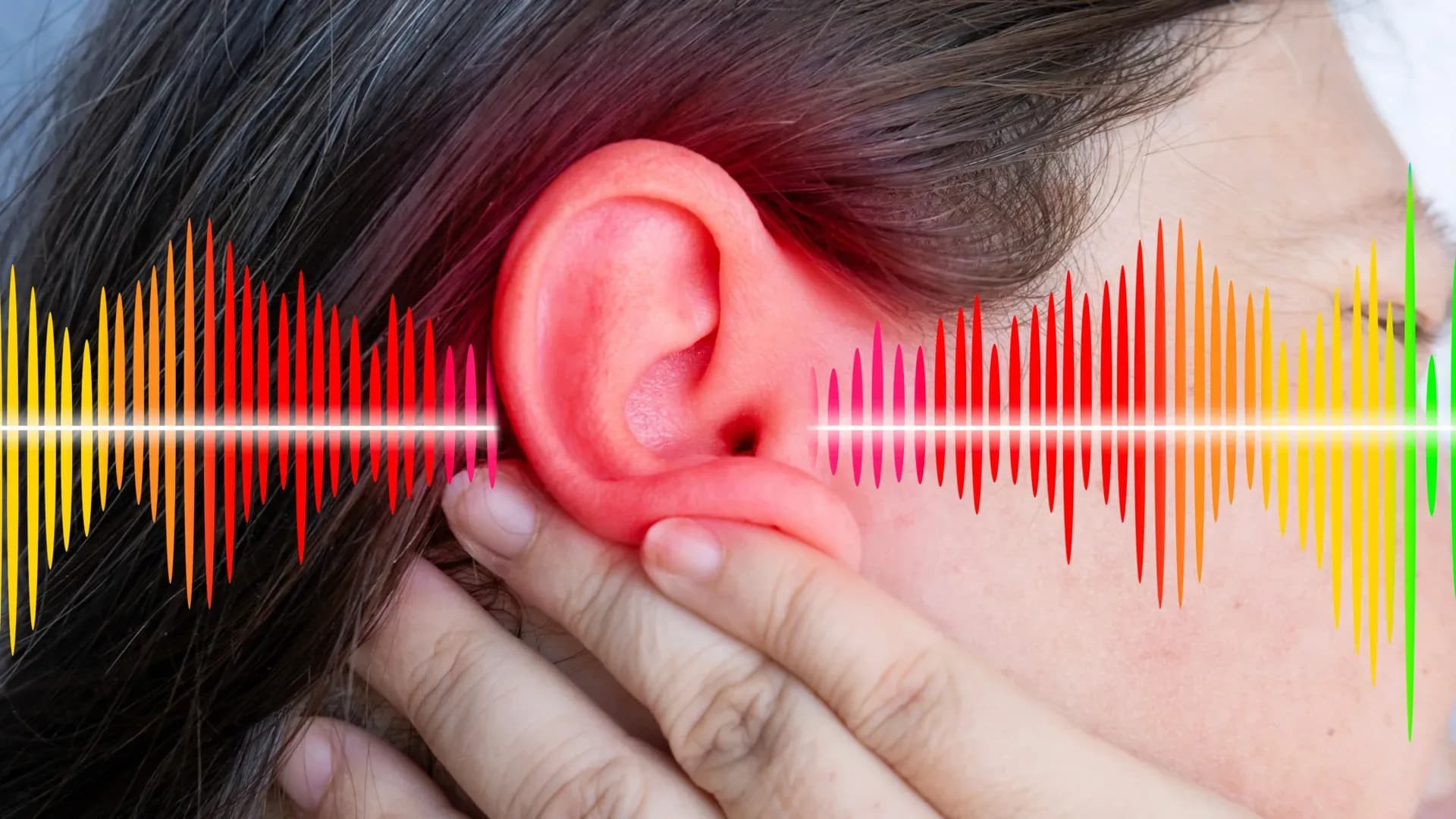
Serotonin's Dark Side: How the Brain's 'Happy Chemical' May Be Making Tinnitus Worse
New research reveals serotonin may intensify tinnitus symptoms — and could explain why some antidepressant users report louder ear ringing.

The Brain Chemical You Trust May Be Amplifying Your Tinnitus
Serotonin has long been celebrated as the brain's mood-lifting chemical — the neurological force behind feelings of calm and well-being. But a striking new study suggests this same chemical may have an unwanted side effect: making tinnitus significantly worse.
Researchers have found compelling evidence that elevated serotonin levels in the brain can intensify the persistent ringing, buzzing, or humming sounds that define tinnitus — a condition that affects an estimated 14% of the global population, with many cases severe enough to disrupt everyday life.
The study was published in the prestigious Proceedings of the National Academy of Sciences.
What the Researchers Discovered
A collaborative research team from Oregon Health & Science University (OHSU) and Anhui University in China conducted experiments on mice, using a cutting-edge technique called optogenetics — a method that employs fiber optics and precisely targeted light pulses to activate specific neurons in the brain.
By directing this light-based stimulation at serotonin-producing neurons, scientists were able to trigger activity in the brain's auditory processing regions. The mice then began exhibiting behaviors consistent with tinnitus-like experiences, as measured through a modified auditory startle response test.
"When you stimulate these serotonergic neurons, we can see that it stimulates activity in the auditory region in the brain," said co-senior author Laurence Trussell, Ph.D., professor of otolaryngology at OHSU's School of Medicine. "We also saw that animals then behaved as if they were hearing tinnitus. In other words, it's producing symptoms that we would expect to be experienced as tinnitus in humans."
A Long-Suspected Link — Finally Explained
Scientists had previously theorized that serotonin played some role in tinnitus, but the precise biological pathway remained frustratingly unclear — until now.
"We've suspected that serotonin was involved in tinnitus, but we didn't really understand how," said co-author Zheng-Quan Tang, Ph.D., of Anhui University, who originally launched the project as a postdoctoral researcher in Trussell's lab. "Now, using mice, we've found a specific brain circuit involving serotonin that goes straight to the auditory system, and found that it can induce tinnitus-like effects."
Critically, when researchers deactivated that same circuit, tinnitus-like behavior in the mice was substantially reduced — a finding that opens promising doors for future treatment strategies.
"This gives us a much clearer picture of what's going on in the brain — and points toward new possibilities for treatment," Tang added.
What This Means for People Taking Antidepressants
The implications of this research extend directly to a large population of patients: those taking selective serotonin reuptake inhibitors (SSRIs), one of the most commonly prescribed classes of antidepressants worldwide.
SSRIs work by increasing the availability of serotonin in the brain, which helps alleviate symptoms of moderate to severe depression and anxiety. However, some patients on these medications have long reported a troubling side effect — a noticeable increase in the intensity of their tinnitus.
This study may finally offer a scientific explanation for those reports.
"People with tinnitus should work with their prescribing physician to find a drug regimen that gives them a balance between relief of psychiatric symptoms like depression and anxiety, while minimizing the experience of tinnitus," Trussell advised. "This study highlights the importance of clinicians recognizing and validating patient reports of medication-associated increases in tinnitus."
The Path Toward Targeted Treatment
Rather than suggesting patients abandon their antidepressants, the researchers see this discovery as a roadmap toward more refined, targeted therapies.
"Our study suggests a delicate balance," Trussell explained. "It may be possible to develop cell- or brain region-specific drugs that steer the elevation of serotonin in some brain regions but not others. In that way, it may be possible to separate the beneficial and important effects of the antidepressant from the potentially harmful effects on hearing."
This research builds upon foundational work the team published back in 2017 and was supported by the National Institutes of Health.
Key Takeaways
- Serotonin — widely known for its mood-regulating role — may worsen tinnitus by activating auditory circuits in the brain.
- Optogenetic experiments in mice identified a specific serotonin-driven neural pathway linked to tinnitus-like behavior.
- Deactivating this circuit significantly reduced tinnitus symptoms in the mice.
- The findings may explain why some SSRI users report increased ear ringing.
- Future treatments could potentially target specific brain regions to preserve antidepressant benefits while minimizing auditory side effects.
For the millions of people navigating both mental health treatment and tinnitus, this research underscores the importance of open, ongoing communication with healthcare providers about how medications may be affecting the full spectrum of their symptoms.