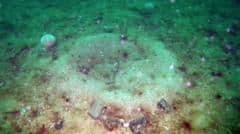
Scotland's Damaged Seabed Shows Promising Signs of Healing After Illegal Fishing Devastation
Early recovery signs emerge in a Scottish marine protected area destroyed by illegal dredging, as campaigners push for stronger ocean protections.

Scotland's Ravaged Seabed Begins to Heal — But the Fight for Ocean Protection Is Far From Over
A protected stretch of Scottish seabed, once devastated by illegal fishing activity, is beginning to show encouraging signs of natural recovery. Scientists and conservationists monitoring the site say the findings demonstrate that marine ecosystems can genuinely repair themselves — but only when properly shielded from destructive fishing practices.
Illegal Dredging Left a Trail of Destruction
The Wester Ross Marine Protected Area (MPA), established in 2016, spans approximately 231 square miles (600 sq km) of Scottish inland waters, encompassing Loch Broom, Gruinard Bay, and Loch Ewe. Shaped by ancient glacial activity at the close of the last ice age, this remarkable underwater landscape provides critical habitat for flame shells, maerl beds, sea cucumbers, scallops, and sea urchins.
In 2019, however, a fishing vessel illegally dragged heavy dredging equipment across the MPA near the small island of Eilean Dubh, close to Ullapool's Summer Isles. Underwater surveys conducted in the aftermath revealed widespread and severe damage to the seabed ecosystem.
Dredging — a method primarily used to harvest scallops hidden beneath the mud — is widely considered one of the most destructive forms of commercial fishing. The heavy gear tears through everything in its path, leaving the seabed effectively barren.
Early Recovery Offers a Glimmer of Hope
Despite the scale of the destruction, remotely operated underwater drones have captured encouraging footage from the damaged zone. Notable numbers of sea cucumbers have returned to the area, taking advantage of their ability to burrow beneath the sand to escape fishing gear. Sightings of cat sharks, cushion sea stars, various crab species, and emerging algae have also been recorded.
However, experts caution that a full ecological recovery is still many years away — potentially taking more than a decade to achieve. The more complex, three-dimensional habitat structures that characterize undisturbed sections of the MPA remain absent from the recovering zone.
In contrast, areas of the MPA that have never been subjected to fishing disturbance display rich, layered ecosystems teeming with life. Phil Taylor, director of Open Seas, highlights these intact zones as vital nursery grounds for juvenile fish species, including cod.
"Cod once thrived here in such abundance that they were commercially harvested and landed at ports all along the coastline," Taylor explained. "They no longer exist in those numbers, and we all need to work together to figure out how to bring them back."
Campaigners Turn Up the Pressure on Scottish Ministers
The recovering seabed has reinvigorated calls for stronger, more effective marine protection policies across Scotland. A coalition known as Our Seas — comprising scientists, environmental activists, and a number of fishing professionals — is preparing to present a petition to the Scottish Parliament, demanding that ministers accelerate the rollout of meaningful MPA restrictions.
The coalition is calling for enforceable fishing restrictions across at least 30% of Scotland's inshore waters. While over 240 MPAs are currently designated across the country, a significant portion of them carry no actual fishing restrictions — rendering them largely ineffective on paper.
Joe Richards, Scotland Project Manager at the Blue Marine Foundation, voiced the frustration felt by many: "The Scottish public is tired of waiting. More than 16,500 people have signed a simple call — stop delaying and start protecting Scotland's coastal seas. Our coastal waters are being drained of life, and we are losing fishing vessels and coastal livelihoods as a result."
Watchdog Slams Government's 'Inadequate' Progress
Adding institutional weight to these concerns, independent environmental watchdog Environmental Standards Scotland has released a highly critical report targeting ministerial inaction. The report describes the government's approach to marine protection as "non-compliant and ineffective," highlighting a "persistent gap between ambition and delivery." Progress, it concludes, has been "slow, inadequate and falling short of key targets."
Scotland's Marine Minister, Jim Fairlie, defended the government's position, stating: "Scottish ministers take the protection and restoration of the marine environment seriously. I appreciate that there will be differing views about how best to manage these incredible natural resources, and my colleagues and I will work with all partners to ensure we are responsible custodians of our seas."
Fishing industry leaders, meanwhile, have pushed back against blanket restrictions, arguing that banning certain vessels from operating in designated areas is an overly simplistic solution to a complex issue.
Greenpeace Plans Physical Barriers on the Ocean Floor
In a bold escalation of direct action, Greenpeace has announced plans to deploy one of its vessels to drop large boulders onto the seabed in offshore MPAs. The strategy aims to create physical obstacles that would prevent trawlers and dredgers from accessing sensitive protected zones — a tactic the organization hopes will force meaningful change where policy has so far fallen short.
The emerging recovery at Wester Ross stands as powerful evidence that nature can heal — but only if given the chance. Whether Scotland's government will act swiftly enough to protect what remains is now firmly in the spotlight.