Scientists Discover Chemical That Wipes Out 95% of Termites With Zero Risk to Humans
A newly studied compound called bistrifluron can devastate entire termite colonies by disrupting their molting process — all without the toxic risks of traditional fumigation.

A Smarter, Safer Way to Fight Termites
For decades, homeowners dealing with termite infestations have had few options beyond disruptive, chemical-heavy fumigation that forces families out of their homes for days. Now, researchers may have found a far more targeted solution — one that destroys termite colonies from the inside out while posing no known risk to humans or mammals.
Scientists at the University of California, Riverside have identified a compound called bistrifluron that can eliminate approximately 95% of a drywood termite colony by interfering with a biological process the insects simply cannot skip: molting. The findings were published in the Journal of Economic Entomology.
Why Drywood Termites Are So Hard to Detect
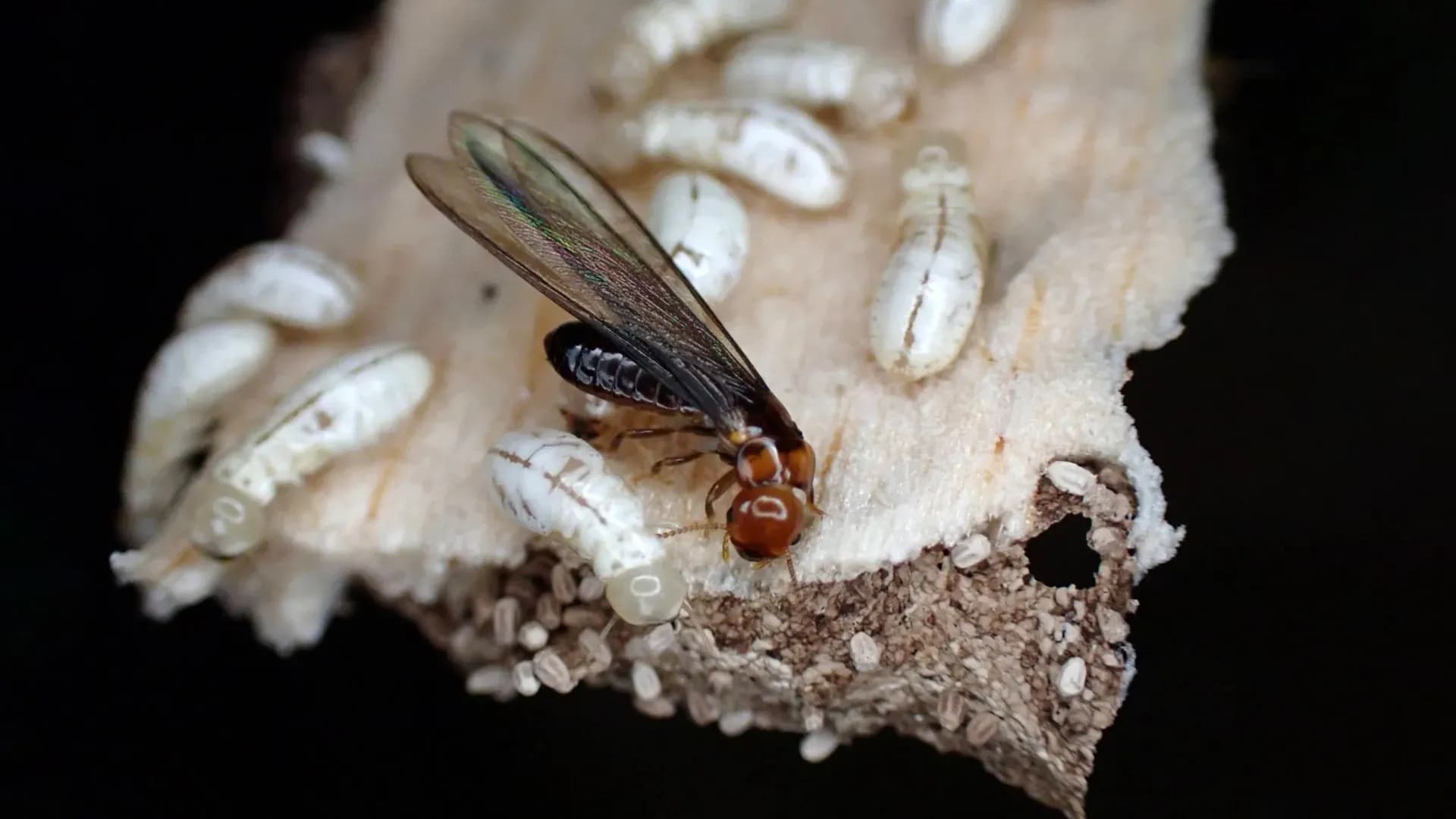
Drywood termites are masters of concealment. Unlike their subterranean cousins, they live entirely within wooden structures — walls, furniture, and framing — feeding quietly and expanding their colonies long before any visible damage appears. By the time most homeowners notice a problem, the infestation is often already well established.
This hidden lifestyle, however, hinges on one critical biological vulnerability: the molting process.
How Bistrifluron Works
Unlike traditional pesticides that attack the nervous system or deliver broad toxic effects, bistrifluron works by blocking the production of chitin — the tough, natural material that forms an insect's exoskeleton. Humans have internal skeletons made of bone. Termites, like all insects, carry their structural support on the outside. That outer shell relies heavily on chitin for strength, protection, and muscle attachment.
As drywood termites grow, they must shed their old exoskeleton and construct a new one. This molting process occurs roughly seven times throughout their lives. Bistrifluron disrupts that cycle entirely.
"Once the termites reach a certain stage, they have to molt. They cannot avoid that," said Dong-Hwan Choe, UCR entomology professor and senior author of the study. "With a lethal dose of this chemical, they'll try to shed their old exoskeleton but won't have a new one ready to protect them."
Because chitin is found in insects but not in mammals, the chemical poses no known toxicity risk to humans — a significant advantage over conventional treatment methods.
"This chemical is more environmentally friendly than ones traditionally used for drywood termite infestations," said Nicholas Poulos, doctoral student and corresponding author of the paper. "It's specific to insects and can't harm humans."
Termites Unknowingly Spread the Treatment Themselves
One of the most remarkable aspects of bistrifluron is how it travels through a colony. The compound doesn't act instantly — instead, it first slows termite activity and reduces feeding before eventually preventing successful molting. This gradual action turns out to be a major advantage.
In laboratory tests, researchers discovered that termites exposed to treated wood passed the compound to unexposed colony members through a behavior called proctodeal trophallaxis — a mouth-to-anus feeding process through which termites share both food and essential gut microbes. Transferred material moved between termites within just 24 to 48 hours.
In transfer experiments where only 5% of termites had been exposed to the compound, entire test groups reached 100% mortality within 90 days. In more direct testing, bistrifluron produced 99% mortality over 60 days — outperforming two other chitin synthesis inhibitors tested in the same study.
Comparing the Results
- No-choice test: 99% mortality over 60 days
- Choice test (0.1% rate): 96% mortality over 60 days
- Transfer test (5% exposure): 100% mortality by day 90
Full colony collapse typically takes around two months — slower than conventional fumigation, but with considerably lower toxicity and no need to tent an entire home.
A Major Improvement Over Traditional Fumigation
Conventional termite fumigation remains one of the more invasive home treatments available. Residents must vacate their homes, bag or remove all food, and wait before returning — all while exposing the structure to powerful chemicals that offer no lasting protection against future infestations.
Bistrifluron, by contrast, may remain active inside treated wood for an extended period, potentially guarding against re-infestation long after the initial treatment.
"Low-impact strategies like this one will become an attractive option in many cases. Furthermore, the chemical may stay active in the wood for some time, potentially providing protection from future infestations," Choe noted.
Adding a Chemical Lure to Boost Effectiveness
The UCR research team has also been exploring a complementary approach: using natural scent to draw termites directly toward treated wood.
Choe's laboratory investigated the use of pinene, a fragrant compound naturally released by forest trees that western drywood termites associate with a food source. A 2025 patent application from UCR describes combining pinene with localized insecticide injections to dramatically improve treatment outcomes.
The results were striking. Using insecticide alone produced roughly 70% mortality. When pinene was added, mortality climbed to over 95%. The application also suggests that pinene could allow for wider spacing between drill holes during treatment — potentially reducing labor, time, and the total amount of insecticide required.
A Growing Threat Demands Better Solutions
Western drywood termites (Incisitermes minor) are native to California and northern Mexico but have been introduced to numerous regions worldwide, including Hawaii, New York, Florida, Canada, China, Japan, Korea, and Australia — largely through the international movement of lumber and wood products.
Climate change may accelerate this spread. As global temperatures shift, areas previously inhospitable to drywood termites may become viable new habitats.
"As we move lumber around the world, the termites are constantly transported to new locations. If they find the climate there acceptable, the problem will spread," Choe warned. "In areas where these termites are common, it's just a matter of time before homes are infested, so this study is a good initial step toward alternative strategies for controlling them."
The team is currently working to refine the delivery method. The current formulation uses acetone as a solvent — effective in the lab, but impractical for real-world application due to its flammability and strong odor.
"We are working to make it more feasible for practical application in real life scenarios," said Poulos.
With bistrifluron showing strong results and a favorable safety profile, this research represents a meaningful step toward termite control methods that are both effective and far less burdensome for homeowners.