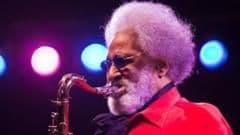
Saxophone Colossus Sonny Rollins Passes Away at 95
Jazz icon Sonny Rollins, widely regarded as one of the greatest saxophonists in history, has died at the age of 95 at his Woodstock, New York home.

Saxophone Colossus Sonny Rollins Passes Away at 95
The world of jazz has lost one of its most towering figures. Sonny Rollins, the legendary saxophonist celebrated as the "saxophone colossus," passed away on Monday afternoon at his residence in Woodstock, New York. He was 95 years old.
His publicist confirmed the news in an official statement, describing Rollins as "one of the most honored and influential figures in American music." The cause of death was not disclosed.
A Career That Defined an Era
Rollins was born Walter Theodore Rollins in New York City in 1930 and earned his nickname "Sonny" from his grandmother. His musical journey began at an early age — his mother gifted him his first alto saxophone when he was just seven years old.
"I got the saxophone and I went into the bedroom and I started playing — that was it," Rollins once recalled in an interview with Jazz Times. "I was in seventh heaven... I could have been there forever."
Mentored by the brilliant pianist Thelonious Monk, Rollins quickly emerged as an extraordinary talent. His career took flight in the late 1940s, and he went on to collaborate with some of the most celebrated names in jazz history, including Miles Davis, Charlie Parker, John Coltrane, Art Blakey, and Bud Powell.
Over the course of his prolific career, Rollins released more than 60 albums as a bandleader and earned two Grammy Awards before respiratory illness compelled him to retire from performing in 2014.
Iconic Albums and Timeless Moments
In 1956, Rollins released Saxophone Colossus, his sixth studio album and one of the most celebrated recordings in jazz history — the title of which would become his enduring nickname.
During the early 1960s, as his profile continued to rise, Rollins developed a habit of practicing for extended hours on New York's Williamsburg Bridge, seeking solitude and creative space away from the public eye. That unconventional ritual directly inspired his acclaimed 1962 album The Bridge, and has since prompted widespread calls for the landmark to be renamed in his honor.
Resilience in the Face of Tragedy
Rollins demonstrated profound resilience following the September 11, 2001 terrorist attacks. Living just six blocks from the World Trade Center at the time, he and his wife escaped to upstate New York — with Rollins carrying little more than his saxophone.
Reflecting on the experience, he later told The Guardian: "I lost many prized possessions in 9/11 and learned a lesson — possessions are not where it's at."
A Master of Improvisation
Rollins was widely considered one of the finest improvisers the jazz world has ever produced. Known for his extended, spontaneous solos, he once told PBS that he would take the stage with a completely open mind, trusting the music to guide him.
"Improvising on it, that I leave completely to the forces," he explained. "Sometimes I'm surprised by what comes out."
Recognition and Legacy
In 2010, President Barack Obama honored Rollins with the National Medal of the Arts. Obama remarked that the jazz legend had inspired him to "take risks that I might not otherwise have taken" — a testament to the far-reaching influence Rollins had beyond the world of music.
Accompanying the announcement of his passing was a quote Rollins gave in 2009, which speaks to his deeply spiritual worldview: "I think when the creative person ends, he continues in the next existence. I'm a person who believes this life isn't the be-all and end-all of everything. A spiritual person doesn't feel like that."
Sonny Rollins leaves behind a legacy that will resonate through jazz halls, music schools, and the hearts of listeners for generations to come.