San Francisco Alley Transforms Into Community Art Project Thanks to Three Tech Enthusiasts
A narrow, unbuildable dirt path in San Francisco is getting a creative makeover. Three tech-savvy locals bought the alley and are now inviting the entire internet to help design it.

From Worthless Dirt Path to San Francisco's Newest Art Destination
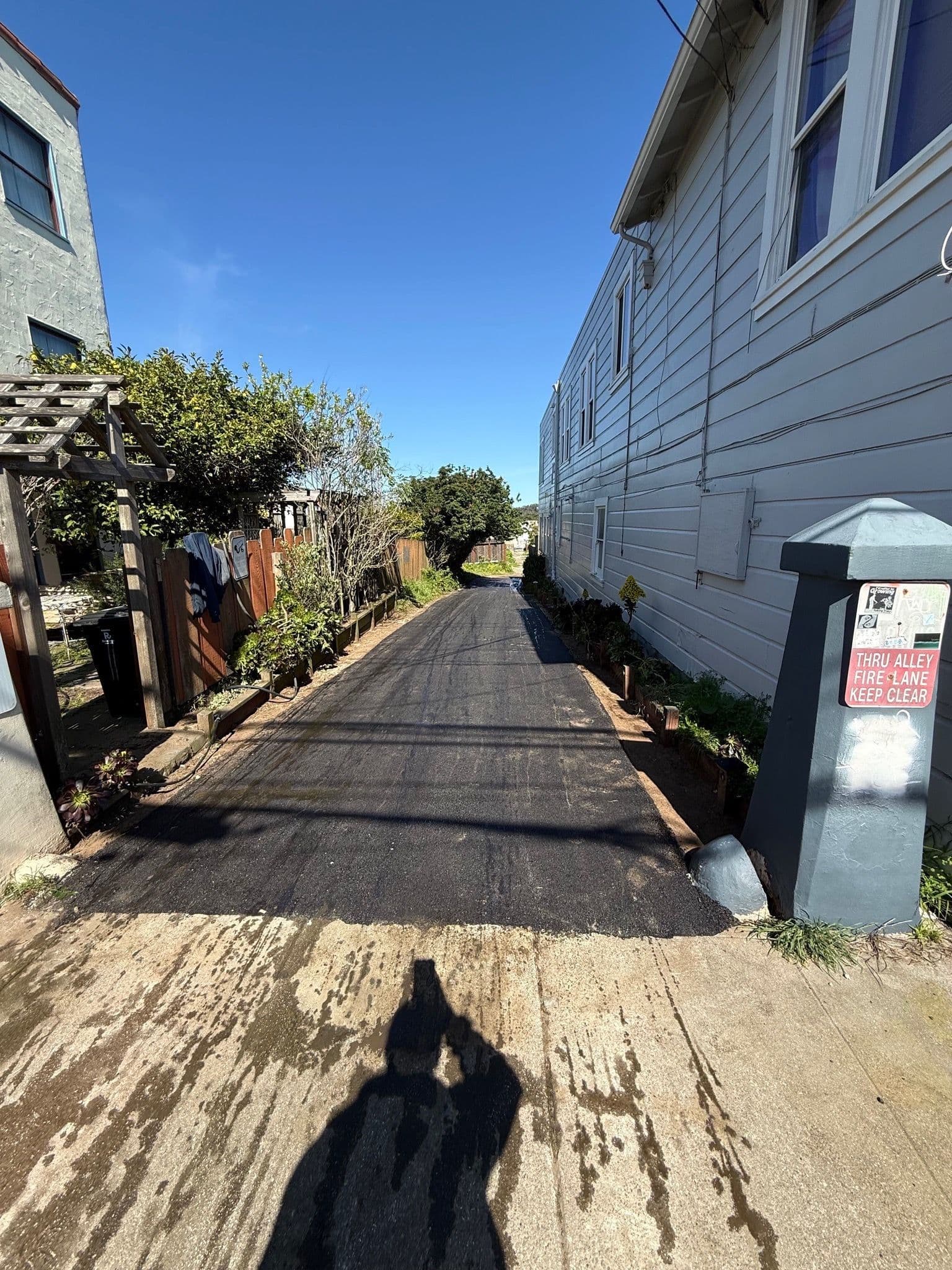
When JJ Hollingsworth won a real estate bid in San Francisco, she expected to acquire something valuable. Instead, she discovered she had purchased an 82-foot-long easement running alongside a residential property — a narrow strip of land where nothing could legally be constructed. The purchase left her financially burdened and legally exposed.
"I couldn't insure it," Hollingsworth recalls. "It was just a big liability hanging over my head, and it caused me a lot of concern and stress, oh my gosh."
Three Tech Enthusiasts Step In
After Hollingsworth's predicament was covered by the San Francisco Standard, a trio of local tech figures came forward with an offer to take the property off her hands. The group consists of software engineers Patrick Hultquist and Theo Bleier, along with Riley Walz, a former OpenAI employee known for building Jmail — a searchable, Gmail-style interface for the emails contained in the Jeffrey Epstein files. The three had previously collaborated on Pursuit, a citywide scavenger hunt that has been running across San Francisco for two consecutive years.
The trio paid $26,000 to acquire the alley and invested an additional $10,000 to have it properly paved. Rather than leaving it as a forgotten strip of urban real estate, they had a far more imaginative vision in mind.
Paint a Street: The Internet Gets to Decide the Art
Launched through a tweet by Walz, Paint a Street is a community-driven web platform that invites users from around the world to submit small digital drawings for inclusion in a large collaborative mural. Each artwork is represented as a 6-by-6-inch square tile, and together these tiles will form a massive collage that spans the full 80-foot length of the newly paved alley.
The platform operates on a democratic voting system. Once submissions are made, users can upvote or downvote individual pieces to determine their ranking and placement within the final design. Submissions and voting opened immediately upon launch and are scheduled to close on Tuesday, April 7. The top 1,280 squares will earn a permanent spot on the street.
"We want to let everybody — the whole internet — paint this street," says Hultquist. "It's going to be this supercool sort of collaborative art project."
Inspired by Reddit's Legendary r/place
The concept draws clear inspiration from Reddit's r/place, an April Fools' experiment from 2017 that evolved into one of the internet's most celebrated community art moments. Participants could alter a shared digital canvas one pixel at a time, resulting in a gloriously chaotic tapestry of imagery, memes, and cultural references.
Paint a Street takes a more structured approach. Submissions appear as small thumbnail tiles on the website, and the voting mechanism ensures a degree of curation over which pieces make the final cut. Early submissions reflect the quirky, unfiltered spirit of internet culture — pixelated stick figures, crude digital sketches, and familiar memes like Pepe and Longcat have already begun populating the platform.
Keeping It Clean — Mostly
To prevent the project from descending into inappropriate territory, every submission is first screened by an AI-powered content moderation tool that flags potentially explicit imagery. Flagged submissions then undergo a manual review before being approved or rejected.
Still, the organizers acknowledge the limits of their control. When asked whether coordinated users could arrange tiles to form something inappropriate at scale, Hultquist was candid.
"In theory, you could draw a really giant [inappropriate image] if you coordinate with a ton of people," he admits. "But I guess we'll see if the internet can do it."
It is worth noting that the final design will not be hand-painted onto the pavement. Instead, it will be applied as a large-format sidewalk decal, preserving both the artwork and the surface beneath it.
A New Landmark for San Francisco
Neighbors are already warming to the idea. Stanton Glantz, a retired professor who lives near the alley, summed up the community's reaction with characteristic San Francisco charm: "I think it will be cool. It will be a little part of San Francisco weirdness."
For Hultquist, the ambitions extend beyond novelty. He envisions the alley becoming a genuine tourist destination — a living, community-created mural that draws visitors and locals alike for years to come.
"Wouldn't it be awesome if this was an SF tourist attraction?" he says. "We want to make this something that people go to because there's this community mural that happened on the street, and it's going to be there forever."
The Original Owner Celebrates the Outcome
For Hollingsworth, watching her costly burden transform into a public art installation has been nothing short of a relief. She was initially cautious about the trio's offer and even hired a lawyer to verify they were legitimate buyers and not simply pulling an elaborate prank.
Once confirmed, her skepticism gave way to genuine enthusiasm.
"They told me that the art was intended to bring people together, so that's a good thing," she says. "Let's get together. Let's come on inside and get together and have a good time and celebrate. I want to be part of that."
She plans to mark the occasion in style: "I'm celebrating with a concert. My songwriter real estate lawyer is going to come over and sing for us."