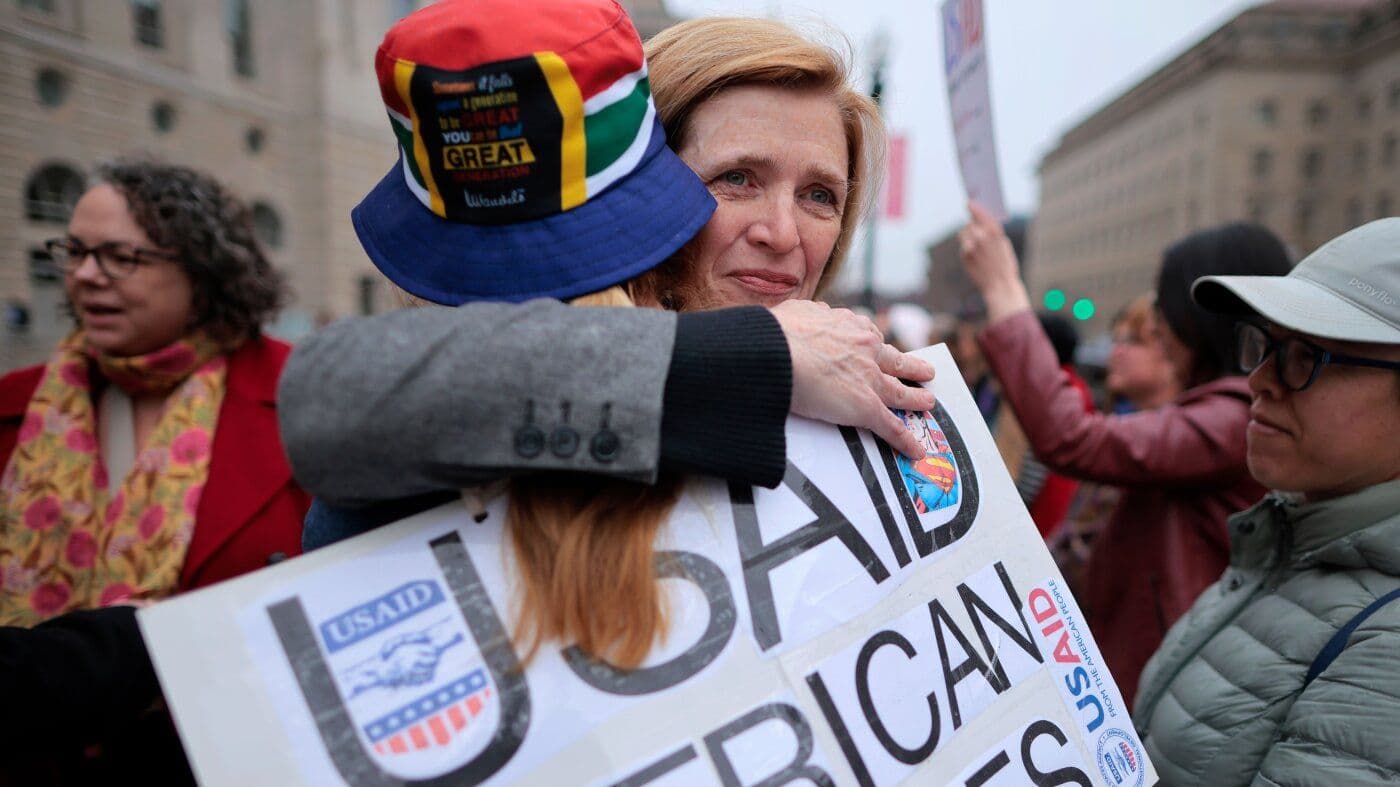
Samantha Power Mourns the Fall of USAID — But Refuses to Give Up Hope
Former USAID chief Samantha Power reflects on the agency's controversial shutdown, its devastating global impact, and why she believes it must one day return.

A Legacy Dismantled Overnight
When Samantha Power stepped out of USAID's Washington headquarters for the final time on January 20, 2025, she had no roadmap for what would follow. The agency she had devoted four years to leading under the Biden administration was about to face an unprecedented reckoning.
Within days of the new Trump administration taking office, a sweeping stop-work order froze all U.S. foreign assistance programs — including those actively saving lives in crisis zones around the world. The systematic dismantling of the 64-year-old agency had begun.
"I was as shocked as I was horrified," Power told NPR in a recent interview. "I could not believe that any human would suspend life-saving assistance without considering the human consequences."
USAID was formally shuttered in July 2025. At its peak, the agency had employed approximately 15,000 people across the globe and administered thousands of programs targeting disease, poverty, and instability. Today, only a fraction of its former staff remain — absorbed into the State Department — while the vast majority of its programs have been permanently terminated.
The Human Cost of Closure
For Power, the months between the initial freeze and the official shutdown were defined by grief and frustration. She describes watching helplessly as thousands of dedicated public servants faced sudden unemployment, financial uncertainty, and an identity crisis rooted in the collapse of their life's work.
"This was a mini cataclysm for 15,000 USAID workers around the world," she said. "Every single one had served our country faithfully — not for the money, but out of purpose and mission. Some couldn't make rent. Some had to pull their kids out of daycare. I just felt massively ineffective."
Power also reached out to Republican members of Congress who had historically championed USAID, hoping to build resistance to the shutdown from within the President's own political coalition. Those efforts, she says, ultimately fell short.
"Initially they worked behind the scenes to try to restart programs," she recalled, "but at a certain point they clearly decided it was in their self-interest to go along."
Global Ripple Effects That May Never Be Measured
The consequences of USAID's closure extend far beyond Washington. Power points to the end of Power Africa — a program that had delivered improved electricity access to 150 million people — as one example of what the world has quietly lost. She also raises alarm over the withdrawal of funding from anti-corruption organizations, independent media outlets, and election monitoring programs.
"When you shut down civil society organizations around the world, you lose things that won't be measured in the here and now," she warned, "but that will create deeply negative ripple effects across generations."
In particular, the toll on global HIV programs and girls' education initiatives may not be quantifiable for years — precisely the kind of slow-burning crisis that rarely generates headlines but reshapes entire societies.
Critiquing the New Approach — With Nuance
Trump administration officials have argued that U.S. disaster response is now faster and more efficient without the bureaucratic weight of USAID. Power acknowledges some incremental improvement — pointing to the government's handling of the Venezuela earthquake response as a step forward — but argues that headline-grabbing disasters are not where the deepest damage lies.
"Doing more is better," she concedes, "but the bigger gaps are in areas no longer even being measured — HIV metrics, girls' education, community health infrastructure."
On the question of aid dependency, Power offers a nuanced take. She actually embraces the Trump administration's shift toward government-to-government assistance, noting that she had championed a similar strategy during her tenure. Her concern, however, is with execution.
"That shift, I welcome it — but it requires proper oversight," she said. "Laying off all the USAID staff who performed that oversight is not the solution."
Is There a Path Back?
Despite the enormity of what has been lost, Power is not without hope. She points to a striking development: the Republican-controlled House and Senate recently sent a $50 billion foreign assistance bill to President Trump's desk for his signature — a sign that bipartisan support for this kind of work has not entirely disappeared.
"The supporters of this work are still out there," she insists. "But rebuilding will require very delicate negotiations — not only about how to restore what was lost, but how to do so in a way that allows majorities in both parties to rally around the cause while saving face. Because clearly, a terrible mistake was made."
Whether USAID returns in name or morphs into something new, Power believes the mission it represented — Americans helping people around the world — remains both morally essential and strategically irreplaceable.
"Walking away from USAID is not just cruel," she said. "It's incredibly dumb. It's like having the world's most trusted brand name and deciding to throw it away."

