Sam Levinson on Reinventing Euphoria Season 3: 'Evolve or Die'
Sam Levinson and cinematographer Marcell Rév reveal how The Idol, a DEA visit, and personal loss shaped Euphoria's bold season three comeback.

Sam Levinson on Reinventing Euphoria Season 3: 'Evolve or Die'
This article contains spoilers from the Euphoria Season 3 premiere.
When Sam Levinson began mapping out the third season of Euphoria, his original plan had protagonist Rue crossing into Mexico by river. After a four-year hiatus following the season two finale, the Emmy-nominated writer-director envisioned Zendaya's now-adult character entangled in a dangerous drug-running operation — smuggling narcotics back and forth across the border for the quietly menacing kingpin Laurie, played by Martha Kelly. That vision, however, changed dramatically after a single research trip.
A DEA Visit That Changed Everything
Levinson and his team traveled to the DEA's Los Angeles headquarters, where they encountered a photograph that instantly sparked his imagination — a Jeep lodged on top of a border wall, seized mid-crossing during a drug bust.
"I asked the head of operations what happened," Levinson recalls, "and he told me some guy tried to drive a car loaded with drugs over the border wall and got completely stuck. I thought: that sounds exactly like something Rue would do."
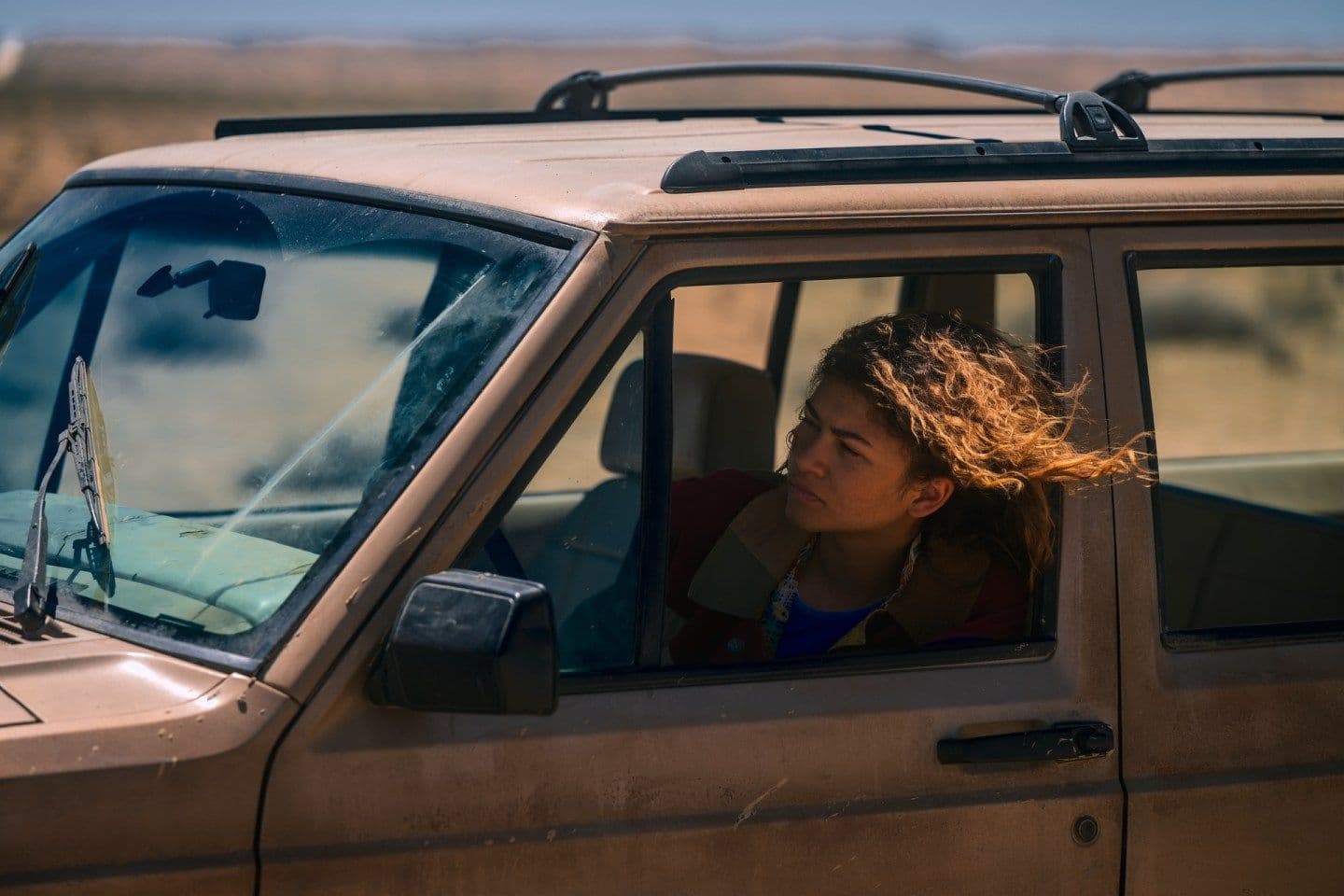
That image became the unforgettable opening sequence of season three — Rue perched behind the wheel of a vehicle suspended in midair, straddling two countries. It's an audacious introduction that signals a reinvented show on multiple levels.
A New Visual Language for a Grown-Up Story
The sequence was shot in a wider aspect ratio using 65mm film, capturing sweeping desert vistas that feel miles removed from the neon-drenched interiors of earlier seasons. Levinson and his longtime cinematographer Marcell Rév deliberately overhauled Euphoria's entire visual identity to match the story's darker, more mature tone.
"That opening scene is like Jurassic Park meets Buster Keaton," Rév says with a laugh. Levinson echoes the sentiment, noting that silent film legend Buster Keaton inspired the season alongside classic Western directors Howard Hawks and Sergio Leone.
The pair operate under a guiding principle: "Evolve or die."
"We wanted the cinematography to feel like a memory that's slowly fading — rougher around the edges," Levinson explains. "We're seeing these characters out in the wider world now, and we wanted to let the actors carry the emotional weight through their performances rather than relying on the camera to do that work. We wanted to see them fend for themselves."
Personal Tragedy Reshaped the Season
Before the Hollywood strikes of 2023 halted production, Levinson had written the majority of a third season — scripts that were ultimately thrown out and reworked. The most significant reason for the overhaul was deeply personal: the accidental overdose death of castmember Angus Cloud, who played the beloved Fezco.
Levinson was close to Cloud and felt a responsibility to honor his memory meaningfully within the show. Rather than writing Fezco out entirely, the character remains alive — though absent onscreen — and his loss drove Levinson to confront themes of mortality head-on.
This grief finds direct expression in the premiere's climactic scene, where Rue makes a drug delivery at a party thrown by rival kingpin Alamo, played by Adewale Akinnuoye-Agbaje, only for the situation to spiral into a life-threatening crisis when the drugs turn out to be laced.
"I was genuinely furious about fentanyl," Levinson says. "In 2023, the year Angus died, 73,000 Americans lost their lives to fentanyl overdoses. I couldn't make sense of why our country was allowing so many people to be poisoned."
The premiere also carries a dedication to Cloud, co-star Eric Dane, and former executive producer Kevin Turen — all of whom passed away between the end of season two and the show's return.
How 'The Idol' Quietly Influenced Euphoria's Return
Between seasons, Levinson and Rév collaborated on The Idol, the controversial HBO music-industry drama that was canceled following its troubled first season. Despite that outcome, both creatives say the experience proved instructive.
"Filming The Idol felt like making a reality TV show at times — three cameras, minimal lighting, almost documentary in style," Levinson says. "Whenever you finish something, you naturally want to do the opposite. That experience gave this season of Euphoria an objectivity we hadn't found before, and it's genuinely exciting."
Rév adds that The Idol also pushed them to embrace real-world locations far more than they had in season two. "The second season was built almost entirely on stage — if we didn't have to go on location, we wouldn't," he explains. "This time, we were eager to find authentic places in the real world."
That philosophy extended to the opening border sequence, which required constructing a 200-foot border wall in the desert roughly four hours outside of Los Angeles. "She's actually up there — 20 to 25 feet in the air," Levinson confirms.
Cassie, Nate, and the Aesthetics of Desperation
The premiere also catches up with Cassie (Sydney Sweeney) and Nate (Jacob Elordi), now engaged and preparing for an elaborate wedding while quietly struggling financially. Location scouting for their home proved pivotal in shaping the characters' storyline.
"An obvious choice would have been something sleek and modern," Rév says, "but we chose a mid-century home that's a little tacky, a little stuck in the '70s. It's an unusual choice, but it opens up creative possibilities."
Those possibilities became especially relevant when Cassie begins producing OnlyFans content to help cover expenses. Blending the aesthetic of that platform with Euphoria's cinematic style presented a unique challenge.
"OnlyFans has its own look, and elevating that to match the show's visual standard is genuinely difficult," Rév admits.
Levinson approached the scenes by leaning into their inherent absurdity. "What makes those scenes work is that her housekeeper is the one filming them," he says. "We always tried to find that extra layer of comedy — something to pull you out of her illusion and remind you of what's really going on."
To achieve this, the crew used the ring lights Cassie's character would realistically use — creating a glowing, flattering effect from inside the frame, and a stark, jarring darkness the moment the camera pulls back.
"We wanted to be inside what she's presenting to the world, and then step back and show how genuinely bleak it is," Levinson says. Shooting it on 65mm added another layer of ironic contrast. "Doing an OnlyFans aesthetic with these tools is something that genuinely excites me," Rév adds.
Looking Ahead: Life, Death, and Surrender
The season premiere closes with Rue surviving a terrifying, near-fatal confrontation with Alamo — exhaling in stunned relief, alive but shaken. It's a moment Levinson sees as the emotional thesis of the entire season.
"I wanted to tell a story about surrendering our will to something greater than ourselves," he says. "These characters are adults now — they're free to make their own choices, but those choices carry real consequences. I've come to see that long gap between seasons, with all its pain and loss, as a strange kind of blessing."
Euphoria airs Sundays at 9 p.m. on HBO and Max.