Robotaxis, SpaceX IPO, and the Real State of Autonomous Vehicles in 2025
Robotaxis are rolling through city streets, yet serious limitations remain. Here's a comprehensive look at where autonomous vehicles, SpaceX, and EV tech stand today.

The Autonomous Vehicle Revolution: Closer Than You Think, Further Than You'd Hope
Robotaxis are simultaneously here and not quite here — a paradox that perfectly defines the current state of autonomous vehicle technology. Step onto the streets of San Francisco and you might reasonably conclude that the self-driving revolution has already arrived. But presence alone doesn't equal permanence, and that distinction is keeping every player in the autonomous vehicle space on edge.
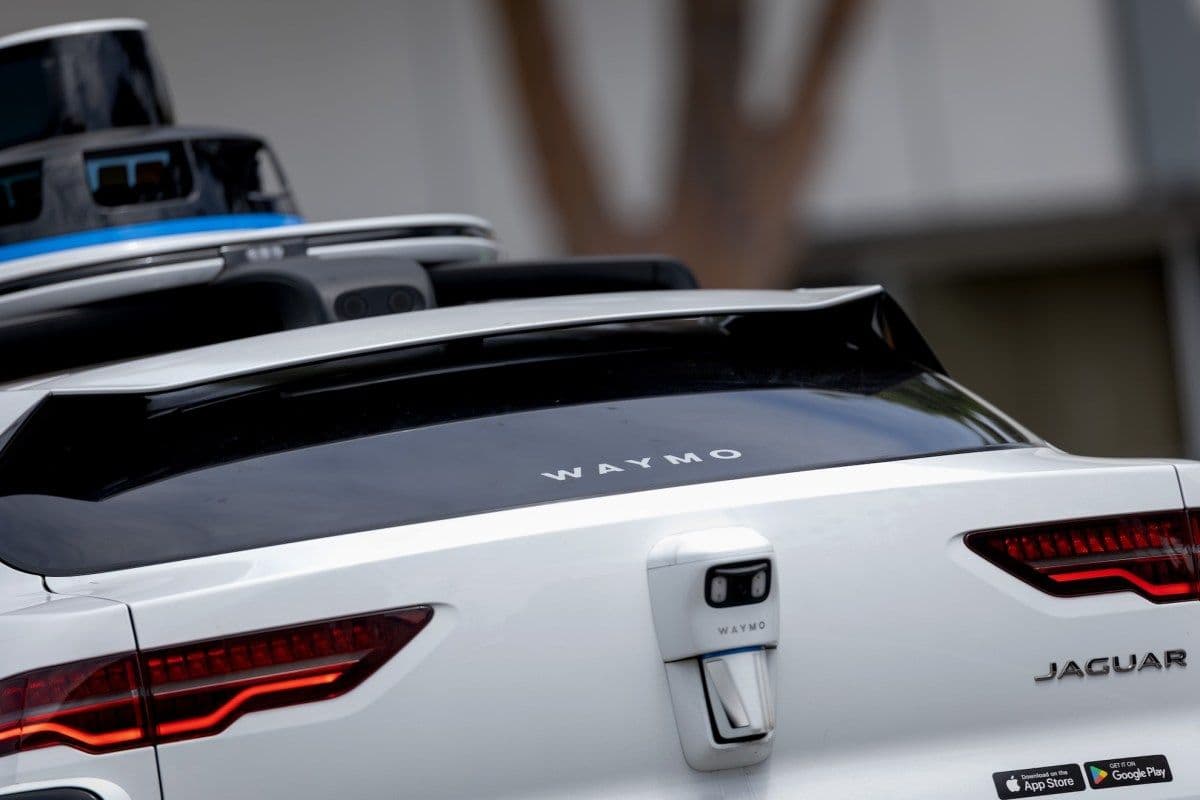
Waymo, widely regarded as the frontrunner in commercial robotaxi deployment both in terms of riders served and fleet size, is experiencing this tension firsthand. The company recently suspended freeway operations across San Francisco, Los Angeles, Phoenix, and Miami while it addresses performance challenges in active construction zones. It's a pointed reminder that going live commercially is just the beginning of a much longer journey — not the finish line.
Every new city Waymo enters and every new capability it rolls out seems to expose a fresh set of edge cases that need solving. The commercial launch is conditional, and while that condition won't last forever, it underscores how much work remains.
SpaceX's IPO Filing Pulls Back the Curtain on Musk's Business Empire
Shifting gears from wheels to rockets — the recently filed SpaceX IPO documentation has offered an unusually detailed look at the financial entanglements running through Elon Musk's constellation of companies.
The connections between Tesla and SpaceX have never been a secret. Tesla, as a publicly traded company, has always been required to disclose financial dealings with Musk-affiliated entities. But the IPO filing goes deeper, and with the recent merger of xAI into SpaceX, all of these transactions now fall under a single corporate umbrella.
What the Numbers Reveal
The financial flows between Musk's various ventures are substantial. In 2025 alone, SpaceX purchased $506 million worth of Tesla's Megapack commercial energy storage systems — nearly triple the figure from the prior year. The company also acquired $131 million in Cybertrucks. SpaceX paid The Boring Company, Musk's infrastructure firm, $1 million to build tunnels at its Bastrop, Texas facility. Separately, X — the social media platform acquired by xAI and now folded into SpaceX — spent another $1 million leasing space from The Boring Company.
Tesla's earlier investment in xAI has since been converted into an equity stake in SpaceX following the acquisition.
Looking ahead, two major joint projects between SpaceX and Tesla are expected to dwarf these figures: Terafab, a chip manufacturing facility currently in development, and Macrohard, an AI platform designed to deploy autonomous agents that work alongside human employees.
All of this raises a compelling question: could a full SpaceX-Tesla merger be on the horizon?
Funding Rounds and Industry Moves Worth Watching
Startups Securing Capital
Several transportation and mobility startups have recently closed meaningful funding rounds. Aboard, a Southern California company building extended-range electric travel trailers, secured $13 million in a pre-Series A round led by Ondine Capital and Llama Ventures. The startup has brought on noted automotive designer Richard Kim — known for the BMW i3 and i8 — as a consultant.
Quartermaster, an Arlington, Virginia-based firm developing distributed ship-sensing networks, raised $43 million in a Series A round co-led by First Round Capital and Quiet Capital.
Scapia, an Indian travel booking platform, closed a $63 million funding round spearheaded by General Catalyst, with Peak XV Partners and Z47 also contributing.
Strategic Partnerships Shaping Tomorrow's Roads
May Mobility struck a significant strategic agreement with Geely-backed automotive tech firm Ecarx, under which Ecarx will supply May Mobility with thousands of purpose-built robotaxi vehicles. Initial deployments through a third-party partner are slated for next year, with full commercial scaling targeted by 2028. The total estimated value of the partnership sits around $750 million over its lifespan.
Stellantis, the group behind Jeep and Ram, has partnered with autonomous driving startup Wayve to bring hands-free driving capability to its vehicles by 2028. The automaker also unveiled a $70 billion turnaround strategy featuring 11 new models for the North American market, including a revived Chrysler lineup.
Uber has grown its stake in German food delivery giant Delivery Hero to 19.5%, according to Bloomberg.
Tesla FSD Expands in Europe as Lyft Clarifies Its AV Strategy
Tesla's Full Self-Driving (Supervised) driver-assistance software has received approval in Lithuania, making it the second European country to greenlight the technology. European expansion is central to both Tesla's product roadmap and CEO Elon Musk's financial interests — his $1 trillion compensation package is tied to several milestones, including reaching 10 million active FSD subscriptions by 2035.
Meanwhile, Lyft has published its official stance on autonomous vehicles, aligning closely with rival Uber's position: a functional ride-hailing ecosystem requires both human and robotic drivers working in tandem. The statement is as much a political calculation as a practical one, designed to reassure the company's gig worker base while acknowledging that robotaxis remain far from mainstream in most American cities.
A Fresh Look at the 2026 Nissan Leaf Platinum+
The Nissan Leaf has come a long way. The 2026 Leaf Platinum+, priced at $42,635 including destination charges and select upgrades, represents a meaningful generational leap over its predecessors.
The third-generation Leaf now offers an EPA-estimated range of 259 miles, with certain configurations exceeding 300 miles. But the range improvement isn't what stands out most. The interior has been substantially reimagined — lighter, more modern, and noticeably more premium in feel, complete with sophisticated ambient lighting.
The top-trim version comes equipped with wireless phone charging, a panoramic dimming roof, a heads-up display, and a sweeping 14.3-inch curved central screen. Previous criticisms around the lack of standard tech have been addressed head-on: the 2026 model now includes a 360-degree camera, wireless Apple CarPlay and Android Auto compatibility, and adaptive cruise control as standard features. It's a compelling package that makes a strong case for the Leaf's continued relevance in an increasingly competitive EV segment.
The Bigger Picture
Across robotaxis, IPO filings, startup funding, and EV hardware, the transportation sector is in a state of energized flux. Progress is real, but so are the constraints. The companies navigating this space most effectively are those treating their commercial launches not as endpoints, but as starting lines.

