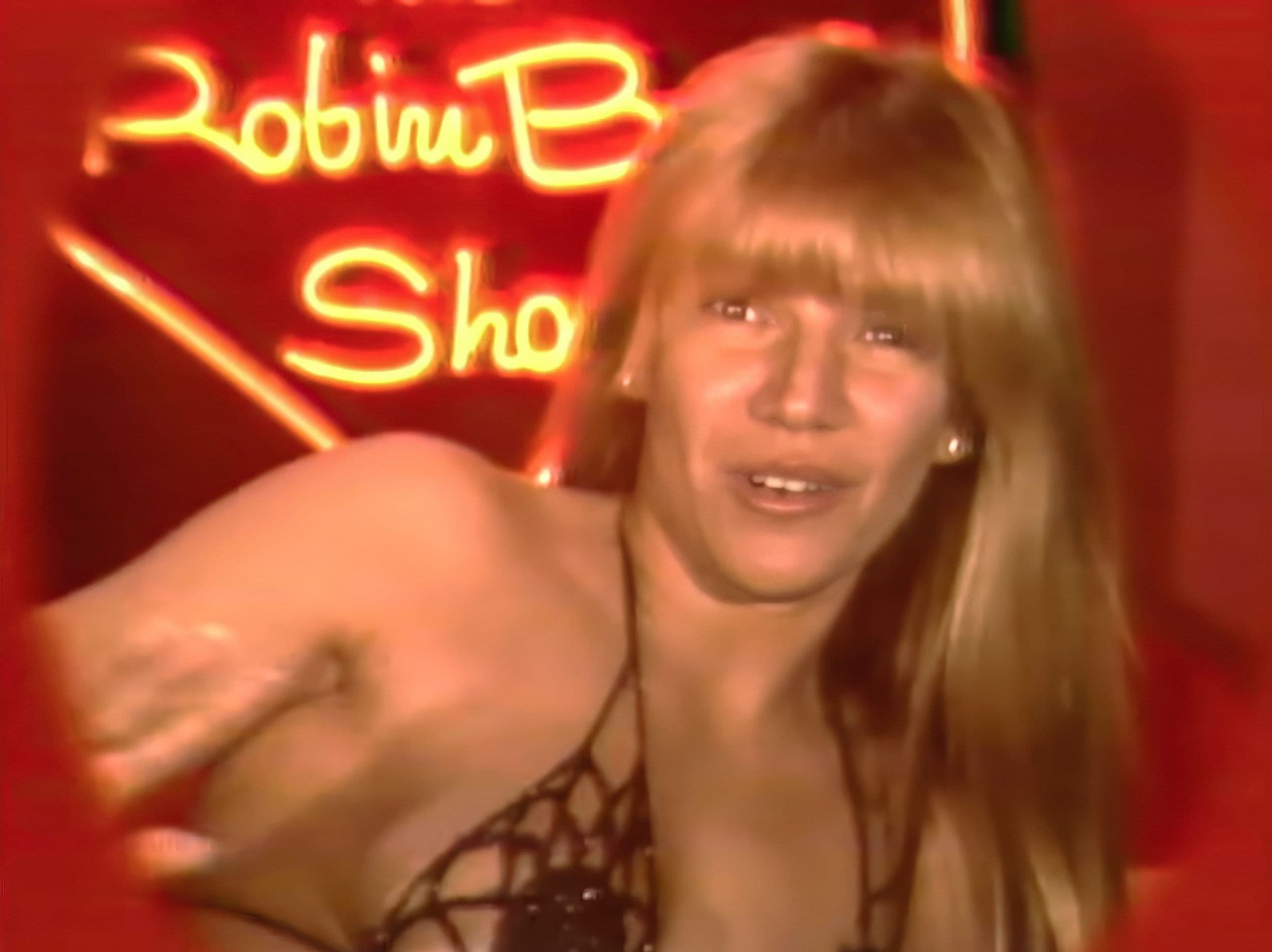
Robin Byrd at 71: How the Internet Killed the Soul of Adult Entertainment
Iconic public access host Robin Byrd reflects on her groundbreaking career, a new HBO documentary, and why digital porn lost its artistic heart.

The Woman Who Brought Adult Entertainment Into Your Living Room
If you grew up in New York City with access to public access cable television, chances are you know exactly who Robin Byrd is. Her rockabilly theme song Baby, Let Me Bang Your Box was practically burned into a generation's memory, and her signature sign-offs — "Lie back, get comfortable" and "don't forget to wear your rubbers" — became cultural touchstones for a city that embraced her unconditionally.
Now 71 years old, Byrd is having a well-deserved cultural renaissance. A new HBO documentary, Bang My Box: The Robin Byrd Story, streaming now on HBO Max, reintroduces her to a broader audience and makes a compelling case for why she deserves to be remembered as far more than a local novelty.
From Public Access Icon to HBO Documentary Subject
The Robin Byrd Show ran from 1977 to 1998, spanning over 600 episodes, and it remains available in reruns for those still subscribed to old-school cable. Filmed on a gloriously low-budget set complete with a garish heart-shaped backdrop and decades-old phone sex advertisements, the show featured Byrd interviewing adult film performers and exotic dancers, who would then perform striptease routines captured by a single aging Nekagami camera.
Directed by Jyllian Gunther and Stephanie Schwam — both proud self-described "Byrd-watchers" who grew up sneaking glimpses of the show as teenagers — the documentary goes well beyond nostalgia. It presents Byrd as a genuine sex-positive advocate who championed LGBTQ rights long before it was mainstream, actively promoted safe sex during the devastating HIV/AIDS epidemic, and took on Time Warner Cable in a landmark free speech lawsuit when the company attempted to censor her programming.
"It was during a Mercury retrograde," Byrd says of agreeing to the project. "Mercury retrograde involves communication — it's a time to renew, redo, and rethink. I realized I'm not getting any younger, and my story needs to be told by the right people."
A One-of-a-Kind Television Personality
Byrd has been compared to Mister Rogers by New York magazine — a comparison she takes in stride while also placing herself alongside Ed Sullivan and Johnny Carson in the pantheon of variety television hosts. Her show was charmingly unpolished in a way that felt entirely intentional. Unable to pay her guests in cash, she compensated them with VHS tapes of their appearances.
"I called it tit for tat and dick for dat," she says with characteristic wit.
Her cultural footprint extended far beyond the five boroughs. In the 1990s, Saturday Night Live comedian Cheri Oteri parodied her in a recurring sketch. Rather than bristle at the imitation, Byrd embraced it wholeheartedly, even gifting Oteri her own lip gloss.
"I felt like I'd arrived and gone national," she recalls. "I wanted to go on the show myself and say, 'No, I'm Robin Byrd,' but I think I was too much of a local celebrity."
Why Robin Byrd Stepped Away — and Why She Blames the Internet
Byrd's departure from the industry in the late 1990s was not accidental. As the internet began reshaping how adult content was consumed and distributed, she found herself increasingly uncomfortable with what the digital landscape represented.
"The internet is open to the world," she explains. "Here in New York City, people got it. But to be open on the internet to some rural religious towns — they wouldn't have gotten it. In New York, we accept everybody, as long as you're not hurting anybody. But in other parts of the country, they don't like that."
She also took issue with the identity verification requirements that came with online adult content platforms, viewing them as an infringement on personal privacy.
"That's why you don't see my show on XTube or anything like that," she says. "The privacy of your own home is the privacy of your own home. And children — they can just lie anyway."
The Art That Got Left Behind
For Byrd, the deeper loss was aesthetic and artistic. She describes the analog era of adult entertainment with genuine affection, contrasting it sharply with what replaced it.
"It was soft, it was artsy — it was an art form," she says. "Digital is very harsh. It's like the difference between an old-timey bulb and an LED. Very distant, very cold."
She also mourned the disappearance of genuine talent from the industry. "The stars weren't stars anymore. They were just anybody from next door. People were just doing it for the money. They weren't doing it for the art. And I did it for the art."
Standing Naked on a Beach at 71 — and Owning Every Moment
The documentary closes with one of its most striking images: Byrd walking along a beach completely unclothed. It is a moment of radical vulnerability and fierce self-acceptance that encapsulates everything she has always stood for.
"I didn't want to change people's fantasy of me," she admits. "But then I said to myself, what kind of hypocrite am I? I've spent years telling people to love their body, respect their body. This is who I am. This is what a 71-year-old Robin Byrd looks like."
For decades, Robin Byrd occupied a uniquely New York space — equal parts entertainer, advocate, and provocateur. The HBO documentary makes the case that her influence stretched well beyond late-night cable, shaping conversations around free speech, sexual health, and LGBTQ acceptance long before those topics entered the mainstream. Whatever one thinks of her medium, her message was always clear: embrace who you are, protect yourself, and never take life too seriously.

