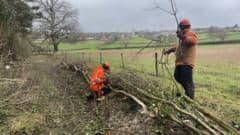
Reviving an Ancient Craft: Hedge Laying Transforms Biodiversity at Blagdon Lake
Bristol Water is turning to a centuries-old technique to breathe new life into wildlife habitats surrounding Somerset's Blagdon Lake reservoir.

Bristol Water Embraces Ancient Hedge Laying to Restore Wildlife Habitats
In a remarkable blend of historical craftsmanship and modern conservation, Bristol Water has launched an ambitious biodiversity initiative at Blagdon Lake — a 440-acre reservoir and trout fishery nestled within the Mendip Hills of Somerset. The project draws on the centuries-old practice of hedge laying to restore and enrich the natural ecosystems surrounding this ecologically significant site.
What Is Hedge Laying and Why Does It Matter?
Hedge laying is a traditional rural craft that involves carefully trimming the base stems of hedgerow plants and repositioning them horizontally along the hedgerow line. Far from simply being a decorative practice, this technique serves a deeply functional ecological purpose. By allowing sunlight to penetrate the lower sections of hedgerows, it encourages thick, upward regrowth — creating dense, layered habitats that offer vital shelter and nesting opportunities for a wide range of species.
In contrast, conventional hedge maintenance, which often relies on heavy mechanical cutting equipment, frequently strips hedgerows of their density, leaving behind sparse, unstructured growth that offers little protection or habitat value for local wildlife.
A Site of Special Scientific Interest Gets a New Lease of Life
Blagdon Lake holds the designation of a Site of Special Scientific Interest (SSSI), making the careful management of its surrounding landscape a matter of genuine national importance. Bristol Water's decision to adopt hedge laying as part of its land stewardship strategy reflects a growing recognition that sustainable, nature-friendly practices must take precedence over convenience.
To date, approximately 1,800 metres of hedgerow have been carefully laid by the specialist team. However, work will be paused during the bird nesting season to ensure that no disturbance is caused to nesting species or other vulnerable wildlife — a thoughtful concession that underscores the project's commitment to responsible conservation.
The Expert Behind the Initiative
Leading the hedge laying team is Mike Reed, a seasoned specialist in the craft. Reed has spoken passionately about the urgency of the project, highlighting the precarious state of many familiar British species.
"So many of our farmland and countryside birds are endangered, as are hedgehogs, so creating these spaces for them to live and nest in is more important than ever," he explained.
Reed also expressed pride in the cultural dimension of the work, noting that hedge laying carries a strong local tradition and that he relishes the opportunity to pass the skill on to a new generation of practitioners through this collaborative project.
A Two-Year Transformation in the Making
The full project is expected to span two years, during which time ecologists and conservationists anticipate a meaningful return of wildlife to the area. The revitalised hedgerows are expected to provide critical winter cover for birds, hedgehogs, and insects — species that have seen significant population pressures in recent decades due to habitat loss.
Simon Hughes, Treescape Officer at Bristol Water, expressed enthusiasm for what lies ahead: "It won't be long before we will start to see a complete transformation in the hedgerows, and it's exciting for all of us at Bristol Water to be a part of creating this significant and important change."
A Model for Conservation-Led Land Management
This initiative signals a broader shift in how water companies and land managers might approach their environmental responsibilities. By investing in proven, traditional methods rather than relying solely on modern machinery, Bristol Water is setting a compelling example of how heritage techniques can deliver powerful, lasting results for both biodiversity and community wellbeing.
As pressure on British wildlife continues to mount, projects like this offer a hopeful reminder that sometimes, the most effective solutions are those that have been quietly perfected over generations.