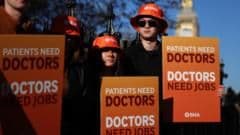
Resident Doctors Call Off Strike After Last-Minute Government Offer
A planned walkout by resident doctors in England has been cancelled after the government tabled a new offer hours before action was set to begin.

Resident Doctors Suspend Strike Action Following Eleventh-Hour Government Proposal
Resident doctors in England have called off a planned strike that was set to begin on Monday morning, after the government stepped forward with a new offer just hours before action was due to commence.
The British Medical Association (BMA) confirmed it had received a fresh proposal from the government and announced it would be presenting the offer to its members for a vote, prompting the cancellation of what would have been the sixteenth walkout in this prolonged pay dispute.
What Was Planned — And What Changed
The strike had been scheduled to run from 07:00 BST on Monday 15 June through to 06:59 on Friday 19 June. Negotiations between the two sides had been ongoing for several days, with talks continuing into Saturday — just hours before the decision to stand down was made.
Health Secretary James Murray described the new proposal as "a chance to draw a line under the damaging disputes of recent years." The BMA, for its part, stated it had held up its "end of the bargain" once the government demonstrated a willingness to shift its stance.
What the New Offer Includes
While government sources confirmed there would be no additional funding for pay increases in the current financial year, the revised offer reportedly includes:
- Accelerated pay scale increases beginning next year
- 4,500 additional training places for newly qualified doctors
- Coverage of doctors' exam fees, reducing out-of-pocket expenses
These concessions represent a notable step forward from a previous offer made in April, which the BMA had rejected despite it including more training positions and faster career progression pathways.
The Broader Pay Dispute
Resident doctors — formerly referred to as junior doctors — have received cumulative pay rises of 33% over the past four years, including a 3.5% increase this year. Starting salaries now sit just above £40,000, while the most senior resident doctors earn £76,500 in basic pay, with additional earnings available for unsociable hours and overtime.
However, the BMA maintains that when adjusted for inflation, doctors are still earning approximately 20% less in real terms than they were in 2008. This argument has underpinned the union's ongoing campaign for a more substantial pay restoration.
The union has been engaged in a series of strikes across England since 2023, with the most recent being a six-day walkout in April. That action followed the BMA's rejection of an offer it deemed insufficient to address the long-standing pay gap.
Patient Impact Still Being Felt
Despite the strike being called off, the disruption was not entirely avoided. NHS England indicated that while 95% of scheduled operations and appointments were expected to proceed as planned, thousands of procedures had already been postponed in anticipation of the walkout. Restoring those appointments to their original schedule is expected to present a significant logistical challenge for NHS trusts.
Reactions From Key Figures
Health Secretary James Murray welcomed the development, stating: "It is a positive and welcome development — especially for patients — that the BMA have called off these unnecessary strikes. The country simply cannot afford to increase the pay offer for this year."
Dr Jack Fletcher, Chairman of the BMA's Resident Doctors Committee, acknowledged the progress while expressing frustration at the timing: "This should not have been left to the last moment, but we hold up our end of the bargain when the government shifts its position."
Sir Ciarán Devane, Chief Executive of the NHS Alliance, described the suspension as "a vital chance to reset the conversation," urging both parties to work toward a "fair, sustainable agreement."
A Dispute With Deep Roots
The origins of the latest escalation trace back to a meeting in May, during which Health Secretary Murray reportedly signalled he was unwilling to negotiate on pay, describing the BMA's demands as "unrealistic and unaffordable." The union had drawn comparisons between his position and that of his predecessor, former Health Secretary Wes Streeting.
With the new offer now in the hands of BMA members, the coming weeks will be critical in determining whether this long-running dispute can finally be brought to a close.

