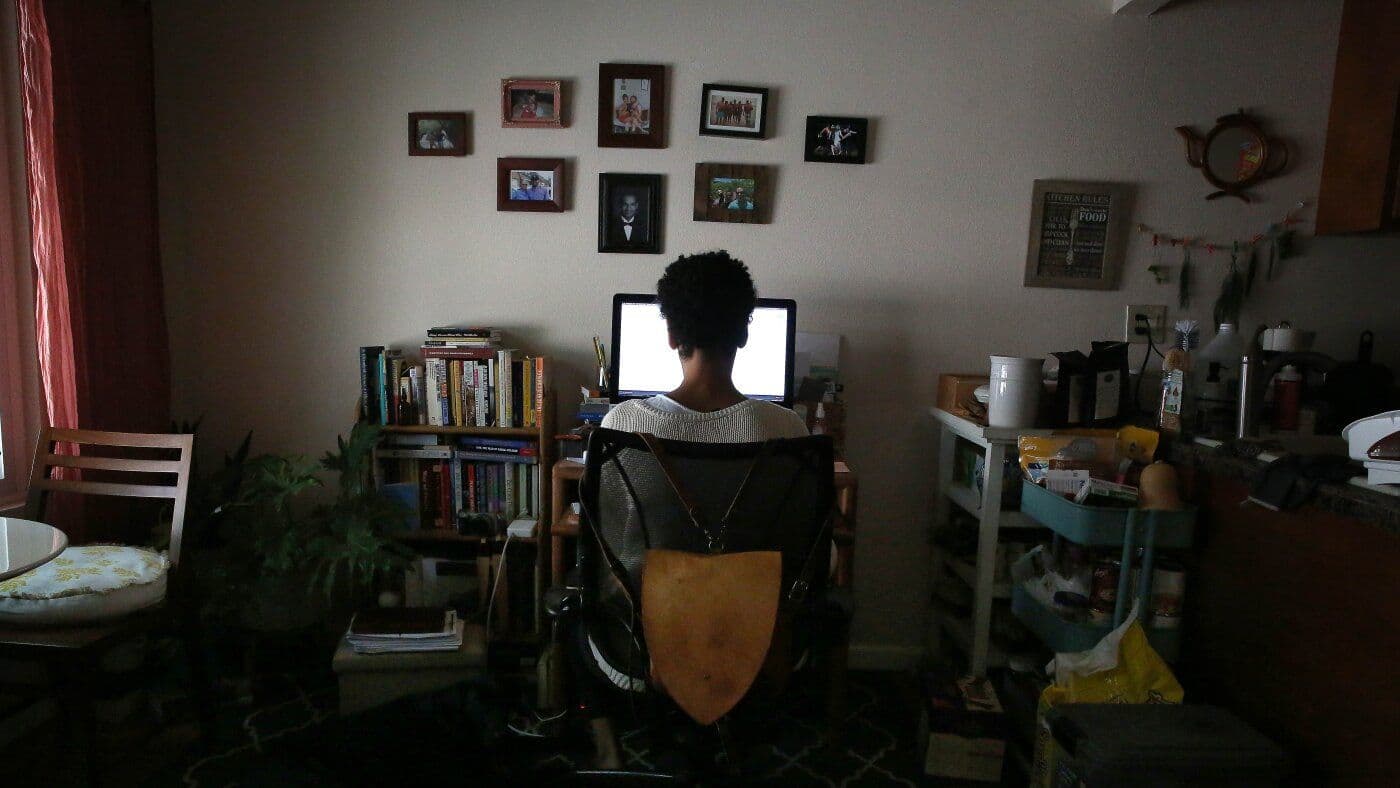
Remote Work Is Hurting Your Mental Health More Than You Realize
Millions of people prefer working from home, but a major new study reveals it may be quietly damaging their mental health and social lives.

The Hidden Cost of Working From Home
Remote work has become one of the most sought-after job perks in the modern era. Since the COVID-19 pandemic reshaped the global workforce, millions of employees have embraced the flexibility of working from their homes. However, a compelling new study published in the prestigious journal Science suggests that this lifestyle choice may be coming at a serious psychological price.
According to the research, people employed in remote-capable roles are experiencing higher levels of depression, anxiety, social isolation, and are seeking mental health care at greater rates than those in jobs that require physical presence.
What the Research Actually Found
Led by economist Natalia Emanuel of the Federal Reserve Bank of New York, the study examined data drawn from five large-scale national surveys. Researchers compared workers in roles that can be performed remotely — such as software development and marketing — against those in occupations that require in-person presence, such as surgery or mechanical engineering.
The results were striking:
- Workers in remote-capable roles logged a 58% increase in hours spent alone during the workday compared to their in-person counterparts.
- They were 72% more likely to go an entire day without any human interaction whatsoever.
- Remote workers also reported higher levels of anxiety and depression through standardized mental health assessments.
- They visited mental health professionals more frequently and used prescription psychiatric medications at higher rates.
Emanuel described the depth of that isolation plainly, noting that some remote workers go entire days without so much as a passing nod to a barista or a brief exchange with a stranger at a grocery store.
The Social Gap Doesn't Get Filled After Hours
One might assume that remote workers compensate for reduced daytime social contact by socializing more outside of work. The data, however, tells a different story. The study found that remote workers actually spend less time with friends after the workday ends compared to people in non-remote occupations — suggesting the isolation compounds rather than corrects itself.
Living Alone Makes It Significantly Worse
For remote workers who live by themselves, the mental health impact is considerably more severe. This group saw an 83% increase in the likelihood of spending an entire day with zero social contact. Meanwhile, their rates of emotional distress were nearly double those of remote workers who share their homes with family members.
Nicholas Epley, a behavioral science professor at the University of Chicago's Booth School of Business, who reviewed the study, emphasized that this aligns with decades of psychological research on loneliness and isolation.
"Being alone compromises your immune system functioning, your cardiovascular system functioning," Epley noted, pointing to the well-documented physical — not just emotional — consequences of prolonged social disconnection.
Why People Keep Choosing Remote Work Despite the Downsides
If remote work is damaging mental health, why do so many people still strongly prefer it? The answer, according to researchers, lies in how humans weigh short-term versus long-term benefits.
Epley explains that people find it easy to recognize the immediate frustrations of commuting — the traffic, the lost time, the stress — but struggle to anticipate how gradually eroding workplace social connections will affect their emotional well-being over time. His own research has shown that people consistently underestimate the positive impact that connecting with others has on their mood and overall happiness.
Emanuel's study also noted that workers are willing to accept a 4 to 10% pay cut just to retain the ability to work remotely — a testament to how highly valued this flexibility is, even as its hidden costs go unrecognized.
The Answer Is Not a Forced Return to the Office
Despite the study's sobering findings, researchers are not advocating for blanket return-to-office mandates. Epley was clear that the data does not support forcing all employees back into traditional workplaces. Instead, he argues that employers have a responsibility to make office environments more genuinely appealing and socially rewarding.
Critically, he advises organizations bringing workers back on-site to ensure that employees actually have colleagues present when they come in. The social interaction itself is the point — not simply the act of being in a building.
"What they're providing that's rewarding at work is social interaction, social connection," Epley said.
Practical Steps for Remote Workers
For those who continue to work from home, psychologist Gillian Sandstrom of Sussex University offers a straightforward but powerful recommendation: be deliberate and proactive about building human connection into every single day.
Sandstrom, who works remotely herself, describes her own approach as a daily practice rather than an occasional effort:
- She leaves her home every day without exception.
- She goes for walks and exchanges greetings with neighbors.
- She participates in regular activities like tennis that naturally bring her into contact with other people.
The underlying message from researchers across the board is that human connection is not a luxury — it is a fundamental need. As Sandstrom put it, people simply cannot thrive when that need goes unmet.
The Takeaway
Remote work offers real and meaningful benefits, and those benefits are not going away. But the growing body of evidence suggests that without conscious effort, working from home can quietly erode the social fabric that underpins mental and physical health. Whether you work remotely or in an office, prioritizing genuine human connection — even in small, everyday moments — may be one of the most important investments you make in your long-term well-being.