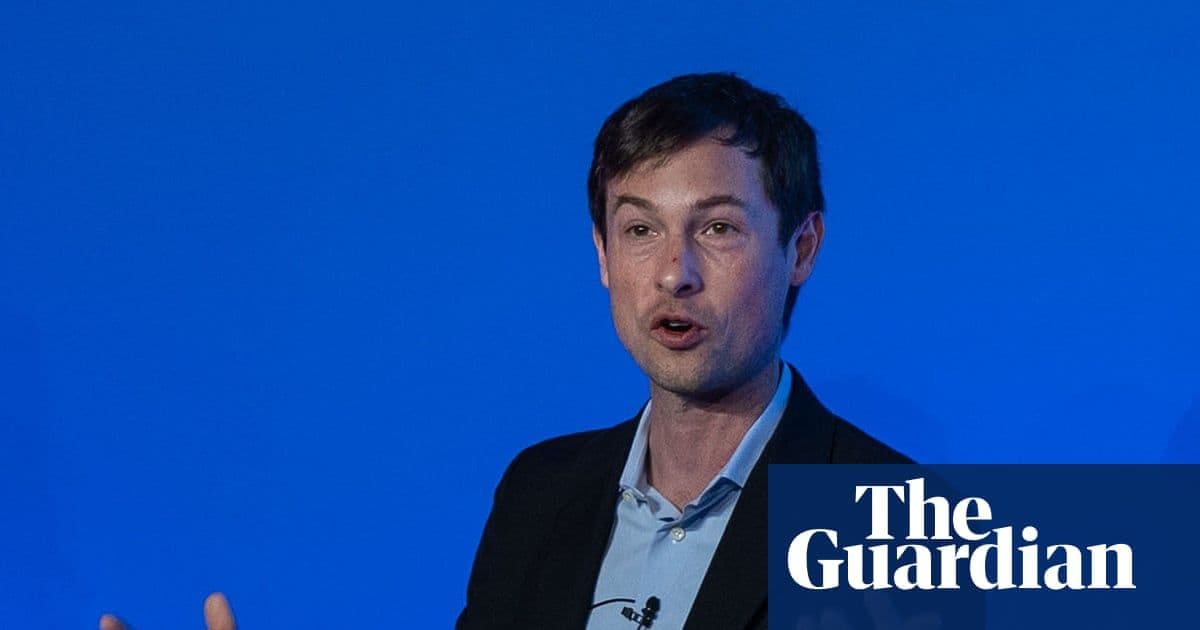
Reed Jobs Is Bringing His $1 Billion Cancer Mission to the UK
Driven by the loss of his father Steve Jobs, Reed Jobs is scouting UK investment opportunities through his oncology-focused venture fund Yosemite.
How One Personal Tragedy Is Fueling a Billion-Dollar Fight Against Cancer
When Reed Jobs was still a child, he watched his father battle a devastating illness. That experience never left him. "I saw my dad have cancer when I was a kid, and unfortunately that happens far too often," he says. "That really motivated me to try to transform outcomes for other people out there."
The father he refers to is Steve Jobs, the visionary co-founder of Apple, who passed away in 2011 at just 56 years old after a rare form of pancreatic cancer claimed his life. That loss became the defining force behind Reed's career — and now, at 34, he is channeling that grief into meaningful action on a global scale.
Yosemite: A Venture Fund With a Purpose
Reed Jobs is the driving force behind Yosemite, a San Francisco-based venture capital fund with a sharp focus on oncology. The fund currently manages more than $1 billion in assets and has already backed roughly 20 healthcare startups across the United States and the United Kingdom.
Its portfolio includes companies such as Tune Therapeutics, Azalea Therapeutics, Chai Discovery, and Sage Care, with investments spanning cutting-edge areas like gene therapy, cancer vaccines, radiopharmaceuticals, and artificial intelligence. Several UK-based investments have also been made, though those partnerships have yet to be publicly disclosed.
Named after the California national park where his parents, Steve Jobs and Laurene Powell Jobs, wed in 1991, Yosemite operates on two fronts: a for-profit arm that invests in healthcare companies, and a donor-advised fund that provides philanthropic grants to scientists conducting early-stage research.
Scouting Opportunities in the United Kingdom
Jobs recently traveled to London to attend a life sciences conference hosted by LifeArc, a British not-for-profit organization focused on rare diseases that was established in 2000 under the UK's Medical Research Council. LifeArc is also one of Yosemite's investors, and the fund has formed partnerships with both Oxford and Cambridge universities, providing philanthropic support to researchers at both institutions.
"As a firm, we invest in companies internationally, and we would love to look at opportunities in the UK," Jobs said on the sidelines of the event. "We're here to meet with pharmaceutical partners and academics. Research here is world class."
Yosemite's broader investor base is equally impressive, with backing from US biotech giant Amgen, the Massachusetts Institute of Technology, Memorial Sloan Kettering Cancer Center in New York, and prominent billionaire investor John Doerr, following a fundraising round earlier this year.
A Personal Mission Rooted in Loss
Jobs' commitment to cancer research goes beyond family legacy. He completed an oncology internship at Stanford University at the age of 15 and later enrolled in pre-medical studies there before ultimately switching his focus to history. As an adult, he also lost a close friend to leukemia — a second blow that only deepened his resolve.
He spent years working within Emerson Collective, the philanthropic and investment organization founded by his mother, Laurene Powell Jobs, where he served as managing director of health. Yosemite was spun off from that organization in 2023 as an independent entity.
Reimagining Cancer as a Treatable Condition
Jobs holds an ambitious but grounded vision for the future of cancer care. He hopes that within his lifetime, cancer will transition from being an "end-stage disease" to a condition that is detected early, closely monitored, and effectively managed — much like the medical community has done with HIV and cardiovascular disease.
"Today far too many cancers are either diagnosed incidentally, because there's no good early biomarker, or only diagnosed once they are metastatic and extremely advanced," he explains. "That is unacceptable. We think that in the course of my lifetime and the current generation, that is going to really change — not only through better detection, but also through better targeted and personalised therapy."
The Promise of Immunotherapy
One area Jobs is particularly enthusiastic about is immunotherapy — treatments that activate the body's own immune system to identify and destroy cancer cells. In recent years, these therapies have already begun to revolutionize outcomes for certain cancer patients.
"Immunotherapy is an area that we're extremely active in," he says. "It's one of the areas I think is going to have the most promise for patients in the next couple of decades."
The Overlooked Crisis of Childhood Cancer
The LifeArc conference also spotlighted a troubling gap in cancer research: the lack of dedicated treatments for children. Lone Friis, who leads the C-Further paediatric oncology programme at LifeArc, highlighted that while cancer in children is classified as rare — with approximately 4,000 new cases diagnosed annually in the UK — it remains the leading cause of disease-related death among children.
The disparity in treatment development is stark. While adults have benefited from as many as 150 new therapies, including immunotherapies, children have seen only eight new targeted medications approved over the past two decades.
"We need to do better," Friis stated plainly.
With approximately 20% of all cancers categorized as rare, the call for more focused investment and innovation has never been more urgent — a mission that Reed Jobs, driven by personal tragedy and professional purpose, appears determined to answer.