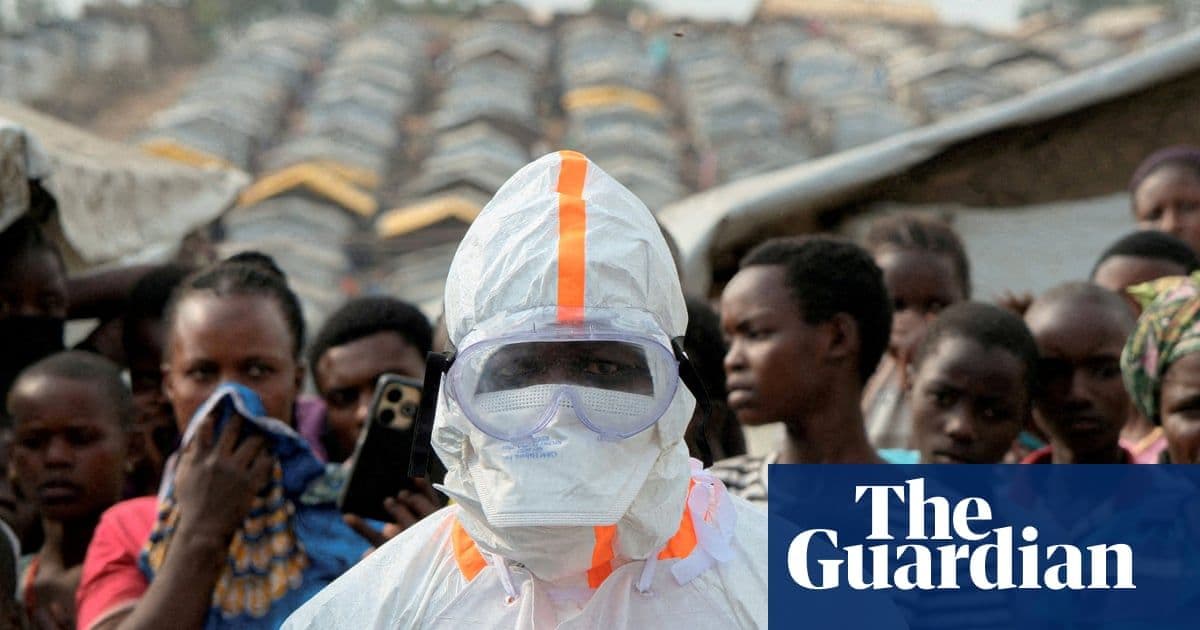
Record-Breaking Ebola Outbreak: How War, Aid Cuts, and Misinformation Are Driving a Deadly Crisis
The DRC's Ebola outbreak is spreading faster than any before it, fueled by armed conflict, slashed humanitarian funding, and dangerous misinformation targeting aid workers.

Record-Breaking Ebola Outbreak Threatens Central Africa
Nearly two months since the Democratic Republic of the Congo officially confirmed an Ebola outbreak, the virus shows no signs of slowing down. It continues to penetrate new regions of the country while infecting an ever-growing number of people, raising alarms among global health authorities.
As of July 8, official government figures recorded 1,759 confirmed cases and 600 fatalities. The disease has also crossed international borders into Uganda, where 20 confirmed cases have been reported, including two deaths.
This particular outbreak stems from the rare Bundibugyo strain of Ebola — a variant for which neither an approved vaccine nor a recognized treatment currently exists.
The Fastest-Growing Ebola Outbreak in History
Wessam Mankoula, who heads emergency preparedness and response at the Africa Centres for Disease Control and Prevention, confirmed to reporters that this is the fastest-growing Ebola outbreak ever documented — surpassing not only previous Bundibugyo outbreaks but all other known variants of the virus.
Adding to the concern, the Congolese health ministry has reported suspected cases in the provinces of Tshopo and Haut-Uélé, signaling that the disease is spreading well beyond its original epicenter in Ituri province. Health experts caution that without urgent intervention, this outbreak could surpass all previous records in terms of total deaths.
Armed Conflict Complicates the Response
The outbreak was first identified in May in Ituri province in northeastern DRC before extending into the neighboring provinces of North Kivu and South Kivu. All three regions have endured prolonged armed conflicts driven by various factions, resulting in widespread casualties and mass displacement of civilians.
Ituri itself has long been a flashpoint for militia violence, with armed groups competing for control over the province's rich mineral deposits. Meanwhile, in North and South Kivu, the Congolese national army and allied militias are locked in ongoing battles with the M23 rebel coalition, with each side controlling different territorial zones.
Ladd Serwat, a senior analyst at the conflict monitoring organization Acled, explained that armed groups in these provinces have historically obstructed humanitarian access, particularly in communities perceived to be allied with opposing ethnic factions. He further warned that the combination of militant activity, mass population displacement, and fragile state authority could severely undermine efforts to contain the disease.
According to an earlier assessment by the International Organisation for Migration, approximately 3.3 million displaced individuals currently reside across Ituri, North Kivu, and South Kivu — with South Kivu alone sheltering 1.2 million displaced people.
Humanitarian Funding Cuts Leave Health Systems Exposed
A dramatic reduction in humanitarian financing for the DRC in 2025 has made matters significantly worse. The decline is largely attributed to the Trump administration's decision to freeze foreign aid channeled through State Department-funded programs.
Carla Martinez, the DRC director at the UN's Office for the Coordination of Humanitarian Affairs, revealed that the funding shortfall forced more than ten humanitarian organizations to scale back or completely suspend their operations in the region.
This retreat weakened both local healthcare infrastructure and disease surveillance systems, making early detection and rapid response to outbreaks far more difficult. Martinez stressed that the Ebola crisis serves as a stark warning about the consequences of underfunding humanitarian systems.
"Without additional resources, both the public health response and broader humanitarian operations will come under increasing strain, with potentially serious consequences for the DRC and the wider region," she cautioned.
Misinformation and Violence Target Healthcare Workers
Healthcare workers and Ebola treatment facilities have repeatedly come under attack during both this outbreak and previous ones in the affected provinces. These incidents — which range from violent assaults and riots to deliberate property destruction — severely disrupt the delivery of life-saving services.
During the current crisis, ten Red Cross volunteers have been targeted, with four sustaining injuries, according to Alex Lock, a spokesperson for the International Federation of Red Cross and Red Crescent Societies. Lock noted that the majority of these attacks took place during safe burial procedures and were largely driven by community mistrust rooted in misinformation and rumors circulating about the disease.
In one particularly serious incident last month, four volunteers were attacked during a burial, two of whom were critically injured and required emergency airlift to the capital, Kinshasa, for treatment.
The deep-seated distrust of outside health responders is not new. Decades of armed conflict and foreign interference in eastern DRC have created fertile ground for conspiracy theories and suspicion toward aid organizations.
Lock emphasized the devastating operational impact of such violence: "An immobilised colleague means a direct reduction in response capacity. This hinders our effectiveness and benefits no one — neither the communities we serve nor those of us working tirelessly to contain and eradicate this virus."
The attacks force response teams to pause or delay critical containment activities, widening the window for the virus to spread and putting even more community members at risk. Health authorities worldwide are urging immediate international support to prevent this outbreak from becoming the deadliest Ebola crisis in recorded history.

