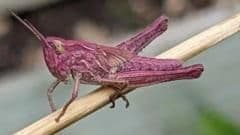
Rare Pink Grasshoppers Discovered Thriving in a Somerset Garden
A Somerset woman stumbled upon an extraordinary genetic rarity in her own backyard — a colony of bright pink baby grasshoppers that experts call a once-in-a-lifetime find.

Rare Pink Grasshoppers Found Breeding in Somerset Garden
A woman from Shepton Mallet, Somerset, has made a remarkable discovery right in her own backyard — a cluster of newborn pink grasshoppers, a sight so uncommon that wildlife experts have described it as a once-in-a-lifetime encounter.
Natasha Welch first spotted a lone pink grasshopper in her garden back in 2025, but was stunned this year to discover an entire group of the vividly colored baby insects hopping through her lawn. She quickly photographed the unusual creatures and shared the images with the Somerset Wildlife Trust to find out more.
A Genetic Mutation Behind the Striking Color
According to wildlife specialists at the Somerset Wildlife Trust, the eye-catching pink hue is the result of a genetic mutation. While the mutation itself is not especially uncommon, actually encountering a live pink grasshopper in the wild is a very different story.
Anne Halpin of the Somerset Wildlife Trust explained that grasshoppers are naturally cryptic creatures, relying heavily on camouflage to avoid predators. Their green and brown tones allow them to blend seamlessly into grass and foliage. Pink variants, however, lack this natural defense and are almost immediately spotted and eaten by birds — which is precisely why so few survive long enough to be seen by humans.
"When they're quite pink, they can't hide as well," Halpin noted. "Grasshoppers are cryptic species — they hide because they're tasty."
Why Welch's Garden Has Become a Safe Haven
So how did an entire brood of pink grasshoppers manage to survive and thrive in Welch's garden? She believes her four cats may deserve much of the credit.
"I've got four cats so birds don't get into our garden," Welch explained. "I also don't cut my grass very often, so that might be it."
Halpin agreed that this is a plausible explanation. Research has shown that in neighborhoods with a high concentration of domestic cats, populations of songbirds tend to be significantly lower. With fewer birds patrolling the area, the pink grasshoppers have a much greater chance of surviving to adulthood.
Halpin also suggested that Welch's garden may simply offer ideal grasshopper habitat, providing the kind of environment where these insects can breed and flourish.
"It is exciting that they're there and chose my garden," Welch said. "If I walk through my grass now, I can see loads of grasshoppers."
How to Create a Grasshopper-Friendly Garden
For those inspired by Welch's discovery and hoping to attract grasshoppers to their own outdoor spaces, Halpin offered some practical advice. The key, she said, is variety.
A well-balanced garden habitat for grasshoppers should feature a mix of both tall and short grass, giving the insects options for shelter, feeding, and breeding. Beyond that, introducing a diverse range of plants, trees, and shrubs will benefit not just grasshoppers but a wide array of wildlife species.
"There's an old saying — variety is the spice of life," Halpin said. "The more variety you have in your grass and garden, the more different types of plants, trees, and shrubs, the more beneficial it will be to the most species."
Welch's extraordinary garden discovery serves as a vivid reminder that nature's rarest surprises can sometimes be found just outside your back door.