Purim in the Modern Age: Why Iran's Regime Threatens Us All
The ancient Purim story echoes loudly today as Iran's regime wages war not just against Israel, but against anyone who dares resist its totalizing ideology.

An Ancient Story With a Terrifyingly Modern Echo
Each year during Purim, Jewish communities around the world open the Scroll of Esther and revisit the tale of Haman — a Persian official who conspired to exterminate every Jewish man, woman and child within the empire in a single coordinated strike. For centuries, this narrative was treated as a relic of a distant past. Today, it reads more like a headline.
The reason is impossible to ignore: a regime currently ruling Persia — the Islamic Republic of Iran — openly harbors ambitions of annihilation and regional domination, with Jewish people as a primary target but by no means the only one in its crosshairs.
More Than Costumes and Noisemakers
Purim is frequently reduced to a festive occasion for children, complete with colorful costumes and celebratory rattles. But beneath that cheerful surface lies a deeply serious political narrative — a confrontation between a ruthless ideologue wielding the machinery of state power and a vulnerable people condemned simply for existing.
In the ancient story, Haman designated an entire group as an obstacle to his vision, mobilized governmental authority to support his hatred and issued what amounted to a bureaucratic order for mass murder. It was only through courage, solidarity and determined resistance that the plot was undone.
Swap out the royal signet ring for missile launch codes and terrorist proxies, and you have a remarkably accurate description of how Iran's clerical regime operates today — against Israel, against the United States and increasingly against neighboring Arab states in the Persian Gulf.
Iran's Regional Web of Terror
When Hamas launched its devastating assault on Israeli communities on October 7th — murdering, raping and abducting civilians in an act of staggering brutality — it did not act alone or in an ideological vacuum. Hamas has long been a beneficiary of Iranian support, receiving training, financing and weapons from Tehran.
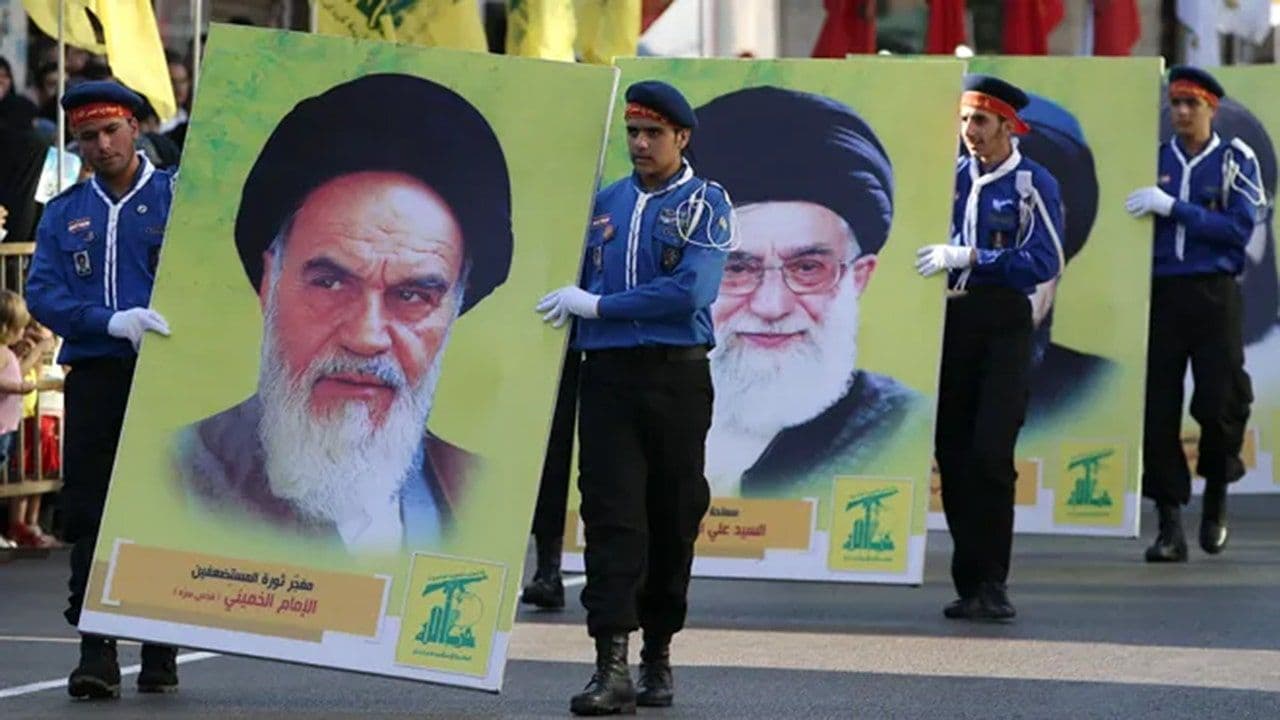
The group operates as one node within a broader "axis of resistance" that Iran has deliberately and patiently constructed around Israel over decades. This network includes Hezbollah in Lebanon, armed militias embedded in Syria and Iraq, and the Houthi movement in Yemen. Together, they form what Tehran strategists have described as a "ring of fire" encircling Israel — all in service of the regime's declared objective to eliminate what it calls a "cancerous tumor" and to expel American influence from the Middle East entirely.
A War Fought in Cyberspace and on Social Media
In the 21st century, however, Iran's war extends well beyond rockets, drones and armed proxies. The regime has developed a sophisticated and well-resourced information warfare apparatus designed to manipulate how global audiences perceive ongoing conflicts and how democratic societies understand themselves.
This apparatus deploys botnets, fabricated online personas and recruited social media influencers to flood digital spaces with divisive, demoralizing content. Investigations into these operations have uncovered networks of fake accounts operating across X (formerly Twitter), Facebook, Instagram and Telegram.
In one particularly well-documented campaign, automated bots inundated Hebrew-language online spaces with tens of thousands of posts within just 48 hours, deliberately amplifying internal divisions within Israeli society and stoking anxiety over the fate of hostages held in Gaza. Separate operations have impersonated Israeli, American and European voices online to push narratives advocating Western disengagement, internal civil conflict and the abandonment of democratic allies — from Israel to Ukraine.
State-Directed Manipulation, Not Random Trolling
This is not the disorganized online harassment that democracies have grown accustomed to managing. It is coordinated, state-sponsored information warfare with clearly defined strategic objectives:
- Undermining Israeli civilian morale during and after military conflict
- Silencing and discrediting Iranian dissidents both inside and outside Iran
- Fracturing Western public support for democratic allies
- Inverting the roles of victim and aggressor in global perception
When regime-linked networks amplify content about alleged "Zionist control," reframe anti-Jewish conspiracy theories as legitimate anti-colonial discourse and simultaneously brand Iranian pro-democracy activists as foreign-paid agents, they are targeting an extraordinarily broad coalition of people — anyone who refuses to bend to Tehran's revolutionary project.
The Same Regime, Many Victims
The West must come to terms with a sobering reality: a hostile authoritarian state is systematically deploying every instrument at its disposal — terror proxies abroad, violent domestic repression, ideological influence campaigns on Western university campuses and algorithmic manipulation online — to delegitimize democratic governments and normalize violence against minorities and dissidents alike.
This is the same regime that arms Hamas and Hezbollah. It is also the regime that shoots women in the streets of Tehran for refusing to wear the hijab, supplies attack drones to Russia for deployment against Ukrainian civilians and issues threats against Gulf Arab states that pursue open diplomatic relationships with Israel.
The ideological hatred that drove Haman has not disappeared from history. It has simply been modernized, scaled up and universalized.
Why This Purim, We Are All Potential Targets
That is precisely why the Purim story carries such resonance beyond the Jewish community this year. The narrative at its heart involves a vulnerable group singled out by an authoritarian power that cannot tolerate their existence — people ordered to disappear or submit for the sake of someone else's totalizing vision of the world.
To stand in solidarity with Israel after October 7th is not to turn a blind eye to other victims of Iran's regime. It is to recognize that the very same system dreaming of erasing the Jewish state is simultaneously dreaming of crushing American influence, destabilizing European democracies, subjugating Sunni Arab nations and silencing the women marching through the streets of Mashhad, Shiraz and Isfahan — and the students on Western campuses who refuse to parrot regime-approved slogans.
The Lesson That Cannot Be Ignored
The Scroll of Esther concludes with the intended victims rising up, resisting and enduring. For Israel and all of Iran's other targets to achieve the same outcome in our time, free nations must be prepared to confront the regime comprehensively and without hesitation.
That means degrading Iran's military capabilities, defeating its terror proxies on the battlefield, extending meaningful support to democratic dissidents within Iran, reinforcing our information ecosystems against foreign manipulation and stripping Tehran of the international impunity it has exploited for far too long.
The ancient lesson embedded in Purim is not a narrow or parochial one. It speaks to a universal truth: when a regime builds its entire political identity around the promise of annihilation, indifference becomes complicity. And by the time the decree arrives at your own door, there may be no time left to act.

