Pioneering Astronomer Cecilia Payne-Gaposchkin Honored With Blue Plaque at London Childhood Home
The woman who revealed the chemical makeup of stars finally gets the recognition she deserves with a prestigious English Heritage blue plaque.

The Astronomer Who Changed How We See the Universe
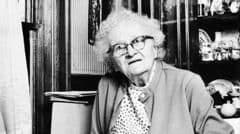
Cecilia Payne-Gaposchkin, the brilliant scientist who fundamentally transformed our understanding of stars and the cosmos, has been honored with an English Heritage blue plaque at her former teenage residence at 70 Lansdowne Road in Notting Hill, London — more than four decades after her passing.
The commemoration celebrates a woman whose contributions to astronomy were nothing short of revolutionary, and whose perseverance in the face of institutional barriers paved the way for generations of women in science.
A Groundbreaking Discovery Born From Exceptional Talent
In 1925, Payne-Gaposchkin submitted a doctoral thesis that would reshape the scientific world's understanding of the universe. She proposed that stars are predominantly composed of hydrogen and helium — a conclusion that was initially dismissed with skepticism by the broader scientific community. Over time, however, her findings were validated and recognized as one of the most significant astronomical discoveries of the 20th century.
Her research into stellar atmospheres and variable stars cemented her reputation as a towering figure in modern astronomy, and she went on to publish hundreds of scientific papers throughout her distinguished career.
Breaking Barriers at Every Turn
Born in 1900, Payne-Gaposchkin demonstrated her intellectual gifts early in life. It was while living at the Notting Hill address — now marked by the blue plaque — that she secured a scholarship to the prestigious Newnham College, Cambridge, setting the wheels of her remarkable journey in motion.
She later crossed the Atlantic to pursue her passion, earning a doctorate in astronomy from Harvard University. By 1927, she had become the youngest astronomer ever to receive a star of distinction beside their name in the celebrated publication American Men of Science — a remarkable achievement that underscored just how swiftly she had risen to prominence.
Her career milestones did not stop there. Payne-Gaposchkin went on to become the first woman appointed as a full professor within Harvard University's Faculty of Arts and Sciences, shattering a ceiling that had long excluded women from the institution's highest academic ranks.
A Legacy Recognized and Celebrated
Howard Spencer, Senior Historian at English Heritage, described Payne-Gaposchkin as "a scientist of exceptional brilliance and determination," adding that the blue plaque honors the London home where her ambitions first took root.
"Her story is not only one of groundbreaking discovery, but also of perseverance in the face of barriers that limited women in science," Spencer noted.
Among the other astronomers to have received similar blue plaque recognition are Sir Arthur Eddington — who notably encouraged Payne-Gaposchkin during the early stages of her career — and the scientific duo Walter and Annie Maunder.
An Inspiration Across Generations
Cecilia Payne-Gaposchkin's legacy endures as a powerful reminder that transformative discoveries can emerge even when the world is reluctant to listen. Her work not only unlocked the secrets of the stars but also helped dismantle the professional barriers that once stood between women and the highest levels of scientific achievement.