Peculiar Pink Boulders Expose a Massive Hidden Structure Lurking Under Antarctica's Ice
Strange pink granite rocks found atop Antarctic peaks have led scientists to uncover a colossal buried granite mass hiding beneath Pine Island Glacier.
Strange Rocks, Extraordinary Discovery
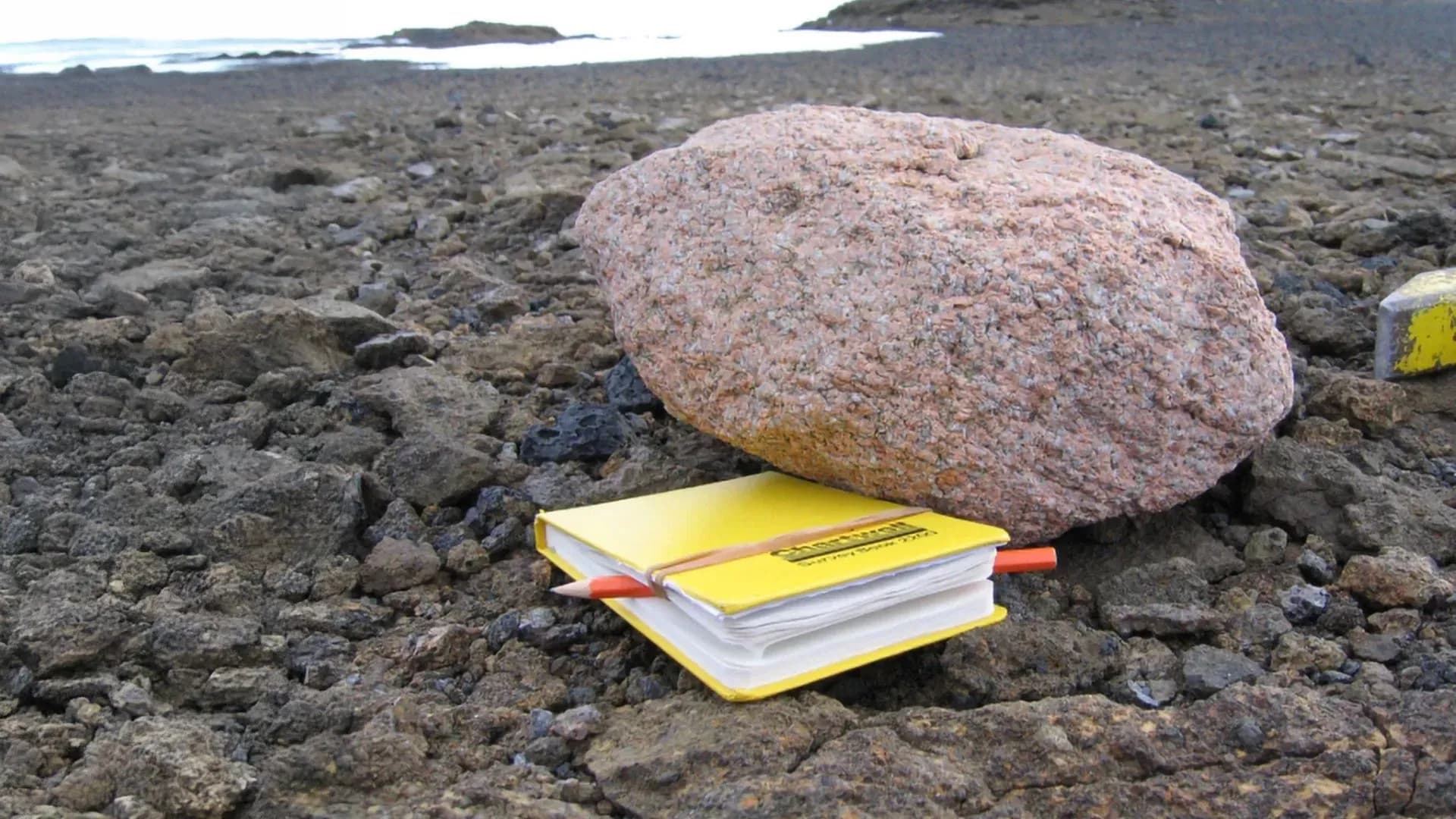
At first glance, a cluster of vivid pink granite boulders resting on the dark volcanic ridges of Antarctica's Hudson Mountains might seem like a geological curiosity. But these out-of-place stones have set off a chain of scientific investigation that has revealed something extraordinary: a colossal granite formation buried deep beneath Pine Island Glacier, measuring nearly 100 kilometers wide and 7 kilometers thick — roughly half the size of Wales.
For years, researchers could not explain how these distinctive rocks ended up perched high on remote mountain peaks. Now, a team from the British Antarctic Survey (BAS) has not only answered that question but uncovered critical new information about how Antarctica's ice sheet behaved in the distant past — and what that means for our future.
Rocks With a 175-Million-Year History
Dating the Jurassic Giants
To understand where these boulders came from, scientists needed to determine their age. Researchers examined radioactive decay within tiny mineral crystals locked inside the granite — a precise technique that revealed the rocks formed approximately 175 million years ago, during the Jurassic period.
Knowing their age was a crucial first step, but it still did not fully explain how Jurassic-era granite ended up sitting on top of volcanic mountain peaks in modern Antarctica. The answer required looking far beneath the surface.
Airborne Surveys Crack the Code
Gravity Measurements Point to a Hidden Giant
Using highly sensitive gravity-measuring instruments mounted aboard BAS Twin Otter aircraft, scientists conducted surveys over the Pine Island Glacier region. The data revealed an unmistakable gravitational anomaly beneath the ice — a signature consistent with an enormous body of buried granite sitting well below the glacier's surface.
When researchers matched this underground formation with the surface boulders, the puzzle clicked into place. The granite mass below is the origin point of those peculiar pink rocks. Long ago, when Antarctica's ice sheet was substantially thicker than it is today, the glacier moved in a dramatically different pattern — physically dragging rocks upward from its base and depositing them on elevated ridges as the ice flowed and shifted over millennia.
What This Means for Ice Sheet Science
A Window Into Antarctica's Frozen Past
Beyond solving a geological mystery, this discovery carries significant implications for understanding how Antarctica's ice has changed over time. The research offers fresh insight into how Pine Island Glacier behaved during the last ice age, approximately 20,000 years ago, when ice sheets were far more expansive.
By reconstructing past ice thickness and movement, scientists can feed more accurate data into the computer models used to forecast how Antarctica will respond to ongoing climate change. This matters enormously because Pine Island Glacier sits in one of the most rapidly changing regions of the entire continent — an area that has recorded some of the fastest rates of ice loss in recent decades.
Geology Shapes the Glacier's Fate
The type of bedrock beneath a glacier is not merely an academic detail. It directly influences how easily ice slides across the surface below and how meltwater drains and moves underneath the ice sheet. Understanding whether granite or other rock types dominate the geology beneath Pine Island Glacier helps scientists better characterize the dynamics driving its retreat — and sharpen projections of how much it could contribute to rising sea levels worldwide.
Scientists Speak on the Breakthrough
Dr. Tom Jordan, the study's lead author and a geophysicist at BAS, described the significance of the find:
"It's remarkable that pink granite boulders spotted on the surface have led us to a hidden giant beneath the ice. By combining geological dating with gravity surveys, we've not only solved a mystery about where these rocks came from, but also uncovered new information about how the ice sheet flowed in the past and how it might change in the future."
Dr. Joanne Johnson, a BAS geologist and co-author who personally collected the boulders during fieldwork conducted as part of the International Thwaites Glacier Collaboration, emphasized the broader value of studying ancient rocks:
"Rocks provide an amazing record of how our planet has changed over time, especially how ice has eroded and altered the landscape of Antarctica. By identifying their source, we have been able to piece together how they got to where they are today, giving us clues about how the West Antarctic Ice Sheet may change in future — information that is vital for determining the impact of sea level rise on coastal populations around the world."
A Powerful Reminder of What Lies Beneath
This research stands as a compelling example of how two scientific disciplines — geology and geophysics — can work in tandem to expose hidden features that no drill or camera could easily reach. A handful of unusual pink boulders, puzzling scientists for decades, ultimately unlocked the secret of a buried giant and deepened our understanding of one of the most consequential ice systems on Earth.
As climate change continues to accelerate, discoveries like this one are essential for building the most accurate possible picture of Antarctica's future — and what that future means for coastlines and communities around the globe.