Oxford Scientists Unlock a Stranger, More Powerful Version of Schrödinger's Cat
Oxford physicists have engineered a radical new class of quantum superposition states — and they could reshape the future of quantum computing.
Oxford Scientists Unlock a Stranger, More Powerful Version of Schrödinger's Cat
Physicists at the University of Oxford have pushed one of quantum mechanics' most iconic concepts into uncharted territory. By creating an entirely new family of quantum superposition states — built from components that are themselves deeply quantum in nature — the team has opened a promising new frontier for quantum computing, precision sensing, and our fundamental understanding of physical reality.
What Is Schrödinger's Cat, and Why Does It Matter?
At the heart of quantum mechanics lies one of its most unsettling ideas: objects don't have to exist in just one state at a time. They can occupy multiple states simultaneously — at least until they are observed. This counterintuitive concept is most famously illustrated by the thought experiment known as Schrödinger's cat, in which a hypothetical cat is considered both alive and dead until someone looks inside the box.
While that scenario remains fictional, quantum superpositions are very real. Scientists routinely create and manipulate them in laboratories using atoms, light, and even physical motion. These superposition states form the backbone of technologies like quantum computers and atomic clocks that push the limits of precision measurement.
A quantum bit, or qubit, is the most familiar example — a unit of quantum information that can represent both 0 and 1 simultaneously. But the quantum world offers far more complexity than a simple two-state system can capture.
Beyond the Qubit: Quantum Oscillators Open New Doors
Quantum harmonic oscillators represent a much richer class of quantum system. Unlike a qubit constrained to two possible states, these oscillators can occupy a vast range of energy levels. They appear across many physical contexts — describing the behavior of light, vibrations in materials, and the motion of trapped particles.
Scientists have long used oscillators to generate a variety of exotic quantum states. Among the most well-known is the so-called "cat state," in which an oscillator exists as a superposition of two wave packets traveling in opposite directions. These wave packets, known as coherent states, represent the closest quantum analog to classical physical motion.
Building Quantum States From Nonclassical Components
The Oxford research team has now gone significantly further. Rather than assembling cat-like quantum states from coherent-state components, they developed a technique that builds superpositions from components that are already profoundly nonclassical.
In one example, they created what are known as squeezed-state superpositions — states in which quantum uncertainty is distributed unevenly across different aspects of the system, producing behavior with no classical equivalent.
The experiment was conducted using a single trapped ion, a platform that elegantly combines two quantum systems within a single physical object. The ion's internal structure behaves like a qubit, while its physical motion functions as a quantum harmonic oscillator capable of existing across a wide range of motional states. This dual nature makes trapped ions an exceptionally versatile tool for advanced quantum state engineering.
How the New States Were Created
To produce these novel quantum states, the researchers first engineered precise interactions that entangled the ion's internal qubit state with various possible motional states. They then performed a mid-circuit quantum measurement on the internal state — a targeted observation that caused the ion's motion to collapse into the intended superposition of nonclassical components.
"This approach gave us a tool to sculpt the quantum superposition into almost any shape," explained lead author Dr. Sebastian Saner of the University of Oxford's Department of Physics.
Programmable Precision Over Exotic Quantum Behavior
One of the most significant aspects of the new technique is the degree of control it affords. By tuning experimental parameters, the team could adjust the relative size, orientation, and spatial separation of components within a given superposition. This flexibility enabled them to generate a wide variety of exotic motional quantum states using the same experimental apparatus.
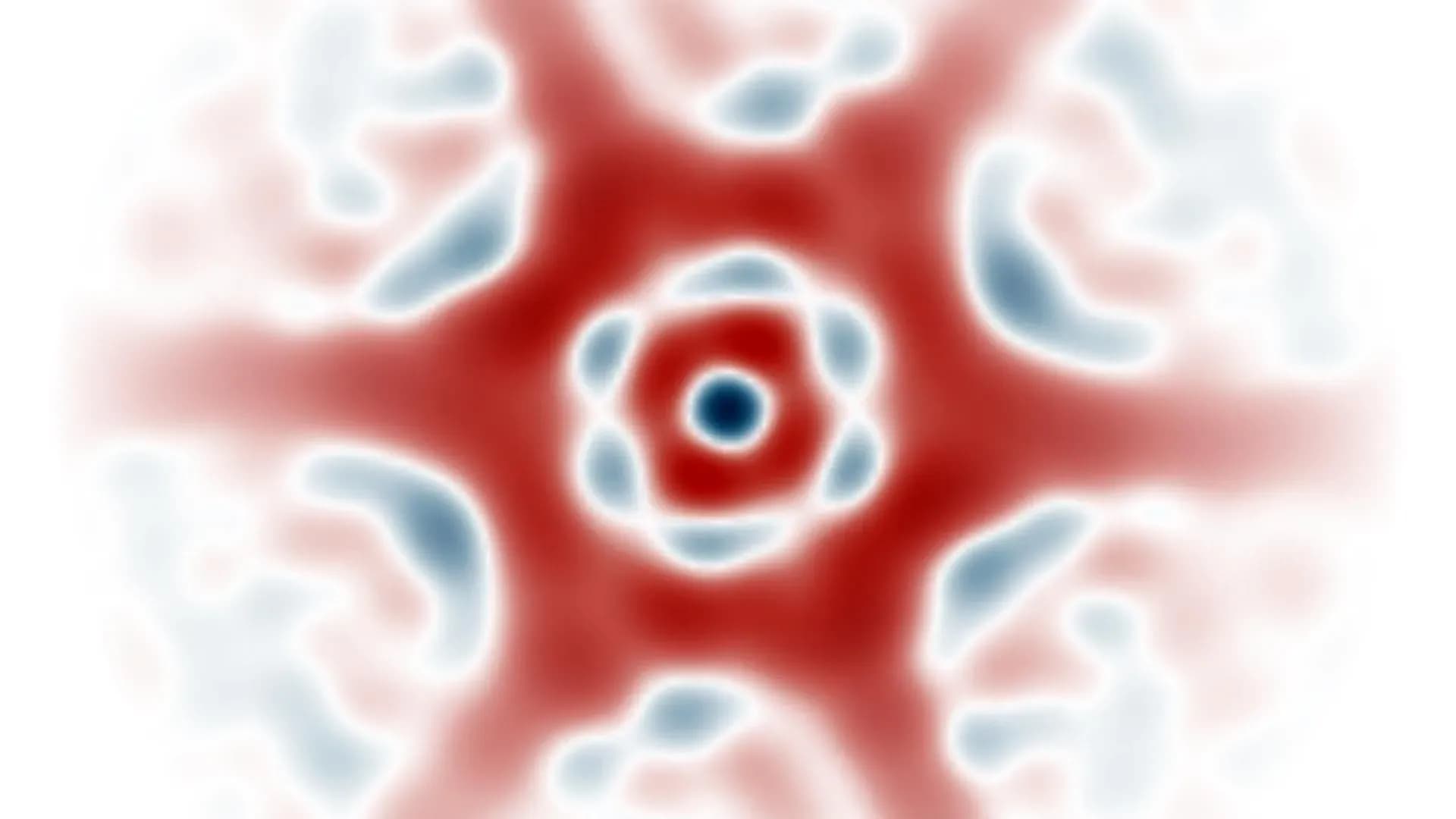
To verify their results, the researchers reconstructed the quantum states directly from measurements. The data revealed distinct interference patterns and regions of what physicists call Wigner negativity — a telltale signature that a quantum state cannot be explained by any classical model. These findings confirmed that the team had successfully produced genuine quantum superpositions with fully nonclassical building blocks.
"We were really encouraged by our colleagues' reaction when we showed them what we had made. We believe we're still scratching the surface of what's possible, both for practical applications and for understanding these states at a more fundamental level," said Dr. Raghavendra Srinivas, who supervised the research.
What This Means for the Future of Quantum Technology
The implications of this breakthrough extend well beyond the laboratory. The newly demonstrated states point toward a new generation of quantum technologies built around quantum oscillators rather than conventional qubits alone.
In quantum computing, these states may prove more resilient to the errors that currently limit the performance of quantum processors. They also suggest simpler and more effective approaches to quantum error correction — one of the field's most pressing engineering challenges.
Beyond computing, the work establishes a new experimental platform for probing one of physics' deepest open questions: precisely where the boundary lies between the familiar classical world and the strange quantum reality that underlies it. The Oxford team is currently collaborating with theorists to develop better tools for quantifying exactly how nonclassical their newly created states truly are — suggesting that even more surprising discoveries may lie ahead.
