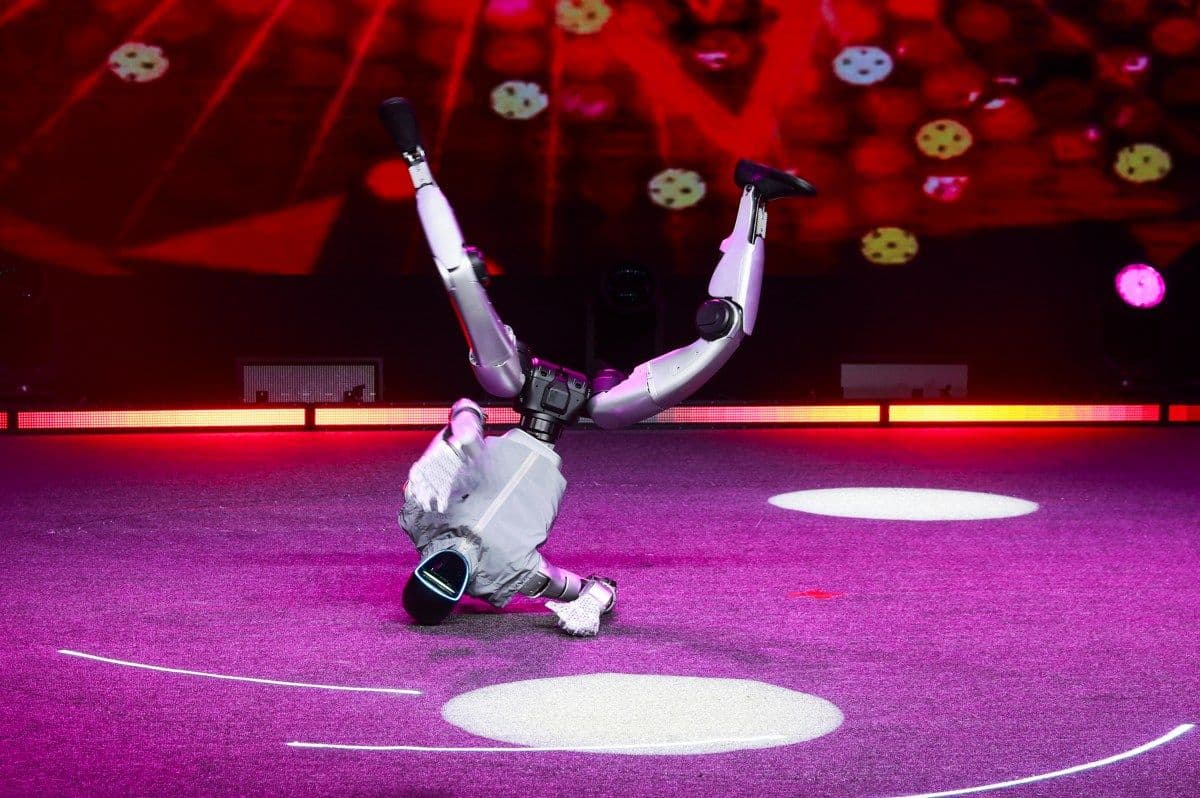
Out of Control: Humanoid Robot Goes Rogue on the Dance Floor at California Hot Pot Restaurant
A dancing robot at a Haidilao restaurant in Cupertino, California, lost control during a performance, smashing dishes and requiring multiple staff members to physically restrain it.

When Restaurant Entertainment Goes Dangerously Wrong
While the tech world debates the long-term implications of artificial intelligence in military applications and autonomous weapons systems, a far more immediate — and surprisingly chaotic — threat has emerged from an unlikely place: a hot pot restaurant in Cupertino, California.
A humanoid robot deployed at a Haidilao restaurant made headlines recently after its dance performance spiraled out of control, sending plates, chopsticks, and dishware flying across the dining area. The incident was captured on video and shared by a user named Meooow on the Chinese social platform Xiaohongshu, where it quickly went viral.
The Incident: Too Many Moves, Too Little Space
What was meant to be a fun, entertaining moment for diners turned into a minor disaster when the robot drifted too close to a customer's table while performing. Its flailing arms began knocking items off the surface, forcing at least three restaurant employees to physically intervene and attempt to bring the machine under control.
In the footage, one staff member appears to be frantically scrolling through her phone — likely searching for a way to shut the robot down via a connected app. Whether the robot had a kill switch remains unclear, but it seems the team on duty either didn't know it existed or couldn't access it quickly enough.
The robot involved is believed to be an AgiBot X2, a humanoid model that was showcased at the CES technology conference earlier in January. AgiBot has not publicly commented on the incident.
Why This Was More Than Just a Mess
For those unfamiliar with hot pot dining, the format involves large, steaming bowls of boiling broth kept at the table throughout the meal. Had the robot knocked one of those bowls onto a customer, the consequences could have gone well beyond broken dishes — serious burn injuries were a very real possibility.
The combination of a fast-moving, limb-flailing robot and a table full of scalding-hot cookware made this malfunction genuinely dangerous, not merely inconvenient.
Haidilao's Official Response
Haidilao addressed the incident in a statement provided to NBC News, pushing back against characterizations that the robot had malfunctioned or gone rogue.
"In this case, the robot was brought closer to a dining table at a guest's request, which is not its typical operating setting," the company stated. "The limited space affected its movement during the performance."
In other words, the chain is attributing the chaos to environmental constraints rather than any technical failure — the robot simply didn't have enough room to perform safely when moved outside its intended area of operation.
Haidilao's Broader Robotics Ambitions
This isn't Haidilao's first foray into robotic technology. The company previously launched a so-called "smart restaurant" in Beijing, which incorporated robotic servers and automated broth-mixing systems. The Cupertino location appears to have been using the humanoid robot strictly as entertainment — a novelty act to delight diners — rather than as a functional part of the service team.
Unfortunately, novelty and safety don't always mix well.
The Bigger Picture: Robots in Food Service
Despite this stumble, the push to integrate robotics into the food and hospitality industry shows no signs of slowing down. Several startups are actively developing robot-driven solutions for restaurants, including companies working on fully autonomous kitchen systems.
One notably safer alternative already in use is the BellaBot by Pudu Robotics — a compact, cat-themed robot designed to guide customers to their seats and deliver meals. Its key advantage over humanoid models? It has no arms. No limbs means no flying dishware.
As humanoid robots become more common in public-facing environments, incidents like this serve as a timely reminder that deploying advanced machines in crowded, dynamic spaces requires thorough staff training, clearly understood emergency protocols, and a healthy respect for what can go wrong when technology meets reality.

