OpenAI Kills Its AI Browser But Doubles Down on Web Intelligence Everywhere Else
OpenAI has shut down its Atlas browser after less than a year, but its AI browsing ambitions are far from over — they're just moving to new homes.

OpenAI Pulls the Plug on Atlas — But AI Browsing Is Very Much Alive
After less than a year in operation, OpenAI has officially shut down Atlas, its AI-powered web browser that launched in October with ChatGPT as its backbone. The decision might look like a retreat, but it's anything but. OpenAI is redistributing Atlas' most powerful capabilities across two platforms that users already live in: the ChatGPT desktop application and a brand-new Google Chrome extension.
Why Atlas Got the Axe
The writing was already on the wall when OpenAI's Chief of Applications, Fidji Simo, instructed her team to rein in what she called "side quests" — internal projects that pull focus away from the company's core priorities. That directive had already cost Sora, OpenAI's AI video-generation tool, its place in the product lineup. Atlas became the next casualty of that same strategic housecleaning.
The shutdown reflects a broader philosophical shift inside OpenAI: rather than building a destination where users go to browse, the company now believes AI should meet people where they already are.
A Crowded Battle for the Browser
OpenAI isn't the only player that has been wrestling with the future of AI-powered browsing. Over the past year, the technology industry has been locked in an intense competition to challenge Chrome's dominance as the world's default gateway to the internet.
- Perplexity entered the space with its browser, Comet
- The Browser Company launched Dia as its AI-first offering
- Google and Microsoft have both layered new AI features into Chrome and Edge, respectively
After running its own experiment, OpenAI appears to have landed on a clear conclusion: the browser itself is a feature, not the end product.
What Replaces Atlas: A Chrome Extension and a Smarter Desktop App
ChatGPT Comes to Chrome
OpenAI is launching a dedicated ChatGPT extension for Google Chrome that gives the AI real-time awareness of whatever page a user is currently viewing. From within the browser, users will be able to ask questions about web content, generate quick summaries, or kick off more complex, multi-step tasks — all without navigating away from their current tab.
The extension puts ChatGPT in direct competition with Google's own Gemini Side Panel, which offers a similar suite of in-browser AI assistance tools.
A More Powerful ChatGPT Desktop App
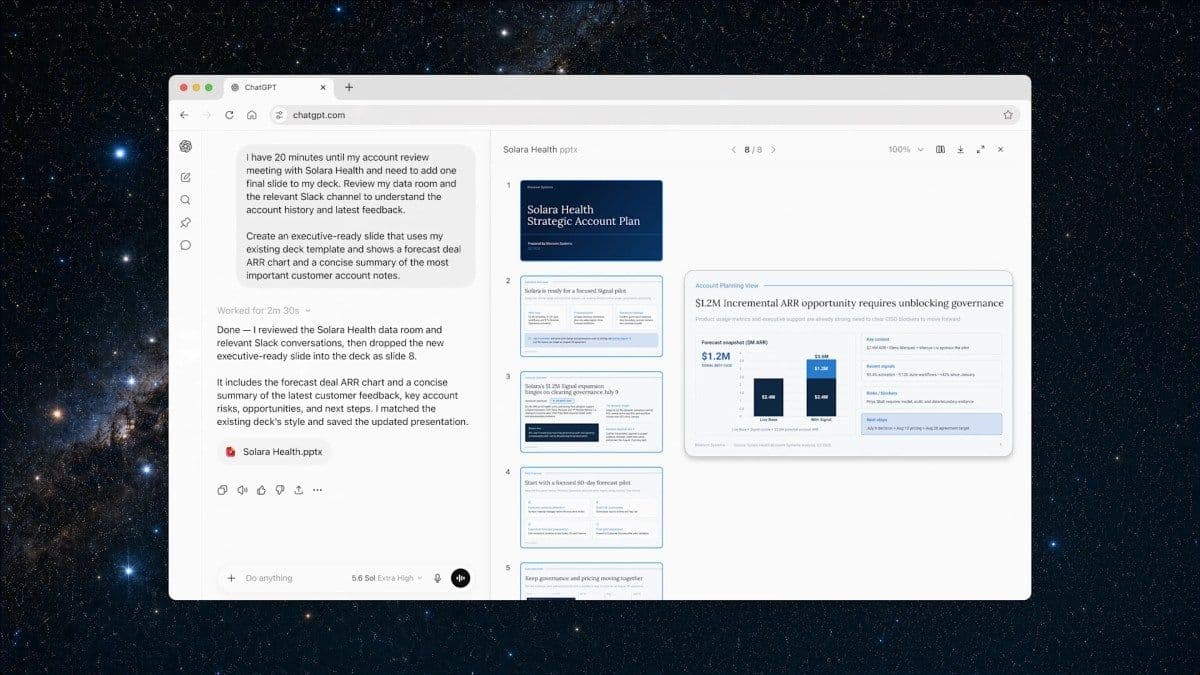
On the desktop side, OpenAI is significantly upgrading the ChatGPT app's built-in browser. Users will now be able to visit websites, log into accounts, download files, and interact with web pages directly from within ChatGPT — no separate browser window required.
Additionally, a cloud-based browser running remotely on OpenAI's own servers will act as a virtual workspace where the app's AI agents can autonomously handle tasks on a user's behalf, even when the user isn't actively supervising the process.
A Unified AI Workspace Takes Shape
Taken together, these updates represent a significant step toward something OpenAI has been quietly building toward: a seamless, always-on AI workspace that doesn't confine itself to a single app or platform. Whether you're inside Chrome, working from the desktop app, or delegating tasks to an AI agent running in the cloud, the experience is designed to feel connected and continuous.
Rather than competing with the browser, OpenAI has chosen to inhabit it — and in doing so, it may have found a far more effective way to embed ChatGPT into everyday digital life.