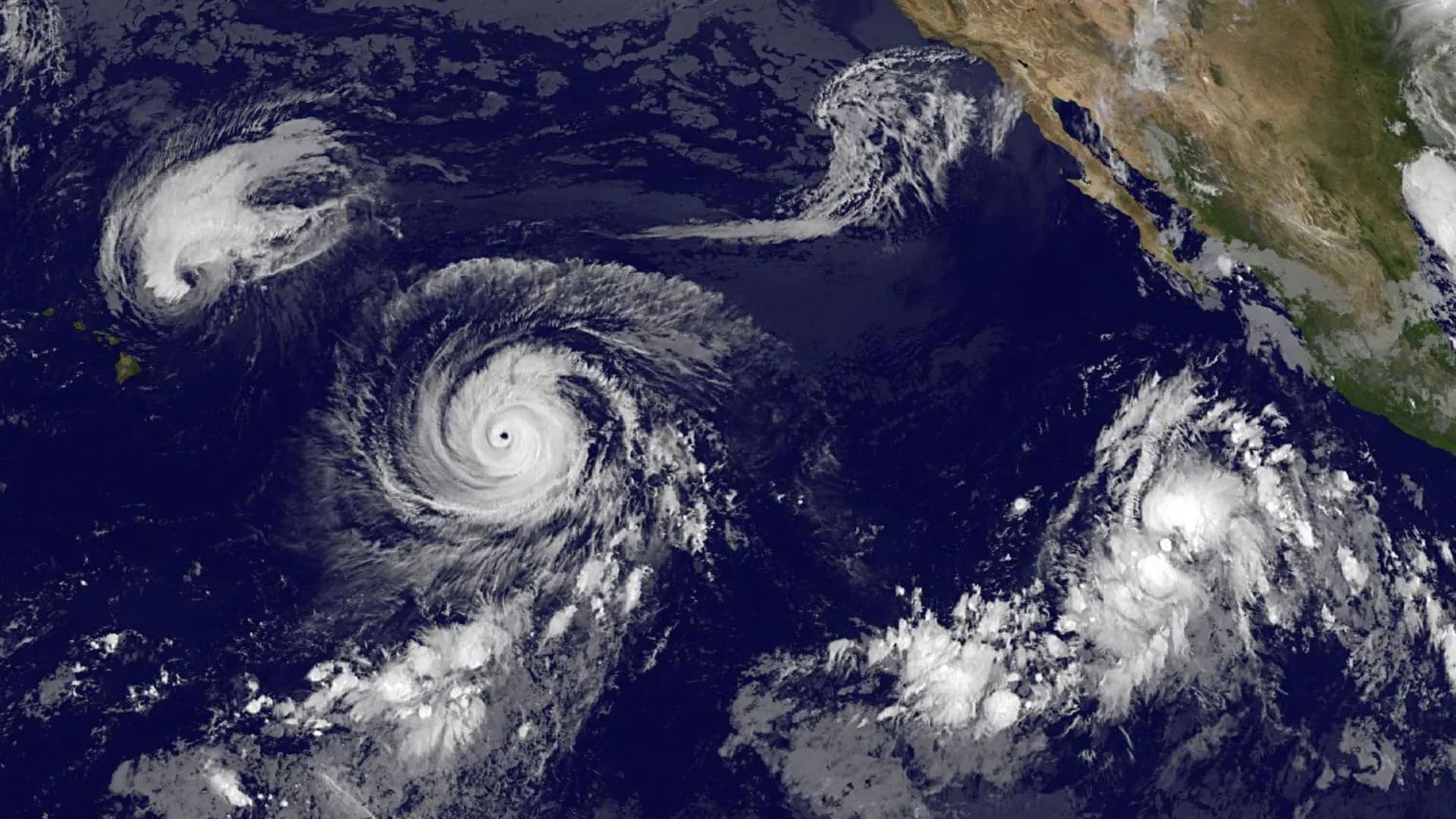
One Geoengineering Method Could Cripple Earth's Most Powerful Climate Cycle
A new study warns that brightening clouds over the Pacific could slash El Niño activity by 61%, while a rival cooling method leaves the cycle untouched.

A Climate Fix With an Unexpected Catch
As global temperatures continue to rise and carbon dioxide emissions show no sign of slowing, scientists and policymakers are increasingly turning to geoengineering — large-scale technological interventions designed to cool the planet. But a groundbreaking new study cautions that not all cooling strategies are created equal, and choosing the wrong one could trigger sweeping, unintended consequences for global weather.
Researchers at the University of California, Santa Barbara have found that one widely discussed geoengineering approach could reduce the strength of the El Niño Southern Oscillation (ENSO) by roughly 61% — a dramatic and rapid shift that would ripple across weather systems worldwide. A second method, however, left the cycle essentially undisturbed. The findings, published in the journal Earth's Future, underscore the urgent need to thoroughly evaluate every climate intervention before it is ever deployed.
"We need to be careful about implementing geoengineering proposals before we fully understand what's going to happen," said Chen Xing, a doctoral student at UCSB's Bren School of Environmental Science and Management and the study's lead author.
Understanding ENSO and Why It Matters
Before diving into the findings, it helps to understand what is at stake. ENSO is a naturally recurring climate cycle that unfolds over a period of two to seven years. It works by shifting warm ocean water across the tropical Pacific, and in doing so, it influences rainfall, temperature, and weather events across the entire globe.
During El Niño phases, warmer waters push toward the western coastlines of the Americas, typically delivering wetter winters to California and other parts of the western United States. During La Niña, those warm waters recede westward, amplifying monsoon activity across South and Southeast Asia. Any significant disruption to this cycle would have cascading effects on agriculture, water supplies, and ecosystems around the world.
Xing and fellow Bren graduate student Cali Pfleger originally set out to study how geoengineering might affect marine ecosystems. Their inquiry quickly led them to examine ENSO as a critical factor in that equation.
Two Cooling Strategies, Two Very Different Outcomes
The research team examined two geoengineering methods that both aim to cool Earth by reflecting more incoming sunlight back into space. Though they share a similar goal, these approaches differ significantly in how and where they operate.
Marine Cloud Brightening
The first method, known as marine cloud brightening (MCB), involves spraying fine sea salt particles into the lower atmosphere, typically less than two kilometers above the ocean surface. These particles cause clouds to form with smaller, more densely packed water droplets, making the clouds significantly more reflective and increasing the amount of sunlight bounced away from Earth.
MCB has frequently been proposed for deployment over the eastern sides of ocean basins, where its cooling potential is considered especially strong. Unfortunately, the southeastern Pacific — a prime candidate region — also plays a central role in regulating ENSO.
When the researchers ran simulations placing MCB over the subtropical eastern Pacific, the results were striking. The brighter clouds cooled the ocean surface below while simultaneously suppressing rainfall, since the smaller droplets were far less likely to merge into actual raindrops. As cooler, drier air spread into the central Pacific, evaporation rates dropped, atmospheric circulation began to weaken, and equatorial winds strengthened. These shifts promoted the upwelling of colder water from the deep ocean, cooling the surface even further.
The combined effect was a collapse of ENSO activity. "Deploying MCB in the subtropical eastern Pacific dramatically reduces ENSO amplitude by approximately 61%," the authors write.
Even the researchers were caught off guard by the magnitude of the change. "It's hard to get ENSO to change by that much that quickly," said Associate Professor Samantha Stevenson, who co-advised the study. Xing added that while the team anticipated some climate impact, "we didn't expect two-thirds of ENSO's variance to disappear."
His conclusion was blunt: "Don't do MCB over the eastern Pacific Ocean because it might cause super strong chain reactions from ENSO's disappearance."
Stratospheric Aerosol Injection
The second method tested was stratospheric aerosol injection (SAI), which involves releasing sulfate particles high into the stratosphere, well above the weather systems that drive ENSO. Unlike the concentrated, low-altitude effect of MCB, these particles spread broadly across the globe, producing a more even and diffuse cooling effect.
The result was a fundamentally different outcome — SAI produced virtually no measurable disruption to ENSO. The researchers attribute this to the uniform nature of the cooling, which does not create the same localized pressure on the tropical Pacific that MCB does.
Important Nuances and Remaining Risks
Despite the alarming findings around MCB, the researchers are careful not to condemn the technology outright. "We're not saying that all MCB is going to kill ENSO. We're just saying that this happens if you do it in this specific region," Stevenson clarified. She noted that deploying MCB in other ocean regions could potentially avoid this problem, though achieving equivalent global cooling would likely require a significantly larger-scale effort.
The team also acknowledges that choosing to do nothing carries its own serious risks. Unchecked climate change is already expected to disrupt ecosystems, destabilize food systems, and intensify extreme weather events. Scientists are still uncertain about exactly how ENSO itself will evolve under continued global warming — but even the worst projections from climate models do not approach the speed of change seen in the MCB simulations.
"There's nothing that compares to the speed with which ENSO would change in these MCB experiments," Stevenson said. "It just does not naturally drop 60% in 10 years, even under climate change."
There are additional concerns beyond ENSO. Reflecting more sunlight away from Earth could reduce the amount of solar energy available for photosynthesis, lowering the productivity of crops, forests, and marine algae. Since ocean algae produce roughly 70% of the oxygen in Earth's atmosphere and anchor the entire marine food web, understanding their vulnerability to geoengineering interventions is critically important. The research team plans to explore these impacts on marine ecosystems in future studies.
The Bigger Picture
Perhaps the most important takeaway from this research is that global temperature targets alone are not a sufficient measure of a geoengineering strategy's safety or effectiveness. Two interventions might achieve identical reductions in average global warming while generating drastically different regional outcomes.
"Two interventions can get to the same warming target globally and have extremely different regional climate impacts," Stevenson said. "The most important question is, 'Are we thinking of all of the potential consequences?'"
As interest in geoengineering accelerates alongside the climate crisis, this study serves as a sobering reminder that the road to planetary cooling must be paved with comprehensive science — not assumptions.