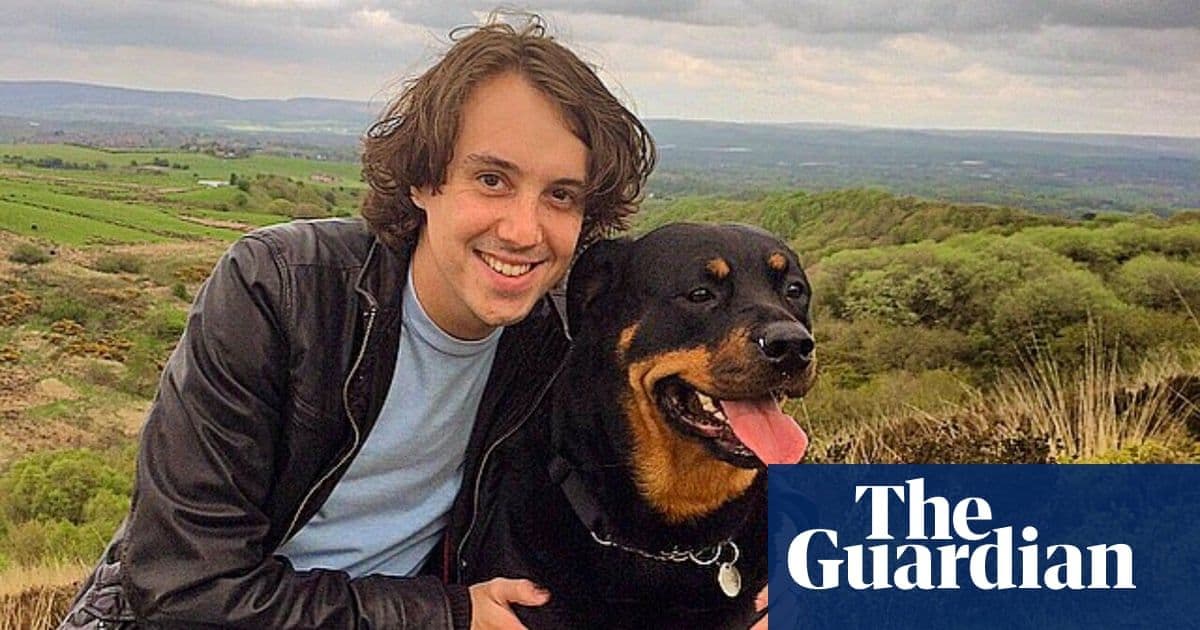
Oliver's Law: The Fight to Regulate Private Cannabis Clinics After a Young Man's Tragic Death
A family is demanding stricter oversight of UK private cannabis clinics after an inquest ruled that a medicinal cannabis prescription contributed to Oliver Robinson's death.

A Family's Grief Becomes a Campaign for Change
When Oliver Robinson walked out of the Priory — a well-known private mental health facility — in 2022, he believed he had run out of options. Years of treatment for depression and addiction had left him searching for something different. For a brief moment, he thought he had found it. But by November 2023, the 34-year-old from Bury had taken his own life, and the medication he believed was helping him had, according to a coroner, likely played a role in his death.
Now his brother, Alexander Robinson, is channelling unimaginable grief into action — pushing for sweeping reforms to the way private medicinal cannabis clinics operate across the United Kingdom.
What the Inquest Found
In January, a formal inquest led by Manchester North coroner Catherine McKenna concluded that Oliver's prescription for medicinal cannabis had "probably contributed to his death." The coroner went further, ruling that the ongoing prescription — first issued in May 2022 by Curaleaf Clinic, one of the UK's leading private cannabis providers — had functioned as a barrier preventing Oliver from receiving the psychiatric and addiction treatment he desperately needed. His family believe this to be the first ruling of its kind in the country.
Dr Pavan Chahl, an expert psychiatrist who gave evidence at the inquest, was unequivocal in his assessment. "Under current British National Formulary guidance, medicinal cannabis should not be prescribed to someone with a history of severe psychiatric disorder," he said. "There is a lack of evidence for efficacy in depression and evidence it can cause or worsen depression. On this evidence, Oliver Robinson should never have been prescribed medicinal cannabis."
The Rise of Private Cannabis Prescribing in the UK
Medicinal cannabis was legalised in the UK in 2018, following a high-profile case involving a young boy from Northern Ireland whose mother had cannabis oil seized at airport customs after bringing it from Canada for his severe epilepsy. The change in law permitted doctors listed on the General Medical Council's specialist register to prescribe cannabis-based medicinal products (CBMPs).
While the NHS limits its prescriptions largely to a small range of licensed products approved by the medicines regulator — targeting conditions such as multiple sclerosis, severe epilepsy, and chemotherapy-related nausea — specialist doctors in both NHS and private settings are legally permitted to prescribe unlicensed cannabis-based medicines where they deem it clinically appropriate.
The private sector has grown at a staggering pace. Freedom of information data from NHS Business Services Authority revealed that 659,293 unlicensed cannabis products were privately prescribed in 2024 alone — more than double the 282,920 issued the previous year. Approximately 80,000 people in the UK currently hold a private cannabis prescription. In contrast, the government reported around 5,000 NHS prescriptions for licensed CBMPs in 2023. According to the Care Quality Commission (CQC), the healthcare regulator overseeing private cannabis clinics, the overwhelming majority of privately prescribed products are unlicensed.
Oliver's Story: A Descent Enabled by a Prescription
Oliver had struggled with his mental health for years. Once a successful property developer in Bury, his life began to unravel following the collapse of his business and the breakdown of a relationship. He received treatment for depression and low mood through both the NHS and the Priory, including two inpatient admissions. During his time at the Priory, clinicians identified recurrent depressive disorder and noted that addictive behaviours — he had been smoking cannabis since the age of 13 — were significantly affecting his mental state.
After leaving the Priory for the second time, Oliver rediscovered cannabis by chance, finding an old supply at home. He noticed it seemed to ease his depressive symptoms and told his brother it allowed him to access his emotions more freely during therapy sessions. Shortly afterwards, he registered with Curaleaf Clinic.
In May 2022, Oliver underwent a video consultation with Dr Urmila Bhoskar, a child and adolescent psychiatrist, submitting a GP summary that was already nine months out of date. Following a review by Curaleaf's multidisciplinary clinical team, it was agreed that "proceeding with a trial of medical cannabis would be appropriate." Prescriptions followed.
What followed was a rapid and devastating deterioration.
Potent Products and a Worsening Crisis
Medicinal cannabis products can be significantly more potent than street cannabis, with THC — the primary psychoactive compound — concentrations reaching up to 27%, compared to an estimated 15–20% typically found in illicit supply. As Oliver's usage continued, his behaviour began to change dramatically.
Alexander started receiving increasingly alarmed calls from his mother that summer. Oliver had become aggressive and volatile, engaging in violent confrontations with her at home. "She was panicked," Alexander recalled. "I've never heard her that scared before." The situation escalated to the point where Oliver threatened to firebomb the family home, and police were called repeatedly. His mother was formally classified as a victim of domestic abuse and ultimately sought a restraining order against her own son. For the final year of Oliver's life, she did not see him.
Evicted from an Airbnb due to his cannabis use, Oliver found himself living in a tent. He had lost his job and was funding his prescription — which had risen to nearly £1,000 per month — through payday loans. When he could not afford the clinic, he turned to street cannabis.
A Prescription Shielded from Scrutiny
Communication with his family fractured badly. Oliver had become fixated on the belief that his prescription was beneficial, dismissing anyone who challenged that view with hostility. "I have 11 months of emails and WhatsApp messages that are not my brother," Alexander said. "They are the angriest and most vitriol-filled messages I have ever read."
Alexander and his father continued trying to maintain contact, absorbing abuse in the hope of keeping a lifeline open. After the firebomb threat, the family wrote to Oliver's Priory therapist, Dr Justin Haslam, to verify whether he truly supported the cannabis use as Oliver claimed. Haslam responded that he was "gravely concerned" and believed Oliver needed more intensive care than the Priory could provide, referring him to NHS psychiatry.
An NHS psychiatrist in Bury subsequently diagnosed Oliver with bipolar disorder, depression, and cannabis dependency, referring him to addiction services and warning that cannabis was accelerating his decline. Oliver rejected the diagnosis entirely and refused to engage with the recommended support.
The Final Weeks
By November 2023, Oliver's condition had deteriorated to a critical level. He began sending his brother videos of himself attempting to self-harm. Warnings of suicidal intent came multiple times that final week. On 24 November, a family friend alerted Alexander that Oliver had told them he intended to end his life.
Something felt different this time. Oliver was not appearing online — unusual for him. At 6pm that evening, Alexander received the call confirming his worst fears. His brother was gone.
'Oliver's Law': What the Family Is Demanding
In response to his brother's death, Alexander Robinson is now spearheading a campaign calling for what he terms "Oliver's Law" — a set of proposed reforms aimed at protecting vulnerable patients from inadequate oversight in the private cannabis prescribing industry.
The campaign's key demands include:
- A ban on prescribing medicinal cannabis to patients with serious mental illness
- Mandatory consultation with NHS mental health teams before prescriptions are issued
- In-person assessments for complex or high-risk cases, rather than relying on video consultations
- Stronger CQC oversight, including routine audits and public disclosure of prescribing data
- Mandatory reporting of serious patient harms
- Clearer GMC sanctions for clinicians found to be prescribing unsafely
"If things do not change, he is not going to be the last," Alexander said. It is a warning rooted in evidence, grief, and the urgent recognition that a fast-growing, loosely regulated industry holds the power to harm the very patients it claims to help.

