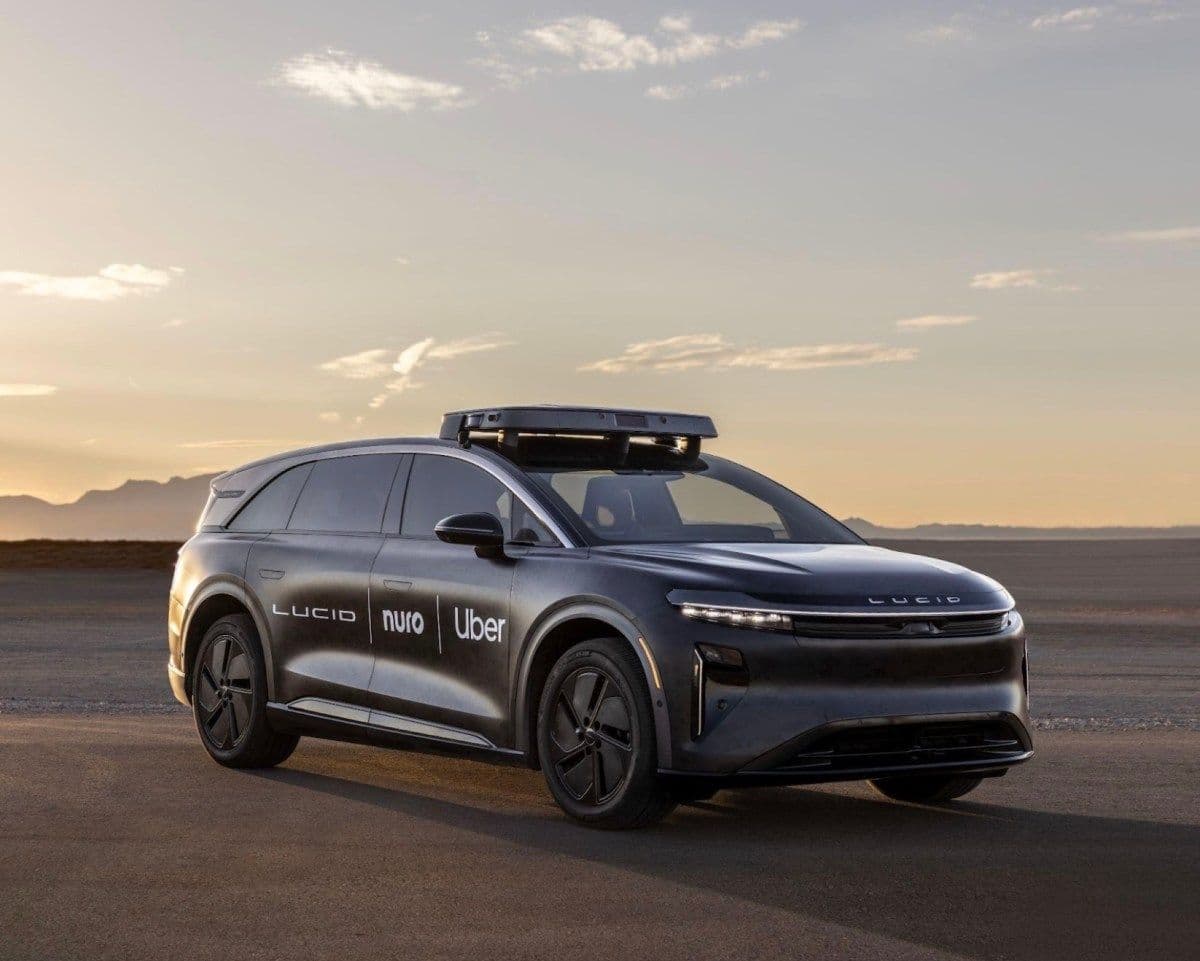
Nuro Secures Driverless Testing Permit for Lucid Gravity SUVs Ahead of Uber Robotaxi Launch
Nuro has obtained a California permit to test Lucid Gravity SUVs without human operators, marking a key step toward Uber's premium robotaxi service.
Nuro Gets Green Light for Driverless Testing in California
Autonomous vehicle startup Nuro has received regulatory approval to conduct driverless testing of Lucid Gravity SUVs on California public roads — a critical milestone on the road to launching Uber's premium robotaxi service. Despite securing the permit, however, Nuro says it has yet to begin actual driverless operations.
The California Department of Motor Vehicles, which oversees autonomous vehicle testing and deployment throughout the state, confirmed to reporters that it has updated Nuro's existing driverless AV permit to cover the Lucid Gravity vehicles. The Silicon Valley-based startup, which counts both Nvidia and Uber among its key backers, is expected to commence driverless testing sometime before the end of the year, though no specific timeline has been disclosed.
A Permit Six Years in the Making — With a New Direction
Nuro has held a driverless testing permit for six years. Previously, that authorization only covered a low-speed autonomous delivery vehicle — a program the company ultimately discontinued when it shifted its business strategy toward licensing its self-driving technology to third-party partners, most notably Uber.
This newly expanded permit now allows Nuro to operate Lucid Gravity vehicles on public roads without a human safety driver present behind the wheel. It represents a significant evolution in the company's regulatory standing and reflects its growing ambitions in the passenger robotaxi market.
Multiple Regulatory Hurdles Still Ahead
While the updated permit is an important step forward, it is far from the last regulatory checkpoint Nuro must clear before Uber's robotaxi service can go live. The company will additionally need to secure a driverless ride-hailing permit from the California Public Utilities Commission, as well as a full deployment permit from the DMV.
In the meantime, Nuro and Uber continue to test Lucid Gravity vehicles in autonomous mode with a human safety operator present in the driver's seat. Recently, testing was expanded to allow Uber employees to summon an autonomous Lucid robotaxi through the Uber app — though a safety operator remains on board during all current rides.
Uber Deepens Its Commitment to Lucid and Nuro
As Nuro advances its testing program, Uber has significantly increased its financial stake in the broader initiative. When the three-party partnership between Uber, Lucid, and Nuro was first announced in July 2025, Uber committed $300 million to Lucid and placed an order for 20,000 robotaxi-ready Gravity SUVs.
That deal has since been substantially upgraded. Uber's investment in Lucid now stands at $500 million, and the vehicle order has grown to a minimum of 35,000 units — comprising at least 10,000 Gravity SUVs and 25,000 electric vehicles built on Lucid's forthcoming mid-size platform. Uber has also made a separate multimillion-dollar investment directly into Nuro.
The Technology Behind the Robotaxi
All of these EVs will be outfitted with Nuro's autonomous driving system, which runs on Nvidia's Drive AGX Thor computing platform. The Lucid Gravity robotaxi, publicly unveiled in January, features an array of high-resolution cameras, solid-state lidar sensors, and radar systems that work in concert to help the self-driving system perceive and navigate real-world environments.
Lucid has already delivered 75 engineering vehicles to Nuro and Uber, with testing and mileage accumulation underway across multiple U.S. cities, according to disclosures made during the company's first-quarter earnings call.
Commercial Robotaxi Operations Targeted for Late 2026
Lucid executives expressed confidence that commercial robotaxi operations remain on track to launch by late 2026. They noted during the earnings call that all development work and certification processes are progressing as anticipated. That said, it remains possible that initial commercial operations could be limited in scope — whether by geographic restrictions or the requirement of onboard safety operators — depending on the pace of regulatory approvals.
The collaboration between Nuro, Uber, and Lucid represents one of the most high-profile efforts to bring autonomous ride-hailing to mainstream consumers, and the coming months of driverless testing will be closely watched by the industry.