No Vaccine, No Warning: What You Need to Know About the Rare Ebola Strain Spreading Now
A rare Ebola strain is fueling a growing outbreak with no vaccine available. Experts are calling it a 'perfect storm' — here's why.

A Growing Crisis With No Easy Answer
Infectious disease experts are sounding the alarm over a rapidly expanding Ebola outbreak that the World Health Organization has officially declared a public health emergency. With more than 600 suspected cases and nearly 140 suspected deaths already recorded, the numbers continue to climb daily — and what makes this situation particularly alarming is the strain responsible for it.
The epicenter of the outbreak is a remote province in northeastern Democratic Republic of Congo — a region long battered by violent conflict and limited infrastructure. Two additional cases have also been confirmed in Uganda's capital city. Perhaps most unsettling of all: health officials believe the outbreak may have been quietly spreading for months before anyone detected it.
"This is an example of a perfect storm," says Dr. Abraar Karan, an infectious disease physician and faculty member at Stanford University.
Where Did This Outbreak Come From?
Ebola outbreaks have historically emerged from either east or west Africa, and the Democratic Republic of Congo has been hit harder than any other nation — this marks its 17th outbreak since 1976. But the exact moment a virus jumps from animals to humans remains difficult to pinpoint.
Scientists believe the most likely route of transmission is through contact with bats — specifically by consuming bat meat or coming into contact with bat droppings, which can occur when workers enter caves or mines. Other animals have also been implicated.
"A number of animals have tested positive for antibodies, including certain types of deer called duiker and non-human primates," explains Dr. Karan, whose research team has been studying Ebola and related viruses in Kenya for several years.
The typical chain of infection begins with a single person contracting the virus from an animal — a process known as spillover — who then passes it on to other humans.
What Does Ebola Actually Look Like?
Forget what Hollywood has shown you. Dr. Nahid Bhadelia, an infectious disease physician who treated more than 500 Ebola patients during the West Africa outbreak a decade ago, says the reality looks very different from the movies.
"After seeing hundreds of Ebola patients, I have yet to see anyone bleeding out of their eyes," says Bhadelia, who also directs the Boston University Center on Emerging Infectious Diseases.
Early Symptoms
In its initial stages, Ebola can be deceptively unremarkable. It often resembles other common illnesses like malaria or typhoid, presenting with fever, nausea, and diarrhea — symptoms that make early diagnosis especially difficult in regions where those diseases are already widespread.
As the Disease Progresses
As the infection advances, the situation becomes far more serious. Patients typically experience severe, often bloody vomiting and diarrhea. The body's own immune response can trigger a dangerous cascade of events, leading to systemic shock and multi-organ failure.
Survival depends heavily on how quickly a patient receives medical attention and the quality of care available. This disparity is starkly illustrated by comparing outcomes: during the West Africa outbreak, mortality rates ranged from 50 to 70% in the field. In contrast, infected patients transported to the United States for advanced medical care saw mortality rates drop below 20%.
What Makes This Strain Especially Concerning?
Not all Ebola strains are created equal. The current outbreak has been caused by the Bundibugyo strain — a far rarer variant than the Zaire strain responsible for the catastrophic 2014–2016 West Africa epidemic.
The Zaire strain carries a fatality rate of up to 90% when left untreated. The Bundibugyo strain, while still deadly, appears to carry a somewhat lower case fatality rate — estimated between 30 and 50% based on previous outbreaks.
"If there's any upside, the data we have on Bundibugyo from past outbreaks suggests a slightly lower case fatality rate — not comfortingly low, but lower than some other strains," says Dr. Daniel Bausch, a visiting professor at the Geneva Graduate Institute.
The Vaccine Problem
Here lies the crux of the challenge: there are currently no licensed vaccines or targeted treatments for the Bundibugyo strain. This stands in sharp contrast to the Zaire strain, for which two vaccines and effective monoclonal antibody therapies now exist.
Despite this gap, some experts urge measured optimism. "We've controlled plenty of Ebola outbreaks in the past without vaccines or specific therapeutics," Bausch notes. "It's only recently that those tools have been available for Zaire at all."
Without such options, the response relies on tried-and-true public health measures: rigorous infection control protocols, supportive patient care including rehydration therapy, and thorough contact tracing — the process of identifying and monitoring everyone who may have been exposed to an infected individual.
How Contagious Is It Really?
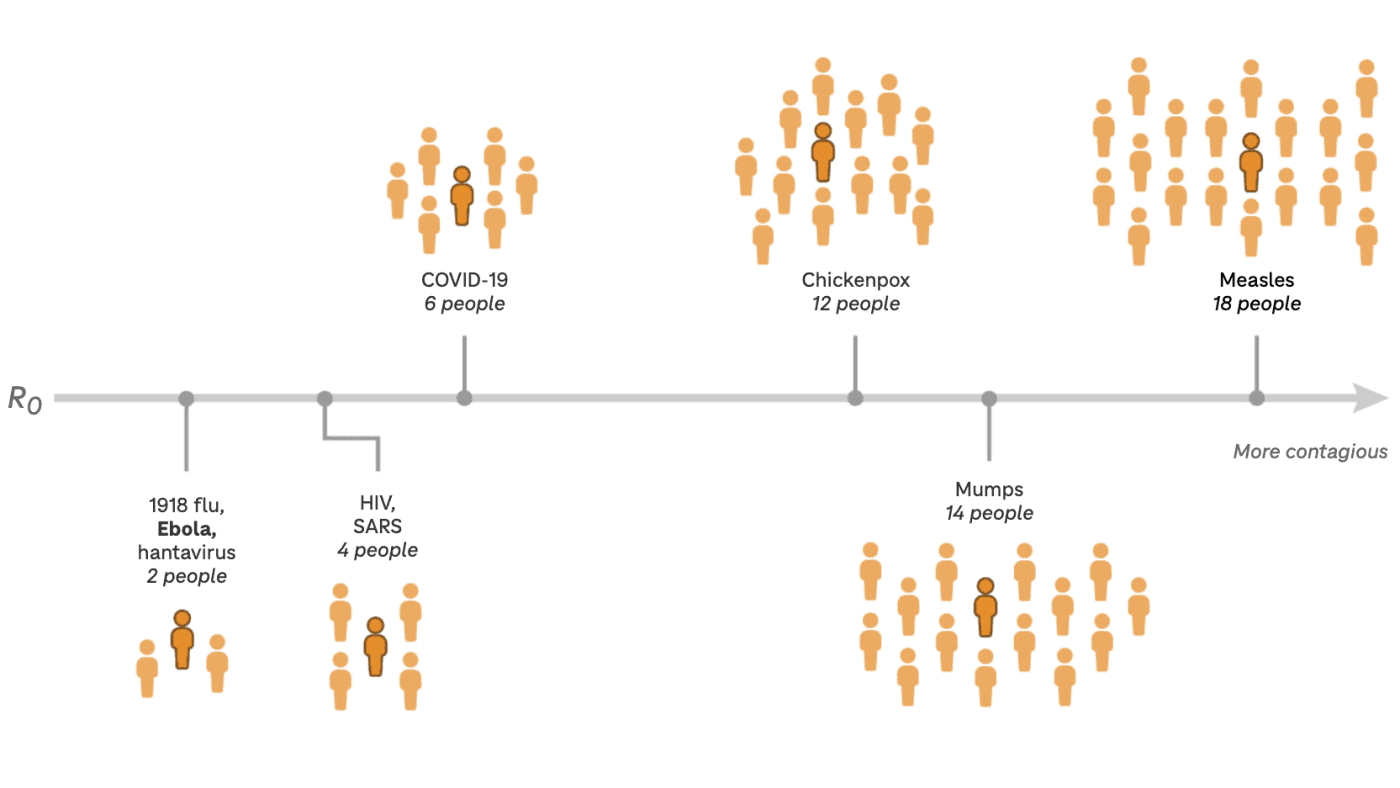
Here is where the news gets somewhat more reassuring. Ebola does not spread through the air, making it significantly less contagious than viruses like COVID-19 or measles.
"On average, one person with Ebola infects about two others," says Bhadelia. "Compare that to measles, where one person can infect around 18. Measles is far more transmissible — though the mortality rate of many Ebola strains is much, much higher."
Ebola spreads through direct contact with an infected person's bodily fluids, including blood, saliva, semen, and diarrhea. Crucially, individuals are not contagious until symptoms appear — and the viral load in bodily fluids increases as the disease progresses, making proper protective equipment essential for healthcare workers and home caregivers alike.
The Bottom Line
The combination of a rare, vaccine-free strain, a conflict-ridden outbreak region, delayed detection, and cases crossing international borders has created conditions that experts are right to take seriously. While the Bundibugyo strain may be slightly less lethal than its Zaire counterpart, the absence of targeted medical tools and the challenging geography make this an outbreak that demands global attention.

