No Lunar Impact: Scientists Confirm Asteroid 2024 YR4 Will Miss the Moon
Astronomers have confirmed that asteroid 2024 YR4 poses no threat to the moon, passing safely more than 20,000km away in 2032.

Earth's Moon Given the All-Clear as Asteroid Threat Is Ruled Out
Scientists have officially confirmed that a large asteroid previously flagged as a potential hazard will not strike the moon — putting to rest concerns that a collision could send dangerous debris into Earth's orbital neighbourhood and disrupt critical satellite infrastructure.
From 'City Killer' to Distant Pass
First detected in December 2024, asteroid 2024 YR4 quickly grabbed the attention of the global scientific community. Early calculations suggested the 100-metre-wide space rock carried a 3.1% probability of striking Earth in 2032 — briefly earning it the title of the most threatening asteroid identified in decades. While follow-up observations eliminated any direct risk to Earth, they introduced a new concern: a 4.3% chance the asteroid was on a collision course with the moon.
A lunar strike, while posing no direct physical danger to people on Earth, raised alarms among experts. The debris field generated by such an impact could potentially interfere with the satellites we rely on daily for GPS navigation, weather forecasting, and global communications.
James Webb Space Telescope Delivers Definitive Answers
With 2024 YR4 rapidly moving away from Earth and growing too faint for most instruments to detect — estimated to be four billion times dimmer than the faintest star visible to the naked eye — scientists had originally anticipated waiting until 2028, when the asteroid would return within observable range, before refining its orbital path.
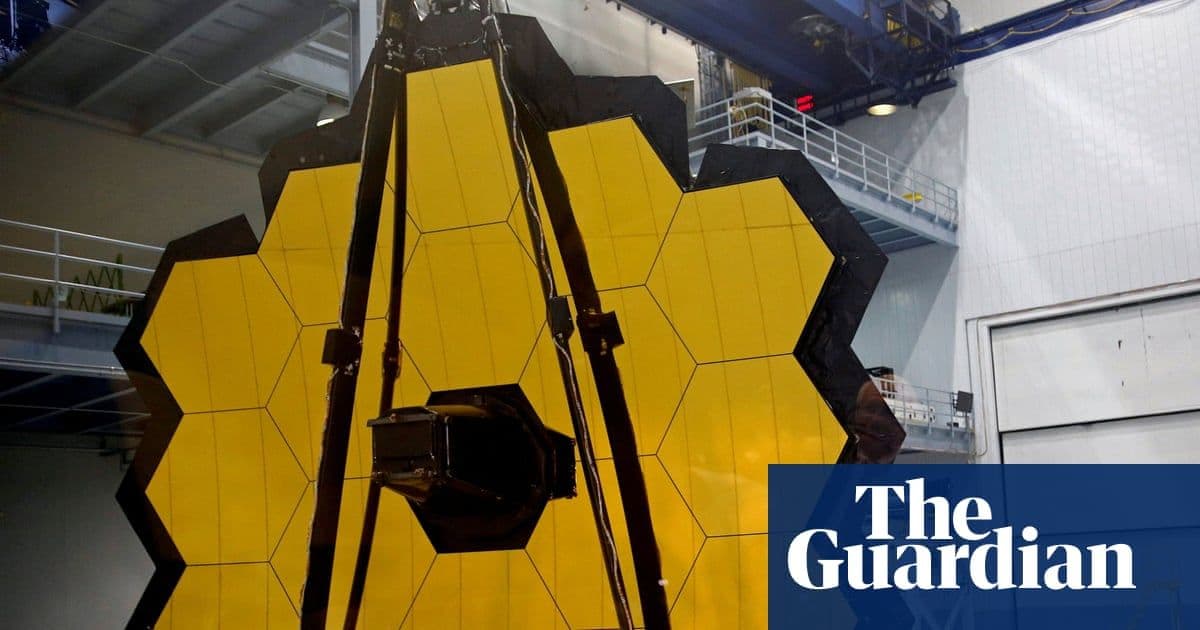
However, an international team of astronomers identified two narrow five-hour windows in February during which the James Webb Space Telescope could successfully detect and track the object. Those observations proved decisive. The data allowed scientists to precisely calculate the asteroid's trajectory, confirming that 2024 YR4 will safely bypass the moon with a clearance of more than 20,000 kilometres (approximately 12,400 miles).
A Scientific Opportunity — But One Best Left Untaken
Not everyone in the scientific community greeted the news with pure relief. Colin Snodgrass, Professor of Planetary Astronomy at the University of Edinburgh, acknowledged that a controlled lunar impact — under different circumstances — would have offered a rare research opportunity.
"It would've been a very interesting science experiment, but probably, given the small risk of debris, it wouldn't be one we'd want to try out," Snodgrass said. "Some of us in the scientific community might be a little disappointed."
A New Era of Asteroid Surveillance
The episode highlights the growing capability of next-generation observatories to monitor near-Earth objects with unprecedented precision. Instruments like the James Webb Space Telescope and the forthcoming Vera Rubin Observatory are dramatically expanding humanity's ability to spot and track potentially hazardous asteroids.
Snodgrass noted that this improved detection power comes with a caveat. "We might get these brief scares slightly more often," he said, "but we also have the technology to track these things much better and will normally be very quick to rule them out."
ESA Reaffirms Commitment to Planetary Defence
The European Space Agency's Planetary Defence team, part of its broader Space Safety programme, responded to the confirmed findings with cautious reassurance. "The moon is safe, 2024 YR4 poses no danger, but the work continues," the agency stated, emphasising that ongoing surveillance of near-Earth objects remains a top priority.
The goal, ESA made clear, is straightforward: ensure that if a genuine threat ever does emerge, the world will not be caught off guard.