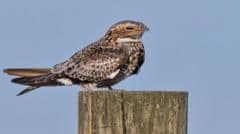
Nightjar Birds Stage Stunning Population Recovery Across Southern England
Conservation efforts in the South Downs National Park have triggered a remarkable doubling of nightjar numbers over just five years, giving hope to wildlife advocates.

Nightjars Make Stunning Comeback in Southern England
One of Britain's most secretive and mysterious birds is quietly reclaiming its place in the landscape. New ecological survey data reveals that nightjar populations within the South Downs National Park have approximately doubled over the past five years — a development conservationists are calling a significant wildlife victory.
Record-Breaking Survey Results
The latest ecological assessment recorded 78 nightjars within the South Downs National Park last year alone. Even more strikingly, surveyors identified 109 nightjar territories across the lowland heaths of east Hampshire — the highest number ever documented in the region. Key locations include Woolmer Forest and the commons of Shortheath, Bramshott, Ludshott, Broxhead, and Kingsley.
A spokesperson for the South Downs National Park Authority (SDNPA) credited the turnaround to dedicated nature recovery programs and improved habitat management, describing the results as nothing short of a remarkable comeback.
Understanding the Nightjar
Nightjars are crepuscular, ground-nesting birds, meaning they become active at twilight and can be spotted hunting insects at dusk and dawn. They are perhaps best recognized by their distinctive rhythmic "churring" call that drifts across heathlands as the sun sets.
Every spring, these birds complete an extraordinary 4,000-mile journey — roughly 6,437 kilometers — from the Democratic Republic of Congo, arriving in the UK between April and August to breed before making the return trip south.
The species carries several unusual nicknames, the most colorful being "the goatsucker." This peculiar name stems from an old European myth suggesting the birds would steal milk directly from goats at night, supposedly blinding the animals and causing their udders to wither. In reality, nightjars were simply drawn close to livestock while pursuing the insects that gathered around them — a far less sinister explanation for their nocturnal proximity to farmyards.
A Species Once in Serious Decline
The nightjar's recovery is all the more significant given its recent history. Listed as an amber species on the Red List for Birds — indicating genuine conservation concern — nightjar populations collapsed by 51% between 1972 and 1992. Intensive agricultural expansion and widespread development claimed vast swathes of the woodland and heathland these birds depend on for ground-nesting.
Today, lowland heaths represent just 1% of the South Downs National Park's total area, making them extraordinarily rare ecosystems. Engagement Ranger Kirsty Murray compared their ecological value to that of tropical rainforests, noting they support some of the UK's rarest species.
Conservation Work Behind the Recovery
The nightjar's resurgence has been driven by a focused effort to protect and expand lowland heath habitats that provide essential nesting grounds. Beyond habitat restoration, community engagement has played a critical role. Over the past decade, SDNPA rangers have worked directly with visitors and local residents, encouraging responsible behavior such as keeping dogs on leads, cleaning up after pets, and staying on marked pathways to avoid disturbing nesting birds and other vulnerable wildlife.
The positive trend extends beyond nightjars. The SDNPA spokesperson noted that woodlarks and Dartford warblers are also showing encouraging population increases — suggesting that broader heathland conservation strategies are delivering measurable results across multiple species.
A Hopeful Sign for Biodiversity
Murray described the survey findings as deeply inspiring, emphasizing that they demonstrate what coordinated conservation efforts between communities, rangers, and partner organizations can achieve.
"It's wonderful to hear the nightjars churring away as dusk falls," she said, expressing optimism about continuing the conservation momentum in partnership with local communities.
The South Downs National Park spans Hampshire, West Sussex, and East Sussex, covering chalk downlands, ancient woodlands, and historic villages. Its ongoing biodiversity recovery story is increasingly being watched as a model for nature-based restoration across the UK.