NHS Faces Major Disruption as Resident Doctors Launch 15th Strike Over Pay
Resident doctors in England have walked out for six days in their ongoing pay dispute, threatening to cancel thousands of NHS appointments across the country.

Resident Doctors Walk Out in Ongoing Pay Battle
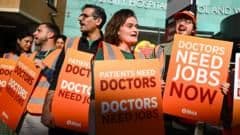
England's NHS is bracing for widespread disruption as resident doctors — formerly referred to as junior doctors — have launched their 15th strike in a prolonged pay dispute. The walkout began at 07:00 BST on Tuesday morning and is scheduled to last six days, with picket lines forming outside hospitals across the country.
Given that resident doctors make up close to half of the entire NHS medical workforce, the impact on health services is expected to be substantial. Senior doctors are being redeployed to cover emergency and urgent care settings, but the knock-on effect means a significant number of pre-planned procedures and outpatient appointments are being cancelled.
What Patients Need to Know
The NHS is urging the public to continue seeking care when genuinely needed. Patients experiencing emergencies or urgent health concerns should contact 999 or 111 as they normally would. Anyone with a confirmed appointment or treatment booking should attend as planned unless they receive direct notification of a cancellation. GP services are largely continuing without disruption.
Health Secretary Wes Streeting appeared on BBC Breakfast to address the situation, stating that approximately 95% of scheduled appointments remain in place. He offered an apology to those facing cancellations, saying they "deserve better," while also asserting that the government had engaged with the British Medical Association (BMA) "in good faith" throughout negotiations.
How Talks Collapsed
The latest round of industrial action follows the collapse of negotiations between the government and the BMA in March. The government had put forward a package of measures aimed at resolving the dispute, which included reimbursement of out-of-pocket professional costs such as exam fees, accelerated pay progression across the five salary bands covering resident doctor training, and the creation of additional specialty training positions.
However, the BMA claimed the government made last-minute changes that reduced the financial commitment in the offer, making it one they could not present to their members. Dr Emma Runswick, deputy chair of the BMA Council, stated that the union had been close to finalising an agreement before the government "moved the goalposts" at a critical stage.
The Department of Health and Social Care maintained that the offer made to resident doctors was "generous" and expressed disappointment that the BMA chose to proceed with strike action regardless.
The Pay Dispute Explained
At the heart of the conflict is a disagreement over pay restoration. Despite receiving cumulative pay increases totalling 33% over the past four years — including a recent 3.5% rise — the BMA contends that doctors are still earning roughly 20% less in real terms than they were in 2008 when inflation is factored in. The union uses the Retail Price Index (RPI) as its measure of inflation, arguing this is justified because the government applies RPI to student loan interest.
The government has disputed this calculation, noting that RPI typically records higher inflation than alternative measures. Currently, resident doctors begin their careers on a starting salary of just over £40,000, rising to £76,500 in basic pay for the most senior grades, with additional earnings available for unsocial hours and overtime.
Streeting has also highlighted that resident doctors have received the highest pay increases of any group within the public sector workforce, and the government has stated it will not reopen pay negotiations.
The government estimates the ongoing strikes — which began in March 2023 — have cost the NHS around £50 million per day, accumulating to approximately £3 billion in total losses, though a detailed breakdown of these figures has not been publicly released.
Following the BMA's announcement of further strike action, the government withdrew its offer of 1,000 new specialty training posts that had been promised for this summer — posts that had attracted enormous demand, with 30,000 applicants competing for 10,000 positions last year.
Real Lives Affected
Behind the statistics are real patients facing genuine uncertainty. Adrian Emery, a 55-year-old from Nottinghamshire, was due to have a follow-up telephone consultation on Tuesday after suffering several mini strokes — known as TIAs — earlier this year. The appointment, which was already rescheduled once from a previous cancellation, has now been called off again with no new date confirmed.
"I'm very worried, because my grandfather actually had a very serious stroke. I hope I don't have a full stroke before I am seen," Emery told BBC News.
BMA resident doctor committee chair Dr Jack Fletcher acknowledged the impact on patients, expressing genuine regret over delayed care. However, he argued that appointment backlogs and specialist shortages cause similar disruptions even without industrial action, and called on the government to return to the negotiating table.
Public Opinion and Internal Tensions
Latest polling by YouGov indicates that public support for the strikes is limited, with 53% of respondents opposing the action and 38% expressing support.
Adding another layer of complexity, the BMA's own workforce is simultaneously involved in industrial action. GMB union members — representing BMA administrative staff, press officers, and negotiators — are midway through a two-day strike over their own pay grievance. These workers have been offered a 2.75% pay increase and argue their real-terms pay has declined by 17% since 2012.

