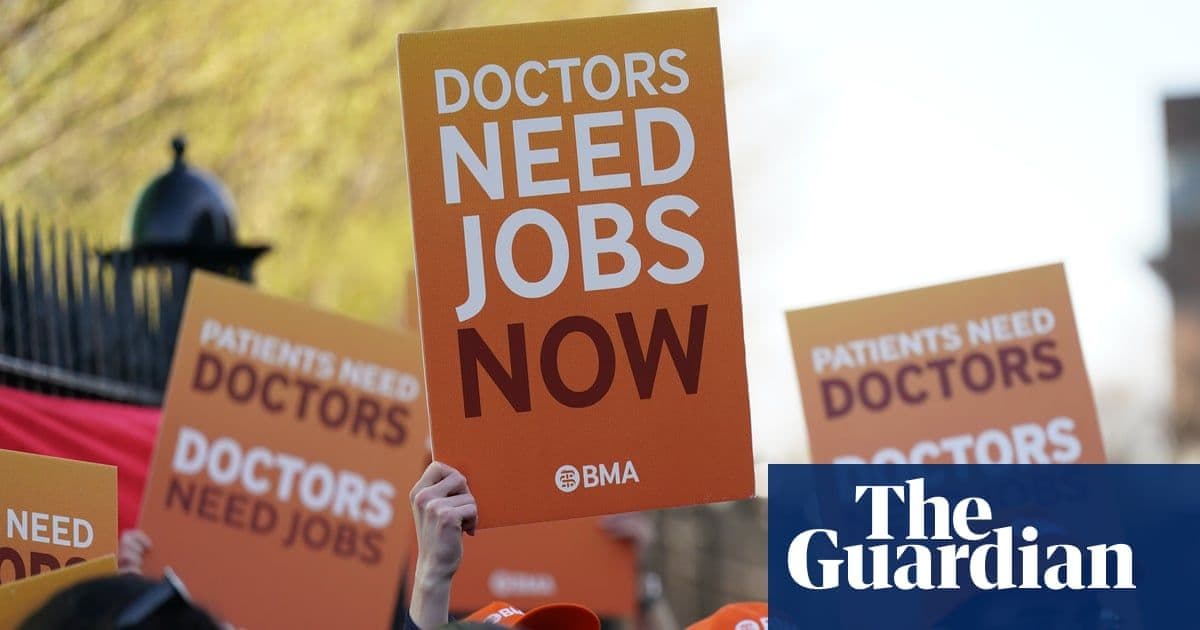
NHS England Chief Accuses Resident Doctors of Timing Strike to Maximize Easter Disruption
Sir Jim Mackey claims the six-day walkout was deliberately scheduled during Easter holidays to stretch hospital staffing to its limits.

NHS Chief Slams 'Deliberately Disruptive' Easter Strike by Resident Doctors
The head of NHS England has launched a sharp criticism of resident doctors currently engaged in a six-day strike, accusing the British Medical Association (BMA) of strategically scheduling the walkout to cause maximum disruption during the Easter holiday period.
Sir Jim Mackey, Chief Executive of NHS England, stated that hospitals across the country have faced serious difficulties filling staff rotas, largely because so many healthcare workers were already away for the Easter break when the industrial action began.
Strike Enters Second Day Amid Growing Pressure on Hospitals
Thousands of resident doctors — previously referred to as junior doctors — entered the second day of their six-day walkout on Wednesday. This marks the longest single period of industrial action in what has become a prolonged and bitter pay dispute between the BMA and the UK government. It is also the union's 15th strike since March 2023.
In a letter addressed to NHS leadership on Monday evening, Mackey warned that the ongoing strike threatened to reverse hard-won gains the health service had recently made in reducing patient waiting times and rebuilding public confidence.
"I know today has been tough for staff picking up the strain across the country — and how disruptive and challenging it's been for many hospitals to manage it and fill their rotas after the Easter weekend," Mackey wrote. "We cannot forget this action has been deliberately timed to cause havoc."
Easter Holidays Compound Staffing Challenges
With most schools in England still closed for the Easter break, a significant portion of hospital staff had already taken leave before the strike commenced. This compounded the usual difficulties of maintaining adequate coverage during walkouts, making it harder than ever for trusts to ensure safe staffing levels.
Despite these challenges, Mackey acknowledged that hospitals had performed remarkably well under the circumstances, working hard to keep planned care on track. NHS England aims to ensure that at least 95% of scheduled appointments and procedures continue during periods of industrial action.
"There's a long way to go, but it looks like we're in as good a place as we could hope on day one," Mackey noted, expressing deep gratitude to all staff who stepped up to maintain services throughout the disruption.
BMA Demands Full Pay Restoration Amid Collapsed Negotiations
The BMA's resident doctors committee formally announced the strike on 25 March, citing what it described as a sudden and unacceptable change in the government's negotiating position. The union is calling for a 26% pay increase over the coming years, framing the demand as essential "full pay restoration" to compensate for the significant erosion of doctors' real-terms earnings since 2008–09.
At the heart of the dispute is an allegation that the Department of Health and Social Care (DHSC) backed away from a previously agreed framework that would have delivered meaningful pay rises through enhanced "progression pay" — a mechanism tied to doctors advancing through pay bands more rapidly.
The BMA's resident doctors committee walked away from negotiations after the DHSC indicated that the additional funding — reported to be in the region of £700 million — would be distributed over three years rather than being made available sooner, as the union had anticipated and expected.
Peace Talks Break Down at Final Hurdle
Dr Jack Fletcher, Chair of the BMA's resident doctors committee, described the collapse of negotiations as deeply frustrating, noting that discussions had been progressing positively until the final stages.
"Peace talks had been making good progress right up until the point, in the last two weeks, when the government began to shift the goalposts," Dr Fletcher said at the time of announcing the strike on 25 March.
With both sides appearing far apart on key terms, and the strike now well underway, the path to resolution remains uncertain — leaving patients, hospital staff, and health service leaders to manage the mounting pressure in the days ahead.