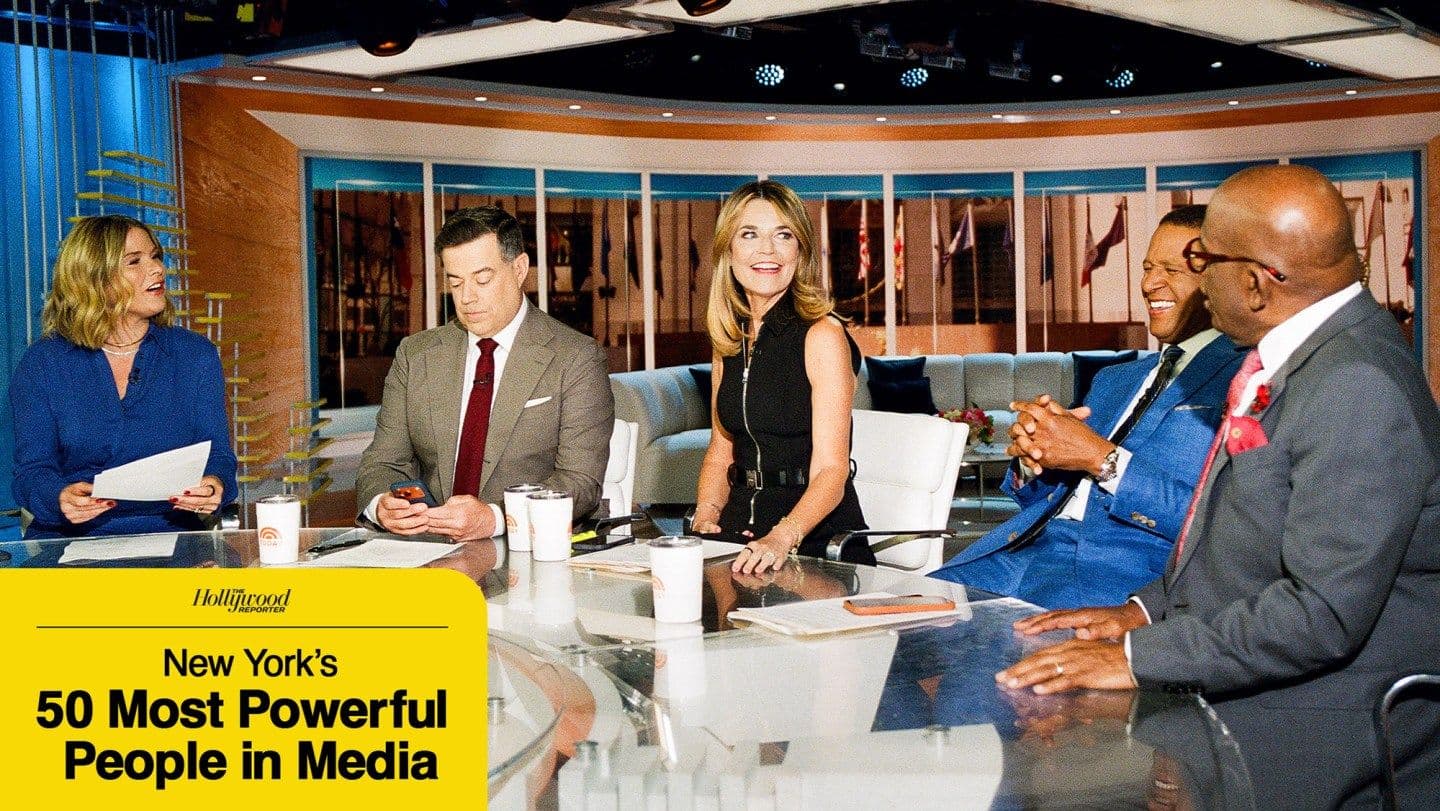
New York's 50 Most Powerful Media Figures Shaping the Industry in 2026
From top editors to broadcast anchors, New York's most influential media players reveal what power truly means in today's rapidly shifting landscape.

New York's Most Powerful Media Players Define Power in a Changing Industry
The most influential executives, editors, journalists, anchors, and polarizing personalities across New York media have weighed in on everything from their dream interviews to what they love most about the city — and perhaps most importantly, how they define power in an industry that refuses to stand still.
Life Imitates Art — A Little Too Closely
For casual moviegoers, The Devil Wears Prada 2 is a fun trip down memory lane. Anne Hathaway and the returning cast strut through the film in designer outfits while dodging Meryl Streep's razor-sharp quips — her tongue-in-cheek portrayal of Anna Wintour firmly intact. For working journalists, though, the laughs come with a familiar sting.
Mass layoffs. Uneasy alliances with social media giants. Entire media empires handed over to disengaged billionaires. Being squeezed into economy class on transatlantic flights. These aren't just clever plot points designed to reunite a beloved cast — they are the lived realities of working in media in 2026.
The old models are crumbling, and legacy companies must adapt quickly if they hope to survive, let alone flourish. At the same time, the shifting landscape is opening doors for fresh platforms, new voices, and unexpected breakout stars. The Fourth Estate still commands enormous influence — it's simply more fragmented than at any previous point in history. And according to many industry insiders, that fragmentation isn't entirely a bad thing.
"New paradigms take time to reveal themselves," says Jon Kelly, co-founder and editor-in-chief of Puck. "The media industry has traditionally rewarded safety: playing by the rules, not screwing up, and traditional ladder-climbing."
The Forces Reshaping Modern Media
Make no mistake — safety is no longer a given for anyone in this business. Broadcast and cable newsrooms are operating under the long shadow cast by Brendan Carr, the Trump-aligned FCC chair who seems to have a new target in his sights on a near-daily basis. Meanwhile, Silicon Valley — which once handed digital publishers a reliable roadmap built on search engine optimization and Facebook's algorithm — is now being upended by artificial intelligence, fundamentally changing how audiences discover and consume news.
And the competition for eyeballs has never been more eclectic. Appearing on Amy Poehler's podcast or sharing an awkward plate of chicken tenders with Amelia Dimoldenberg carries just as much cultural weight these days as landing the cover of a major magazine.
New York Remains the Undisputed Capital of Media Power
Despite the sweeping decentralization reshaping the industry, The Hollywood Reporter's survey of media's longtime nerve center confirms that New York City holds its position as the unrivaled hub of journalistic influence — and it's home to more high-profile media personalities than ever before.
When asked to define what power in journalism actually looks like today, the industry's heaviest hitters gave a wide range of answers. Audience connection, consumer trust, and editorial independence were among the most frequently cited qualities. Others offered more layered perspectives.
A.G. Sulzberger, publisher of The New York Times and chair of the New York Times Company, argues that real power still belongs to the reporters in the field. "The internet is overflowing with aggregators and commentators, but there are fewer people doing actual original reporting than ever before," Sulzberger explains. "It's easier to offer a take than to follow the facts or dig for new ones. But reporting is the greatest contribution news organizations make to the public and the essential ingredient that sustains the rest of the media ecosystem."
Humor as a Lens on a Serious Industry
Not everyone took the philosophical route. Given that comedy has become an increasingly prominent force in media, several respondents opted for wit over wisdom — delivering answers that, much like the Prada sequel itself, manage to be both hilarious and deeply unsettling.
Tonight Show host Jimmy Fallon offered perhaps the most cutting definition of modern media power: it's simply "how many times a day the president tweets about you."
As irreverent as that sounds, there's more than a grain of truth in it — which is precisely what makes it land.
Meet the Power Players: A Spotlight on Dan Abrams
All of these perspectives capture something real about the current state of journalism, which is why this list takes a close look at the individuals who are actively shaping — and in some cases, reinventing — the industry from within.
Dan Abrams — Legal Media Entrepreneur
Thirty years after first making his name covering the O.J. Simpson trial for Court TV, legal analyst and media entrepreneur Dan Abrams has come full circle — purchasing Court TV itself and folding it into his expanding Law&Crime network earlier this year in February.
One of the most versatile and commercially savvy operators in news media today, Abrams wears many hats simultaneously. He hosts and executive produces On Patrol: Live, the law enforcement-focused franchise airing on Reelz, runs the influential media criticism site Mediaite, and delivers a daily program on his dedicated SiriusXM channel.
Interview he wants to book right now: Former FBI Director Chris Wray.
With two free hours in New York City, he'd: Head straight to the Bronx Zoo with his five-year-old daughter.
From legacy print empires adapting to a digital-first reality to scrappy independent outlets punching well above their weight, New York's media landscape in 2026 is as chaotic, competitive, and captivating as ever. Even when it makes you fly coach.

