New York City and Los Angeles Join Forces to Accelerate Electric Vehicle Adoption
America's largest city and most populous county are forming a powerful bicoastal alliance to push the electric vehicle agenda forward despite growing industry headwinds.

America's Two Biggest Urban Giants Are Betting Big on Electric Vehicles
In a bold move that signals serious commitment to fleet electrification, New York City and Los Angeles County have announced a formal partnership aimed at advancing electric vehicle adoption across their combined government operations. Officials are calling it a "bicoastal bridge" — a strategic alliance designed to leverage their enormous collective purchasing power and send a clear message to automakers: the demand for electric vehicles is not going away.
Ambitious Goals, Significant Gaps
Los Angeles County, despite being one of the most car-dependent regions in the United States, has set an aggressive target of achieving 100 percent fleet electrification by 2045. That goal would require replacing all 20,000 vehicles currently in operation. To date, however, the county has only managed to deploy around 600 fully electric vehicles and approximately 350 plug-in hybrids — leaving officials with an enormous amount of ground to cover.
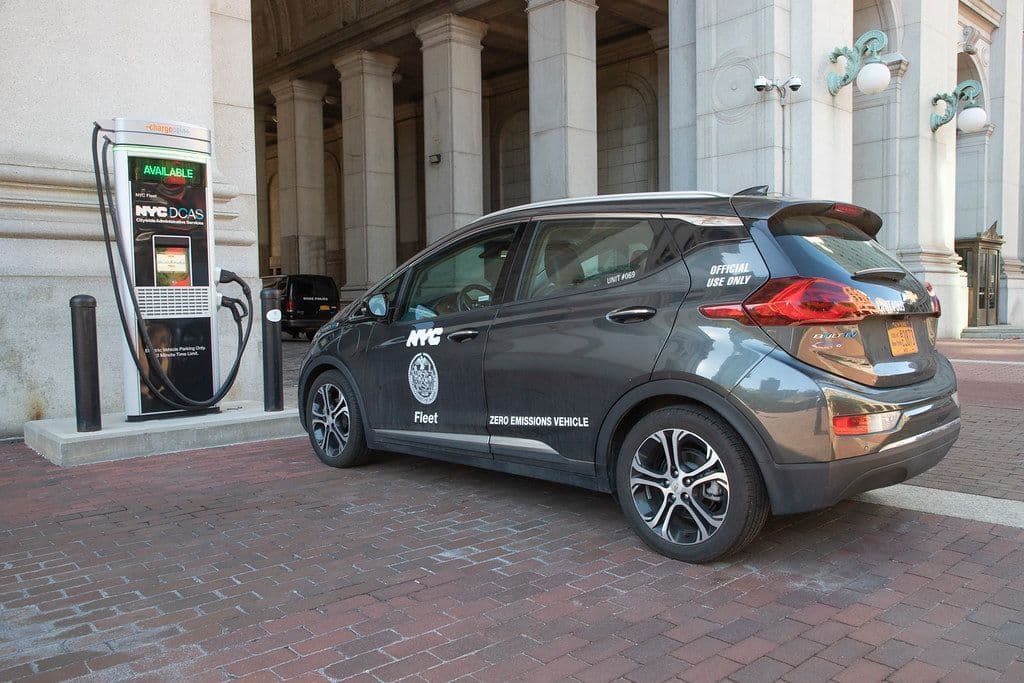
New York City faces its own set of challenges. While the city currently operates roughly 2,500 EV charging ports — the largest network in the state — officials acknowledge that significantly more infrastructure will be needed before electric vehicles can realistically scale across all city departments. Reliable backup solutions for power outages also remain a pressing concern.
Vehicles That Simply Don't Exist Yet
One of the more surprising hurdles facing both governments is a manufacturing gap. American automakers currently do not produce electric versions of several specialty vehicles that cities depend on. These include electric passenger vans, fire department pumper trucks built to city specifications, and — particularly relevant for New York — electric snowplows. Until manufacturers step up to fill these gaps, full fleet electrification will remain out of reach regardless of political will or budget.
Navigating a Hostile Federal Climate
The timing of this partnership comes amid significant uncertainty at the federal level. The current administration has scaled back support for electric vehicles, and several major automakers have quietly walked back their previously ambitious electrification timelines. These developments have created what New York City's Chief Fleet Officer Keith Kerman describes plainly as "headwinds for electrification in the United States right now."
Kerman, who oversees vehicle procurement across New York City's numerous agencies, expressed little ambiguity about where he stands. "I regret every electric and hybrid vehicle we haven't bought yet," he said. "It would have shielded us from the doubling of fuel costs we're now enduring." Data gathered through a partnership with the US Department of Transportation indicates that transitioning to battery-electric vehicles has already improved New York City's overall vehicle energy economy by 6 percent.
Sending a Market Signal to Manufacturers
At its core, the bicoastal partnership is a strategic market signal. Quintin Haynes, Chief Deputy Director of the Los Angeles County Internal Services Department, put it succinctly: the collaboration is "really about having the market understand where we're going so they can actually supply us."
Industry consultant Mike Finnern, Senior Vice President and Zero-Emission Fleet Lead at WSP, agrees that guaranteed large-scale future orders from government fleet managers provide manufacturers with the financial stability they need to continue investing in EV development. "Manufacturers would really like to know what the future will be and what are the rules," Finnern noted. Firm commitments, he says, "will help them be stable for a while."
Finnern also points out that government fleets are uniquely well-suited for electric vehicles. Unlike private consumers who may worry about range anxiety or unpredictable usage patterns, city governments operate vehicles on known routes, can precisely manage charging schedules, and have determined that current EV ranges of 250 to 400 miles per charge comfortably meet their operational needs. Cost savings on fuel and maintenance provide an additional financial incentive.
The fact that private-sector giants like Amazon continue expanding their own electric fleets is further validation. As Finnern puts it, "they wouldn't do it if it didn't pencil out."
Winning Over the Workforce
Beyond the technical and logistical challenges, both cities have learned that human factors play an equally critical role in successful EV deployment. Maintenance crews require retraining to service electric vehicles, and operators need consistent reminders to keep vehicles plugged in. More subtly, workers can be resistant to abrupt changes imposed from above.
Privacy concerns have also emerged as a real issue. Many of New York City's newer electric vehicles come equipped with intelligent speed assistance technology, which city data suggests reduces speeding and may lower crash severity. However, employees have raised concerns about workplace surveillance through vehicle data collection. The matter was formally addressed in March, when the city workers' union reached an agreement establishing guidelines for how vehicle data could be used in disciplinary proceedings.
Ultimately, enthusiasm within the workforce can be the deciding factor between a successful EV rollout and a struggling one. "We've seen some deployments be really successful and some, not so much," Finnern observed. "They have the exact same problems, but some were able to overcome them because their people were excited about it and trained."
From Skeptic to Believer
Haynes himself was once a doubter. Having previously worked alongside Kerman in New York before relocating to Los Angeles, he credits a test drive in a Tesla — arranged by Kerman — with completely changing his perspective. The experience was, above all else, enjoyable.
Kerman has seen this reaction play out time and again. "No one goes into these electric cars, walks out and says, 'I hate this car,'" he said. "They all say, 'I love the car.'" That enthusiasm, both officials believe, is one of the most powerful tools available as they push forward on their shared electrification mission.
A Blueprint for Other Cities
Both New York and Los Angeles acknowledge they are still in the learning phase and that the partnership will serve as a platform for developing and sharing best practices. The ultimate hope is that their collaboration will serve as a replicable model — one that other cities across the country can eventually adopt as the push toward cleaner, more sustainable urban transportation continues to gain momentum.