Never Too Old for the Big Top: Why Older Adults Are Embracing Circus Skills
From trapeze to hula hoops, adults over 50 are discovering circus arts — and the physical, mental, and social benefits are nothing short of remarkable.

The Unexpected Fitness Trend Winning Over the Over-50s
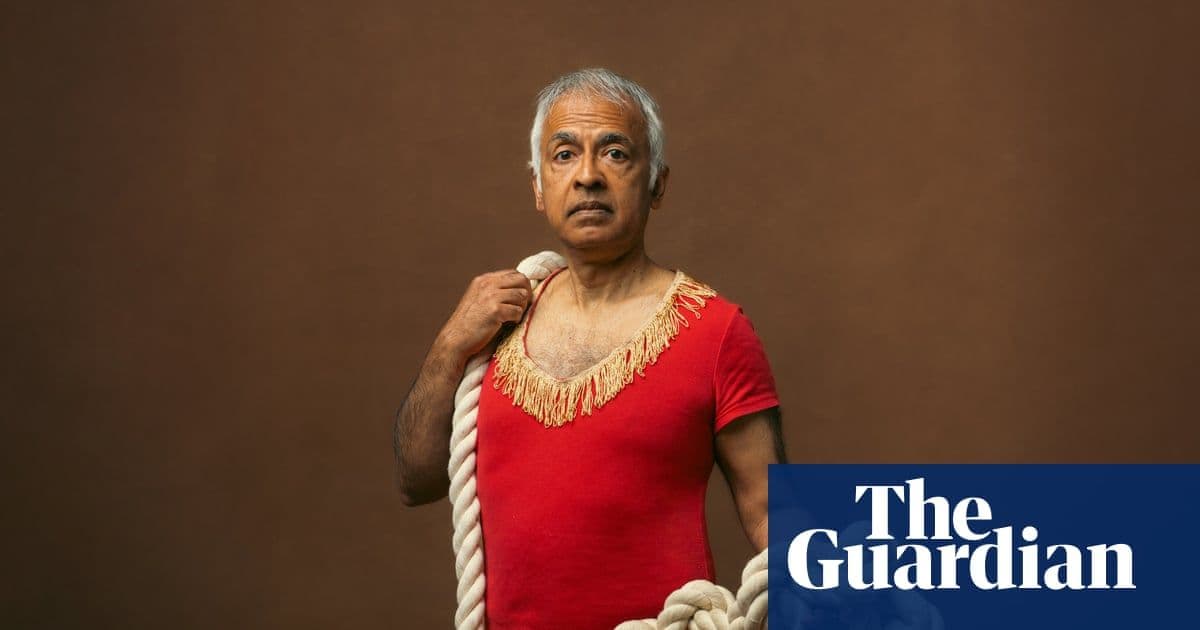
When Rumman Talukder turned 60, he made a deliberate decision to step outside the boundaries of what society typically expects of people his age. Every Sunday, the IT consultant makes the drive from his home in Stanmore to a circus school in Ware, Hertfordshire, where he practises a breathtaking aerial move known as the Mermaid — hanging from a trapeze by one arm, back arched, legs coiled around the rope.
"My wife thinks I'm mad," he admits with a smile. "But in the run-up to turning 60, I decided I wanted to challenge myself — to pursue things not normally associated with someone my age."
Talukder describes the feeling as nothing short of being "indomitable." And he is far from alone.
A Growing Movement Across the UK
Across Britain, a quiet but compelling trend is taking shape: older adults are signing up for circus skills classes — and discovering that juggling, trapeze work, and hula hooping are far more than just novelty entertainment.
In Hertfordshire, Generation Circus has been running a pilot programme for older participants for the past year and now holds weekly sessions. Its oldest member is approaching 97 years old. In London, the National Centre for Circus Arts in Hoxton has recently launched dedicated classes for older people and is planning a six-week aerial skills course later in the year. On the south coast, Sweet Circus in Eastbourne has introduced monthly sessions. All three organisations are actively seeking funding to grow their offerings.
Emma Taylor, the founder of Generation Circus, says the impact on participants goes well beyond physical fitness.
"A lot of people sign up simply because it sounds like an enjoyable way to keep active," she explains. "But circus immediately opens up an entirely new world. Before long, they're buying their own hula hoops and rigging up equipment in their back gardens."
The Science Behind the Skills
While large-scale research into circus arts specifically remains limited, early studies are encouraging. Small-scale research has found that older adults who take up juggling and poi show measurable improvements in balance, with some participants also reporting sharper attention and faster cognitive processing. Brain-imaging research has gone even further, suggesting that learning to juggle can actually alter the structure of the brain itself.
For Talukder, however, the appeal has nothing to do with neuroscience.
"I see people in their 70s and 80s doing things I never imagined, and I realise there is no age at which you should feel prevented from trying something entirely new," he says.
More Than Movement: The Social Lifeline
The social dimension of circus schools is proving just as vital as the physical benefits — particularly at a time when Age UK estimates that around one in 14 people aged 65 and over in the UK experience chronic loneliness.
Taylor has observed a striking transformation in her participants beyond the physical. "They begin to carry themselves differently. They seem brighter, more vibrant," she says. "They go home and look up new tricks on YouTube. They go to circus shows together. They talk about what they want to learn next. It all stems from training together in a real circus school environment, week after week."
'A Shot of Life in the Arm'
For Carol Masson, 70, circus school has been nothing short of life-saving — and she says so without hesitation. The retired housekeeper was devastated by the loss of her daughter four years ago, and the grief pushed her to a very dark place.
"I would stay in bed and sometimes even think about suicide," she says candidly.
Today, Sundays are the highlight of her week. "After every class I feel like I've had a shot of life in the arm. There's so much fun and joy. Everything else just disappears."
Even a hip replacement in February has not dampened her enthusiasm. She returned to class the following month, focusing on juggling and hula hoops while rebuilding her strength. "Generation Circus is mental and physical therapy in abundance," she says. "I just wish I could do it every day."
Rewriting the Rules of Disability
Claire Howard, 54, uses a wheelchair and has experienced 121 transient ischaemic attacks — commonly known as mini-strokes. The idea that she might one day teach circus skills would once have seemed laughable to her.
"The first session, I looked at the trapeze and just wanted to turn around and leave," she recalls.
She stayed. And a year later, she has developed such impressive wheelchair-adapted hula hoop techniques that she now instructs able-bodied members of the class.
"I've gone from having no purpose in life to rediscovering my inner child," she says. "As a wheelchair user, you're constantly reminded of what you can't do. Here, I have skills that many able-bodied people simply don't have. That means everything."
Reconnecting With Joy
Corinna Hartwig found her way to circus after years of personal loss — the death of her mother when she was 12, followed by the passing of her father four years ago. Therapists had encouraged her to reconnect with her inner child, but she struggled to find a meaningful way to do so.
"I didn't know how until I started going to circus," she says. "Now, once a week, I can be playful, happy and creative again."
Diane Bernier, recreational programme manager at the National Centre for Circus Arts, believes this sense of possibility is at the heart of what makes circus so powerful for older adults.
"People realise their life doesn't have to follow a single predetermined path simply because of their age," she says. "They discover they can still learn entirely new things — and that is an extraordinarily powerful revelation."
Better Than Being Young?
Back in Ware, Sarah Hodson, 63, still finds it amusing that she now spends her weekends training at a circus school — alongside her 96-year-old mother, Jane.
"Never in a million years did I think I'd end up here," she laughs. "People our age are often told they should be doing water aerobics or chair yoga. Then you look around the room and see someone older than you hanging upside down from a trapeze, with someone even older swinging from their arms."
But perhaps Hodson puts it best when she reflects on what separates this joy from anything she experienced in her youth.
"In some ways, it's better than being young," she says. "Because we've rediscovered that sense of joy, fearlessness and freedom — without the self-consciousness that comes with youth."