Neighborhood Rallies to Rescue a Runaway Sulcata Tortoise — and Exposes a Growing Pet Crisis
When a giant sulcata tortoise named Rex escaped into a Phoenix suburb, neighbors banded together. His story reveals the little-known challenges of owning these massive reptiles.

A Dinosaur-Like Visitor Disrupts a Quiet Phoenix Evening
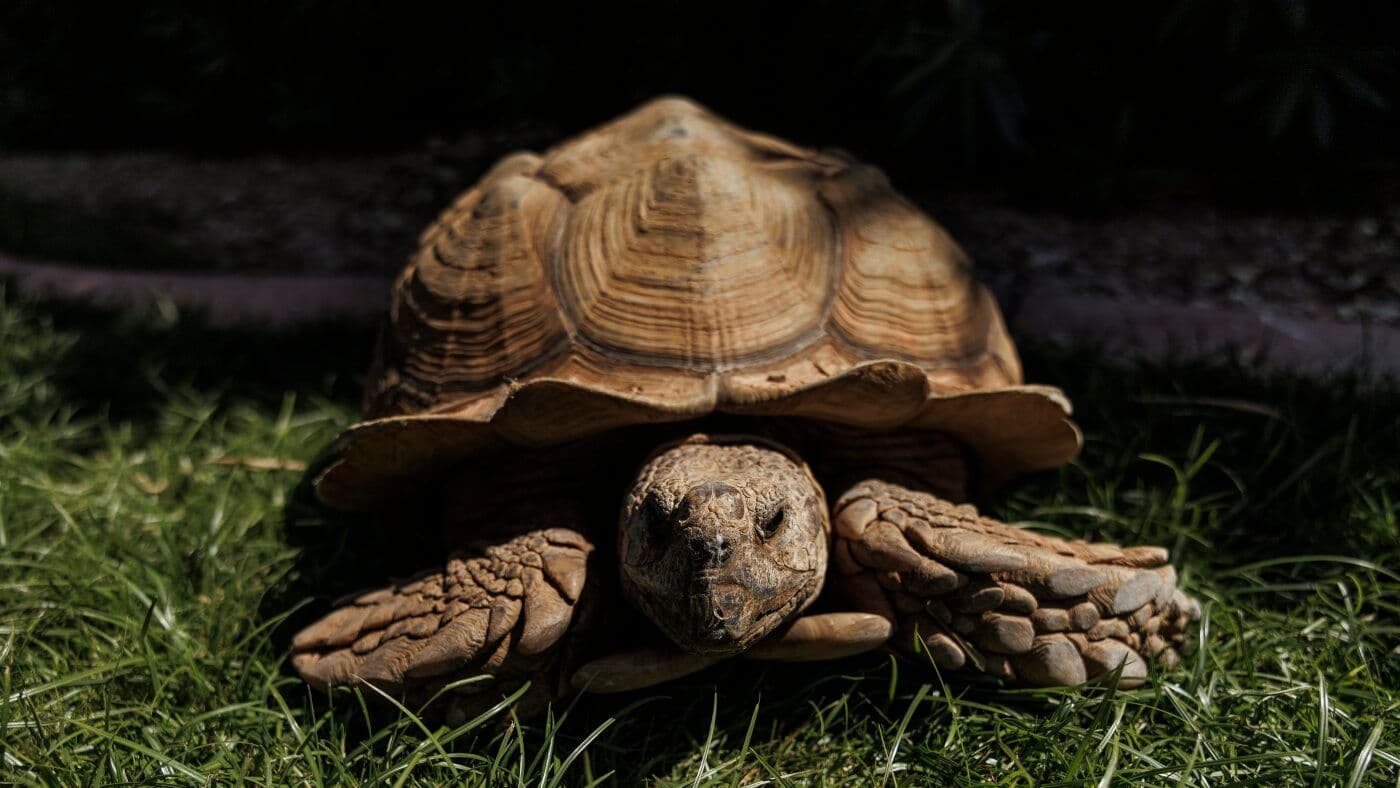
It started with a slow, lumbering silhouette making its way down a suburban Scottsdale sidewalk. Neighbors stopped in their tracks. A cluster of bewildered residents gathered, phones in hand, completely unsure of what to do next. The visitor in question was Rex — a massive sulcata tortoise who had apparently decided that Tuesday evening was the perfect time to explore the neighborhood on his own terms.
His name suited him perfectly. With his prehistoric build and deliberate, unhurried gait, Rex looked every bit the dinosaur descendant. But while the scene had all the charm of a quirky neighborhood moment, it also quietly illuminated a much larger and more pressing issue: the widespread challenges that come with owning a sulcata tortoise.
Cute as Hatchlings, Overwhelming as Adults
Sulcata tortoises — also known as African spurred tortoises — are frequently purchased on impulse. When they hatch, they are no bigger than a golf ball, and their undeniable charm makes them irresistible to buyers at reptile expos and pet shows.
"They're so damn cute, you can't help but say, 'Oh, I want to take one or two of these home for my kids,'" said Dan Marchand, founder of the Phoenix Herpetological Sanctuary. "But it doesn't take long before it's taken up your yard. It's tearing up your garden. It's knocking over furniture."
The reality of sulcata ownership quickly diverges from the initial appeal. These tortoises rank as the third-largest tortoise species in the world, capable of reaching weights of up to 200 pounds and living as long as 150 years. The United States banned their importation in the early 2000s, though domestic breeding remains entirely legal. Despite their enormous size potential, they are sometimes sold in small plastic pet carriers at reptile shows, often with little to no guidance on the extensive care they demand.
Proper sulcata care requires spacious, grassy outdoor enclosures where the animals can roam and graze freely. They need consistent access to clean water and warm, dry shelter during cooler months. Perhaps most importantly, they are powerful diggers — a trait that can wreak havoc on a backyard not specifically designed to contain them.
"If you do your homework and you're prepared for the size and what they can do to your yard, and if you give them the right setup, they can be a fantastic pet. You just have to be prepared," Marchand said.
Rescues Are Overwhelmed Across Arizona
Marchand's sanctuary is currently home to approximately 700 sulcata tortoises, all of whom arrived over the past two decades. Some, like Rex, were found wandering neighborhood streets. Others were left behind in backyards by previous homeowners, inherited by new residents who had no interest in caring for a colossal reptile. Many were simply surrendered by owners who could no longer manage them.
"They're not destructive by nature, but they're just so big, they don't realize how strong they are. They don't go around anything. They just go through it," Marchand explained.
The situation is even more acute at Eclecteri Tortoise and Reptile Rescue, based in Casa Grande, Arizona. Owner Teri Boyungs reports that her facility takes in roughly 1,250 sulcata tortoises annually and refers at least another 1,000 cases to partner rescues each year.
Unlike native desert tortoises, which benefit from some degree of government and county support, sulcatas have no such safety net. "There's no government or county support for this species, and the few private rescues that take them in are inundated each year," Boyungs noted. "Arizona is ground zero for the chaos, as our climate allows eggs to hatch naturally in the ground, and each female can produce 60 or more babies a year."
The overwhelming majority of surrendered tortoises come from well-meaning owners who simply find themselves unable to provide adequate care over the long term.
One Tortoise, One Community
Rex very nearly could have become another statistic in Arizona's sulcata surrender crisis. Instead, he stumbled into a neighborhood that rose to the occasion.
It was Sara Westfall's five-year-old daughter who first spotted Rex ambling past the family's front dining room window during dinner.
"My daughter goes, 'Daddy, a tortoise!'" Westfall recalled. "We thought maybe it was a neighbor's lawn decoration or something. Then we went outside and said, 'Oh my gosh, that's a real tortoise — and he's huge!'"
The family immediately reached out to neighbors, knocking on doors and checking in with anyone who might know of a tortoise owner in the area. Posts went up on Facebook and Nextdoor. Someone brought out lettuce. Eventually, Rex was carefully loaded into a wheelbarrow and transported to the Westfall backyard, where the family set about making him as comfortable as possible.
Westfall ordered hay online and dug a shallow soaking pit. They paused mowing the lawn so Rex could graze and supplemented his diet with carrots. Westfall's daughter, exercising her preferred naming approach, rechristened him "Chicken Nugget" — though Rex stuck for everyone else.
"He's a good little houseguest," Westfall said warmly.
Handmade "Large Tortoise Found" signs went up around the neighborhood. For five days, the Westfall family cared for Rex while fielding calls from curious and concerned neighbors checking on his well-being.
Reunion After Five Days on the Loose
Approximately five days after his great escape, Rex's owner came forward. Frank Boxberger had purchased Rex at a San Diego pet store around 15 years ago — back when Rex was a fraction of his current size and the full scope of sulcata ownership was perhaps not entirely clear.
Rex's adventure had a happy ending, but his brief journey through a Scottsdale suburb served as a vivid reminder of what it truly means to commit to one of nature's most underestimated pets. Behind the charm of a wandering tortoise lies a decades-long responsibility that far too many owners are unprepared to meet.