Nebraska Becomes First State to Enforce Medicaid Work Requirements, Leaving Enrollees on Edge
Nebraska launched the nation's first Medicaid work requirements on May 1, forcing roughly 70,000 enrollees to prove employment or face losing health coverage.

Nebraska Leads the Nation Into Uncharted Medicaid Territory
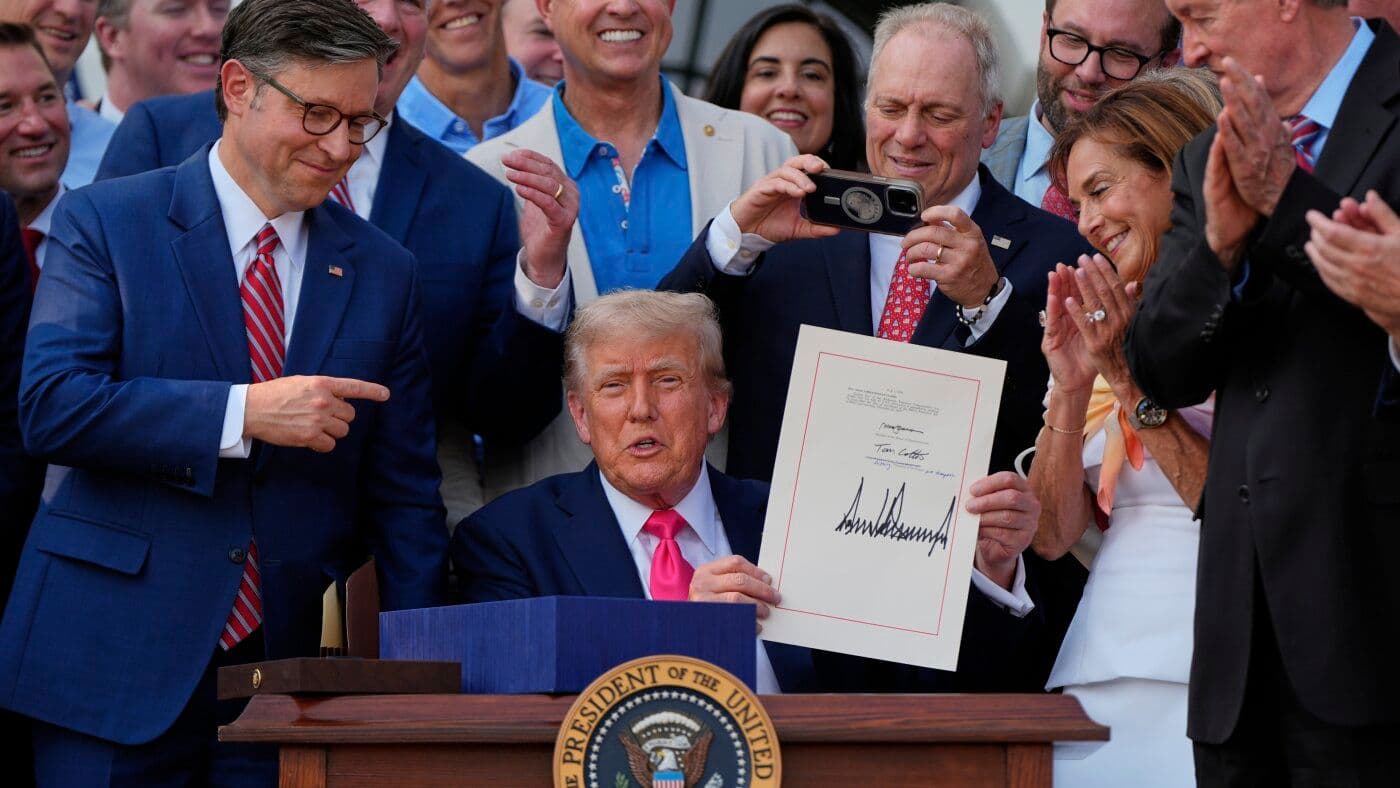
As of May 1, Nebraska has become the first state in the country to enforce new Medicaid work requirements, mandating that certain enrollees demonstrate they are employed, enrolled in school, or participating in job training in order to keep their health coverage. The policy, rooted in federal legislation signed by President Donald Trump, will eventually apply to dozens of states — but Nebraska chose to move forward eight months ahead of the federal deadline.
The change has sparked widespread anxiety among low-income residents who depend on Medicaid for their healthcare, while health advocates and hospital officials warn that the rollout could leave thousands uninsured.
One Woman, Three Jobs, and Still Worried
Schmeeka Simpson of Omaha knows what it means to hustle. The 46-year-old holds three jobs simultaneously — working as a patient navigator for the American Civil Liberties Union, serving as an administrative assistant at Nebraskans for Peace, and picking up extra shifts at a local Dunkin' location.
Yet despite her packed schedule, Simpson is deeply concerned that she could still lose her Medicaid coverage due to administrative complications rather than any failure to meet the work requirement itself.
Simpson has relied on Medicaid ever since her divorce in 2014. None of her employers provides health benefits, leaving her entirely dependent on the government program. Her anxiety is not unfounded — she previously lost access to food assistance benefits after a technical glitch prevented her from renewing on time.
"Adding more barriers won't make the program work any better," Simpson said.
What the Law Actually Requires
The requirement stems from the One Big Beautiful Bill Act, passed by congressional Republicans and signed into law by President Trump. Under the legislation, Medicaid enrollees must fulfill at least one of the following conditions each month:
- Work or volunteer a minimum of 80 hours
- Attend school at least part-time
- Participate in an approved job training program
Alternatively, enrollees may qualify for exemptions, which include caring for a child aged 13 or younger, caring for a disabled parent, or having a health condition that prevents them from working.
The law mandates that the 42 states — plus Washington, D.C. — that fully or partially expanded Medicaid under the Affordable Care Act must implement similar requirements by 2027. Medicaid expansion allows adults earning up to 138% of the federal poverty level, which equals roughly $22,025 annually for a single individual, to qualify for coverage. More than 20 million people gained insurance through this expansion, according to KFF, a nonprofit health policy organization.
The Congressional Budget Office projects that 4.8 million people will lose their Medicaid coverage over the next decade as a direct result of the work requirement policy.
Nebraska's Implementation Plan
Approximately 70,000 Nebraska Medicaid enrollees are subject to the new requirement, according to state officials. However, the state estimates that around 72% of those individuals likely won't need to take any action, because their employment or exemption status can already be verified through existing state and national databases — including Medicaid claims records and data from credit reporting agencies.
For those whose status cannot be confirmed automatically, the state will send notifications and allow enrollees to complete an online form to self-certify their compliance.
Nebraska's Medicaid Director, Drew Gonshorowski, emphasized that the state's primary focus is ensuring enrollees understand what is expected of them. "Our top priority is making sure members clearly understand changes to the program and how to maintain their coverage," he said in an April news release.
Notably, Nebraska's Medicaid agency is not hiring any additional staff to manage the increased administrative workload — a decision that has drawn scrutiny from health industry leaders.
"The fact that they say they do not need additional resources raises questions as to whether they will be able to pull this off without future headaches," said Jeremy Nordquist, president and CEO of the Nebraska Hospital Association.
Self-Attestation and Medical Exemptions
One aspect of Nebraska's approach that has drawn both praise and concern is its reliance on self-attestation for certain exemptions. Enrollees who claim they volunteer, attend school, or qualify for a medical exemption will not be required to submit supporting documentation such as medical records, according to state spokesperson Collin Spilinek.
The state has released a lengthy list of qualifying medical conditions — covering a wide range of cancers, mental health disorders, and heart conditions — that would exempt enrollees from the requirement.
However, Kelsey Arends, a senior staff attorney at Nebraska Appleseed, an advocacy organization, argued that the list still falls short. She noted that it fails to account for varying levels of illness severity, potentially excluding individuals with serious but less-advanced diagnoses.
The medical exemption is critical for people like Crystal Schroer, a 30-year-old Kearney resident who has been on Medicaid since 2022 and has been unemployed since 2024. Schroer relies on a psychiatric service dog named Tarot to help manage her anxiety, and she said finding employment that accommodates the animal has proven extremely difficult.
"I am insanely worried," she said. "It's made my depression way worse."
Federal Officials and Industry React
Centers for Medicare & Medicaid Services Administrator Dr. Mehmet Oz expressed support for Nebraska's early adoption of the requirement during a brief interview outside the National Press Club in Washington, D.C., on April 28. He acknowledged that the state is still "working out the kinks" but expressed optimism, saying he hopes the program will reach "a more sophisticated place" by year's end.
Oz also indicated that CMS is unlikely to support self-attestation on a broad scale, stating plainly: "We don't like self-attesting" and "documentation is critical." Final federal rules governing how work requirements will be verified across states are expected to be released sometime this summer.
Several prominent health organizations — including the American Diabetes Association, the HIV+Hepatitis Policy Institute, and the National Bleeding Disorders Foundation — have urged the state to expand its list of exempted conditions. These groups warn that losing Medicaid coverage would cut off access to life-sustaining medications and ultimately drive up hospitalizations.
Hospitals, too, have expressed concern. Nordquist of the Nebraska Hospital Association noted that a surge in uninsured patients could significantly strain hospital finances across the state. Many enrollees, he added, may not even be aware that the rules have changed.
A Policy With a Troubling Track Record
This is not the first time work requirements have been attached to Medicaid. During Trump's first term, his administration became the earliest to permit states to adopt such policies. Only Arkansas moved forward with implementation — and the results were alarming.
In the nine months before a federal judge struck down Arkansas's work requirement as unlawful, more than 18,000 people lost their coverage — nearly one in four of the individuals subject to the rule. Critics argue that history serves as a cautionary tale for what Nebraska and other states may soon face on a much larger scale.

