Nearly 300 Ebola Patients Unaccounted For as DR Congo Outbreak Escalates
African health officials warn nearly 300 confirmed Ebola cases have vanished from tracking systems, raising fears of widespread community transmission across DRC.
Nearly 300 Ebola Patients Missing as DR Congo Crisis Deepens
Africa's leading public health authority has revealed that the locations of nearly 300 confirmed Ebola patients in the Democratic Republic of the Congo remain completely unknown — a alarming development that officials warn could fuel uncontrolled spread of the deadly virus.
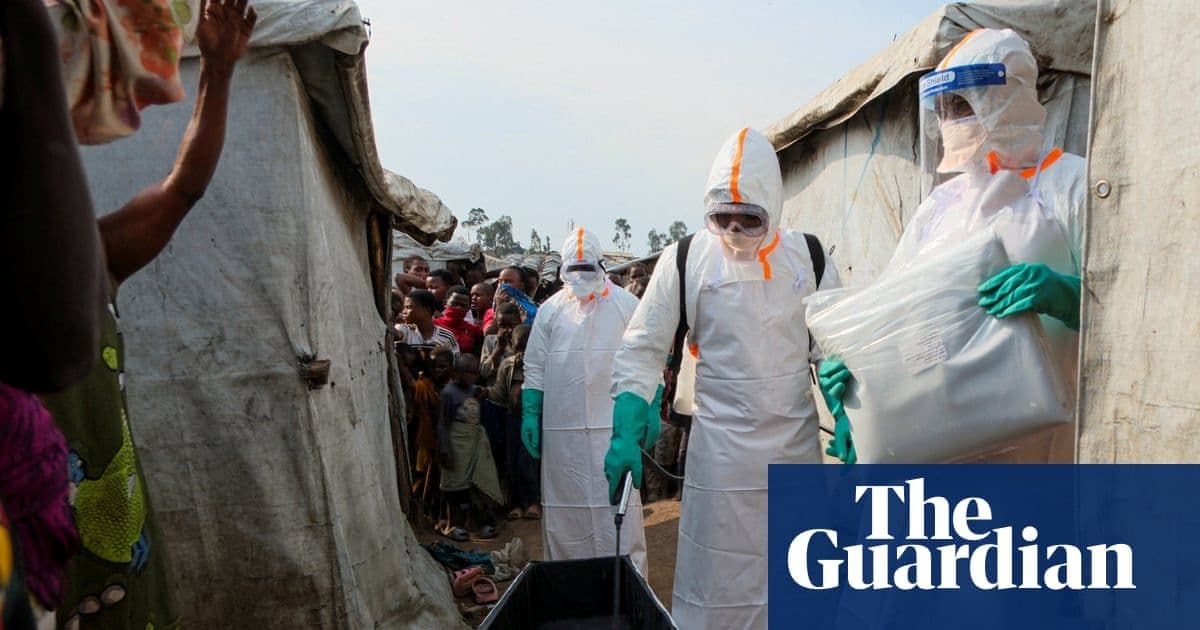
Dr. Jean Kaseya, Director General of the Africa Centers for Disease Control and Prevention (Africa CDC), disclosed on Thursday that the ongoing humanitarian emergency, compounded by active armed conflict in affected regions, has left more than one million displaced civilians living in camps that health workers simply cannot reach.
WHO Projects Thousands of Cases and Deaths by September
The warning came alongside sobering projections published in the Lancet Infectious Diseases journal by the World Health Organization's Africa regional office. The WHO's modelling forecasts approximately 8,210 Ebola cases and around 1,420 deaths by mid-September 2026. Under the worst-case scenario, confirmed cases could soar as high as 66,000 by that same deadline.
The modelling also estimated a 70% probability that the outbreak will cross the border into South Sudan within the coming weeks — a prospect that has intensified calls for urgent international intervention.
As of now, the DRC has recorded 1,118 confirmed cases and 291 deaths. Neighboring Uganda has reported 20 cases and two fatalities. In a further sign of the outbreak's reach, France confirmed that a doctor who had been working in the DRC tested positive for Ebola upon returning home. His employer, medical NGO Alima, stated they were actively investigating how the infection occurred.
Massive Community Transmission Fuels Concern
Dr. Kaseya noted that 30% of new infections are appearing among individuals who are already known contacts of confirmed cases — a pattern he described as evidence of "huge, huge community transmission." In response, authorities plan to deploy 20,000 community health workers sourced from affected local areas to dramatically expand contact tracing operations.
The situation inside Ebola treatment centers is equally dire. Bed occupancy has reached 95% capacity, and officials warn the outbreak has not yet reached its peak.
"These camps have cases, and because we don't have access to them, we cannot carry out contact tracing. We cannot get a clear picture of what's happening there. We cannot stop this outbreak without resolving the humanitarian crisis," Kaseya stressed.
Travel Restrictions Imposed
DRC authorities announced on Thursday that any individual who has been present in affected provinces must observe a mandatory 21-day waiting period before being permitted to travel elsewhere — a measure aimed at preventing further geographic spread.
A Record-Breaking Outbreak
The current outbreak, caused by the Bundibugyo strain of the Ebola virus, is already the largest on record at this stage — just five weeks after its official declaration. By comparison, the catastrophic West Africa outbreak of 2014 to 2016, which ultimately infected more than 28,000 people and claimed over 11,000 lives, had recorded only 239 cases and 160 deaths at the equivalent point in time.
Despite the bleak projections, WHO researchers noted that current case counts align most closely with their central transmission scenario, which estimates between 6,636 and 10,287 cases by September 16. There are early indications that containment efforts are beginning to slow transmission rates.
Funding Gap Threatens Response
The financial picture remains deeply troubling. Africa CDC and the WHO previously calculated that $518 million would be required purely for health-related response efforts. When broader humanitarian needs are factored in, that figure climbs to $1.4 billion.
However, Dr. Kaseya revealed that only around 13% of the $910 million pledged by international governments and organizations has actually been delivered — a shortfall that threatens to severely undermine containment efforts.
First Drug Trials Set to Begin
There is a glimmer of hope on the treatment front. The first-ever clinical trial of drugs designed to treat the Bundibugyo strain of Ebola is scheduled to begin in the DRC next week. A separate trial testing an antiviral medication administered to close contacts of infected individuals — with the goal of preventing them from developing the disease — is set to launch one week after that.

