National Trust Launches Ambitious 10-Year Hedgerow Revival at Historic Wimpole Estate
A sweeping hedgerow restoration programme is transforming a Cambridgeshire farm, promising major benefits for wildlife and agricultural resilience.

National Trust Embarks on Decade-Long Hedgerow Restoration Mission
A landmark conservation initiative is now underway at one of England's most celebrated rural estates, as the National Trust launches a comprehensive 10-year programme to restore and expand the hedgerow network at its Wimpole Hall estate in Cambridgeshire.
The ambitious project aims to plant or reinstate approximately 23 kilometres (14 miles) of hedgerows across the 1,000-hectare working farm, with far-reaching benefits expected for both local wildlife and the farm's long-term productivity.
Why Hedgerows Matter for Farms and Wildlife
According to the National Trust, the restored hedgerow network will serve multiple critical functions. Beyond providing rich habitat for a wide range of species, the hedges will act as natural firebreaks and play a vital role in preventing soil erosion — two pressing concerns for any large-scale agricultural operation.
Dave Hassall, Farm and Countryside Manager at Wimpole Estate, explained the broader significance of the project: "Each section of hedge that we restore makes the whole network bigger and better." He added that the work would enhance how the landscape operates as an interconnected system, ultimately making it more resistant to the pressures of a changing climate.
What the Restoration Work Involves
The programme, which was formally developed in 2023, breaks down into three key areas of activity:
- Coppicing will be applied to around 10% of the farm's existing hedgerows
- Hedge laying will cover 6.7 kilometres (4.1 miles) of existing growth
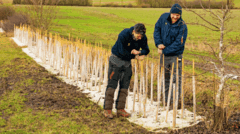
- New hedgerow planting will introduce 13.8 kilometres (8.6 miles) of fresh vegetation, incorporating roughly 83,000 native trees and shrubs
This winter alone, a dedicated team of staff and volunteers completed an impressive milestone — planting 30,000 trees and coppicing or laying 2.3 kilometres (1.4 miles) of hedgerow across the estate.
Traditional Techniques at the Heart of the Project
The restoration relies on time-honoured land management methods. Hassall acknowledged that techniques such as laying and coppicing can appear severe at first glance, but reassured that hedges recover rapidly and emerge stronger and denser than before. These approaches are specifically designed to stimulate flowering and fruiting, ensuring the hedgerows become thriving sources of food and shelter for wildlife throughout the seasons.
A Boost for Endangered Farmland Birds
One of the most compelling aspects of the project is its potential impact on farmland birds, many of which are in serious decline. The restored hedgerows are expected to provide critical habitat for red-listed species including the corn bunting, yellowhammer, and linnet. Additionally, the dense hedgerow structure will offer vital winter sustenance for migratory visitors such as fieldfares and redwings.
About Wimpole Estate
The Wimpole Estate is a diverse and historically significant property managed by the National Trust. It encompasses a grand stately mansion, sweeping parkland, formal gardens, and a fully operational working farm — making it one of the most complete rural estates in the country. The hedgerow restoration programme represents one of the most substantial conservation investments the estate has undertaken in recent years, underlining the National Trust's commitment to sustainable land stewardship and ecological recovery.