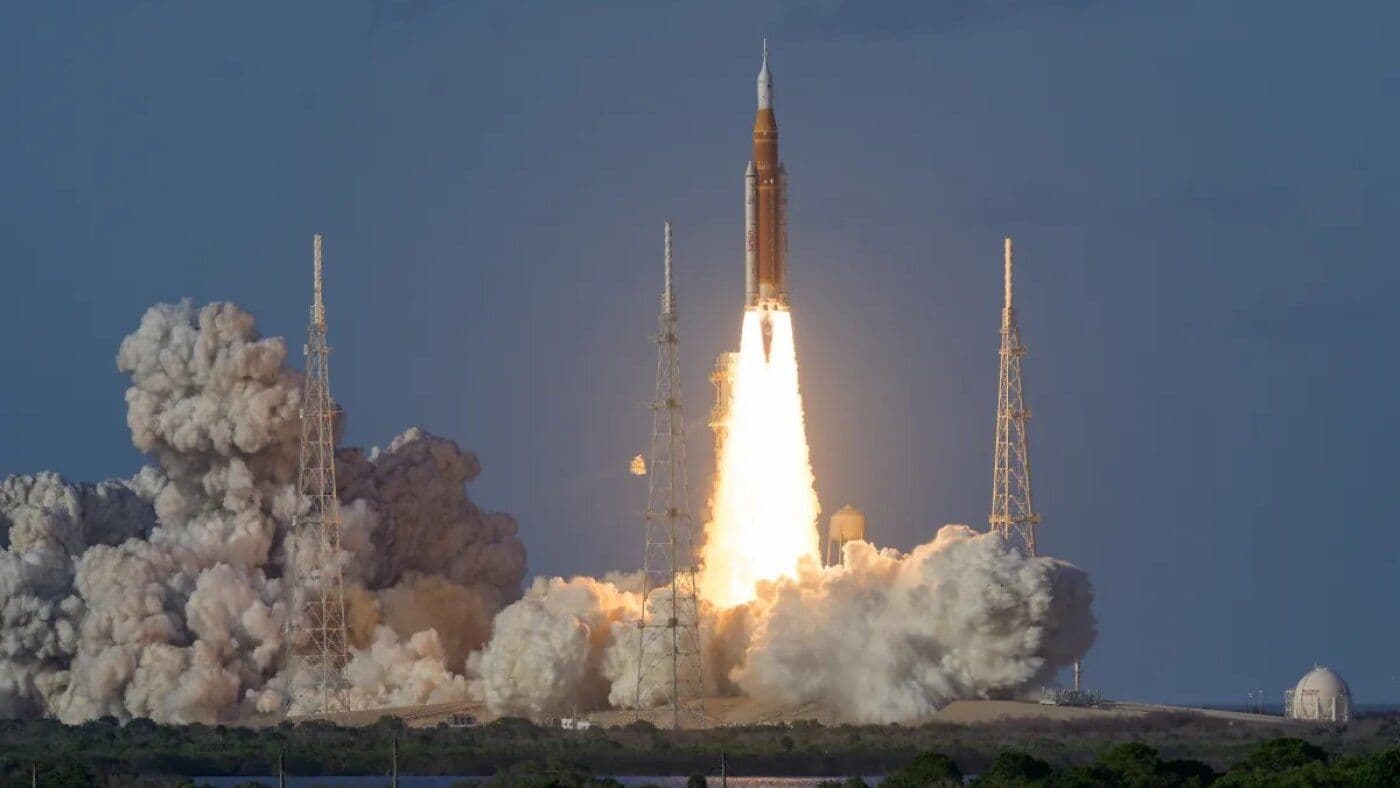
NASA's Artemis II Crew Blasts Off on Landmark Journey Around the Moon
Four astronauts launched aboard NASA's Artemis II mission Wednesday, embarking on a historic 10-day voyage around the moon for the first time in over 50 years.
NASA Launches Artemis II: A New Chapter in Human Space Exploration
Cheers filled the control room at Kennedy Space Center in Florida on Wednesday evening as NASA's Artemis II mission roared into the sky, marking one of the most significant moments in space exploration in decades. The massive Space Launch System rocket lifted off at 6:35 p.m. Eastern Daylight Time, carrying four astronauts on a bold journey to circle the moon and return safely to Earth.
Meet the Crew Making History
Seated inside the Orion capsule atop the 322-foot orange-and-white rocket were NASA astronauts Reid Wiseman, Christina Koch, and Victor Glover, along with Canadian Space Agency astronaut Jeremy Hansen. Together, they represent several historic firsts — the first woman, the first person of color, and the first non-American citizen to travel to the vicinity of the moon.
Shortly after launch, mission commander Reid Wiseman radioed back to the control room with an enthusiastic update: "We have a beautiful moonrise — we're headed right at it."
What Artemis II Will Actually Do
The mission will not attempt a lunar landing. Instead, the crew will begin by orbiting Earth to run thorough checks on critical spacecraft systems, including life support, navigation, and communications. Once those systems are confirmed operational, the astronauts will ignite their propulsion system to propel the Orion capsule on a sweeping figure-eight trajectory around the moon before heading back toward Earth.
The round trip to the moon covers approximately 230,000 miles, and the full mission is expected to wrap up in roughly ten days, concluding with a splashdown in the Pacific Ocean.
A Stepping Stone Toward Permanent Lunar Presence
Although Artemis II is not touching down on the lunar surface, it serves as a critical milestone in NASA's broader ambition to establish a sustainable human presence on and around the moon. The last time humans traveled to the moon was during the Apollo 17 mission back in 1972 — more than half a century ago.
What Comes Next in the Artemis Program
The roadmap following Artemis II includes several additional missions designed to steadily build toward a full lunar landing:
- Artemis III will remain in Earth's orbit and conduct practice rendezvous operations with the program's lunar landing system.
- Artemis IV and V are planned to deliver astronauts directly to the moon's surface, utilizing lunar landers developed by commercial aerospace companies SpaceX and Blue Origin.
With international partners involved and commercial industry playing a key role, NASA's vision extends beyond a single moon landing — the agency aims to build a permanent lunar base that could one day serve as a gateway for deeper space exploration.