NASA Reveals Four-Person Crew for Artemis III, a Critical Stepping Stone Toward Lunar Return
NASA has announced the international crew set to fly the Artemis III mission, a complex test flight designed to pave the way for humanity's return to the Moon.
NASA Unveils Artemis III Crew as Moon Landing Ambitions Take Shape
NASA has officially announced the four astronauts who will fly aboard the Artemis III mission, a pivotal test flight the agency describes as "one of the most highly complex missions NASA has ever undertaken." The crew was introduced at a press conference held at NASA's Johnson Space Center in Houston, Texas, with a planned launch window set for as early as next year.
Meet the Artemis III Crew
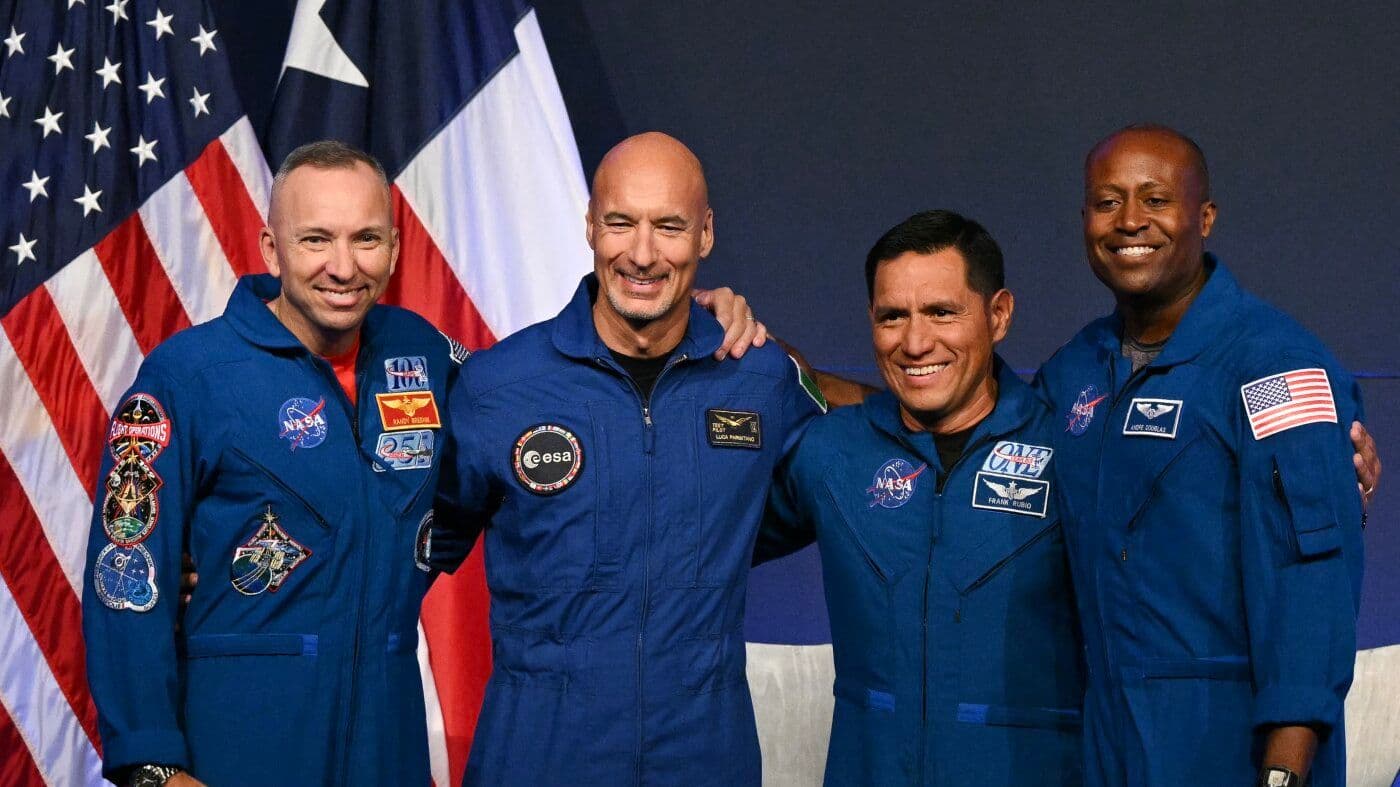
Leading the mission as commander is NASA astronaut Randy Bresnik, a decorated U.S. Marine Corps veteran who has accumulated 149 days in space across two previous missions. At the pilot seat will be Luca Parmitano, an Italian astronaut representing the European Space Agency. Parmitano is a seasoned spacefarer with two missions under his belt, though one of his spacewalks became a life-threatening ordeal when his helmet unexpectedly filled with water, forcing an emergency abort.
Rounding out the crew as mission specialists are NASA astronauts Frank Rubio and Andre Douglas. Rubio, a former U.S. Army officer and board-certified family physician, holds the record for the longest spaceflight by an American — a remarkable 371 consecutive days aboard the International Space Station. His extended stay was the result of unexpected spacecraft damage that delayed his return home.
Andre Douglas will be making his first trip to space. A Coast Guard reserve officer and systems engineer holding a doctorate from George Washington University, Douglas was selected as a NASA astronaut in 2021 and previously served as a backup crew member for the Artemis II mission. His enthusiasm at Tuesday's announcement was unmistakable: "This mission is going to be fantastic. What an excellent crew. Got Artemis! Go NASA!"
What Artemis III Will Actually Do
Despite its name and role in NASA's broader lunar program, the Artemis III mission will not travel to the Moon. Instead, it will operate entirely in low-Earth orbit, where it will serve as a critical hardware test ahead of an actual crewed lunar landing — currently targeted for no earlier than 2028, which would mark humanity's first return to the lunar surface since 1972.
The mission's primary objective is to demonstrate that NASA's Orion spacecraft can successfully rendezvous and dock with two commercially developed lunar landers — one built by Blue Origin and one by SpaceX. Testing these docking capabilities in Earth's orbit, rather than in deep space near the Moon, gives mission teams the ability to respond quickly to any issues that arise.
"This gives our teams key information on systems the lunar lander crew will depend on in an environment close to home versus four-plus days away around the moon," said NASA's Jeremy Parsons.
How the Mission Will Unfold
The mission sequence begins with the uncrewed launch of Blue Origin's Blue Moon lander, which is capable of remaining in orbit for up to 90 days. That window allows NASA time to launch the Artemis III crew inside the Orion capsule, riding atop NASA's Space Launch System (SLS) rocket from Kennedy Space Center in Florida.
Once in orbit, the crew will pilot Orion to intercept the Blue Moon lander, dock with it, and spend approximately two days testing its internal systems — including life support and flight controls — before separating.
Next, SpaceX will launch its Starship vehicle into low-Earth orbit, and the Artemis III crew will dock with it as well, spending roughly one day attached to the spacecraft. After completing both docking tests, Orion and its crew will depart and splash down in the Pacific Ocean off the coast of California.
Challenges on the Road to Launch
While NASA Administrator Jared Isaacman has expressed a desire to fly the mission before the end of next year, recent events have introduced uncertainty into that timeline. Last month, a pre-launch test at Blue Origin's Cape Canaveral facility ended in an explosion of the company's New Glenn rocket, causing significant damage to the launch site. Blue Origin's lunar lander for Artemis III is scheduled to fly aboard New Glenn.
Despite the setback, Blue Origin remains optimistic. "While we recognize there are questions about how Blue Origin's recent anomaly impacts our plans, setbacks are a learning opportunity," said Blue Origin's John Couluris. "We are confident that New Glenn will be ready for Artemis III."
Meanwhile, SpaceX continues to advance development of its Starship system, having completed a 12th test flight of the vehicle. However, the company has yet to achieve a full orbital Starship launch.
Passing the Baton
At the crew announcement, the Artemis II astronauts — who recently completed a historic journey around the Moon — symbolically handed off a baton to the new crew. The baton, which had traveled with the Artemis II team during their mission, represented the steady, incremental progress driving NASA's lunar ambitions forward.
"We've been carrying these batons around for way too long," said Artemis II commander Reid Wiseman. "So with that, the Artemis II crew hands you the baton. You got the controls."
Commander Bresnik reflected on the significance of the moment: "The most important Artemis mission will always be the next Artemis mission." With a highly experienced crew and a clear mission ahead, NASA takes yet another decisive step toward returning humans to the Moon.