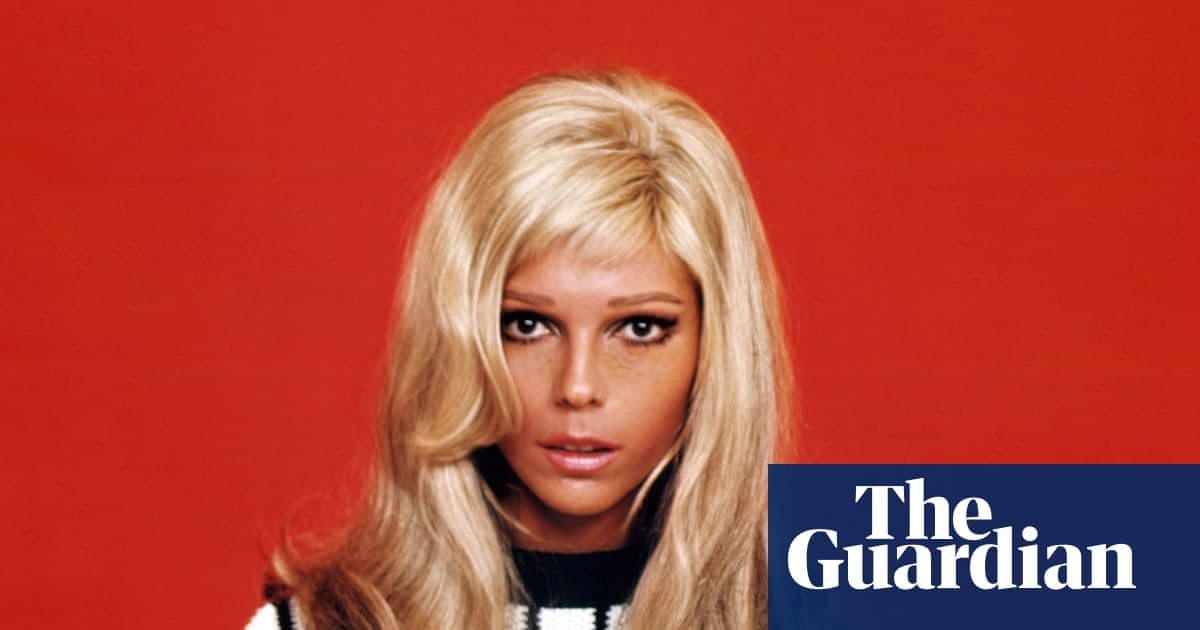
Nancy Sinatra's 20 Greatest Songs Ranked: A Celebration of a Pop Icon
Six decades after her debut album Boots, we rank Nancy Sinatra's 20 finest tracks — from iconic Bond themes to her most enigmatic collaborations.

Nancy Sinatra's 20 Greatest Songs Ranked: A Celebration of a Pop Icon
Sixty years after the release of her debut album Boots, Nancy Sinatra remains one of the most distinctive voices in pop history. From playful novelty records to hauntingly atmospheric duets, her catalog is far richer and more varied than casual listeners might realize. Here, we rank her 20 finest tracks.
20. The Last of the Secret Agents (1966)
Before Sinatra ever sang an actual Bond theme, she recorded a spot-on parody of one — twanging guitars, John Barry-esque brass and all. The witty lyrics, poking fun at an incompetent spy, make this one of the most delightfully absurd novelty records of the mid-60s.
19. Don't Let Him Waste Your Time (2004)
Sinatra's 2004 self-titled album drew attention largely due to Morrissey's contribution, though his Let Me Kiss You sounded oddly out of place sung by her. Far more fitting was her rendition of Jarvis Cocker's Don't Let Him Waste Your Time — the sharp, knowing voice of These Boots Are Made for Walkin', grown wiser with age and dispensing no-nonsense relationship wisdom.
18. Hello Birdies (1967)
When it comes to Sinatra's duets with her legendary father Frank, Somethin' Stupid tends to steal all the glory. Yet this strange, swinging slice of cod-hippy whimsy — seemingly designed to suggest Frank had at least a passing awareness of the counterculture — is infinitely more fascinating, particularly when you hear him cheerfully singing: "Hello, birdies! Hello, spring!"
17. Been Down So Long (1968)
The collaborations between Nancy Sinatra and Lee Hazlewood generally fall into two categories: the ones charged with odd eroticism, and the ones where Hazlewood plays a hapless loser with Sinatra as his weary partner. Been Down So Long is a stellar example of the latter. Sinatra catalogs Hazlewood's misfortunes, he agrees — and then she casually reveals herself as the cause, delivering a gloriously sardonic "Poor Lee."
16. Kinky Love (1972)
Sinatra always excelled at blending sexiness with self-aware humor. The 1970s proved commercially difficult for her — a 60s icon struggling to adapt to a changing musical landscape — but Kinky Love deserved far better than the obscurity it received. A beautiful 1991 shoegazer cover by Pale Saints later introduced it to new audiences, and the track has since experienced an unexpected TikTok renaissance.
15. Lightning's Girl (1967)
In spirit, Lightning's Girl is a distant cousin of the Angels' girl-group classic My Boyfriend's Back. It transplants the swagger of These Boots into more menacing territory, complete with fuzzed-out garage-rock bass, a thunderous bass drum, jarring Psycho-style strings, and Sinatra murmuring threatening asides throughout.
14. It's Such a Pretty World Today (1967)
Dolly Parton's tale of unmarried motherhood takes on an intriguing new dimension as a Nancy and Lee duet. Hazlewood plays the baby's father, insisting on doing the right thing — yet his deliberately ambiguous delivery makes it difficult to take him at his word. Sinatra, meanwhile, is consumed by dread. It does not end happily.
13. Drummer Man (1967)
Never a hit, but arguably it should have been. With lyrics addressing the grinding reality of life as a musician's spouse, Drummer Man features a surprisingly funky backing track with faint echoes of Donovan's Barabajagal. It's remarkable that the rhythm section never became a go-to source for sampling.
12. How Does That Grab You, Darlin'? (1966)
This track was an unashamed attempt to replicate the formula of These Boots — similar rhythmic structure, comparable hook, near-identical brass arrangement. Yet Sinatra's sheer commitment elevates it entirely. Her delivery of "You smart alec tomcat, you!" alone makes the whole thing irresistible.
11. Jackson (1967)
It takes considerable nerve to revisit a song just months after Johnny Cash and June Carter turned it into a hit. Nancy and Lee's take on Jackson cranks up the camp considerably to tremendous effect. Hazlewood's dry, fatalistic delivery implies he already knows how the story ends, regardless of what he claims otherwise.
10. As Tears Go By (1966)
Sinatra's first Hazlewood-penned single failed to chart, yet it represented a dramatic leap forward from the sugary pop she had spent the previous five years recording. Hipper in sound, with folk-rock undertones and a noticeably harder edge, it announced a new direction — and a welcome one.
9. I Move Around (1966)
Sinatra's albums have always varied in quality, but I Move Around from her debut Boots stands as an undisputed highlight. Hazlewood's writing conjures a glamorous world tour — Zanzibar, Paris, Singapore, London — yet the globetrotting is tinged with unmistakable sadness, fueled by heartbreak: "Since I saw you with her — yeah, I move around."
8. Friday's Child (1967)
A striking departure from the salty wit of These Boots and How Does That Grab You, Darlin'?, Friday's Child is pure melodrama. Raw, emotionally exposed vocals sit atop blues-inflected guitar, surging strings, and lyrics of unrelenting despair. Hard luck is her brother; misery her sister.
7. Sand (1966)
The very first Nancy and Lee duet, Sand introduced a markedly different Sinatra — less a sharp-tongued wisecracker, more an enigmatic temptress capable of bringing Hazlewood's rugged wanderer to his knees. The production is extraordinary: shimmering Autoharp, reversed guitar, and an arrangement unlike anything else of its era.
6. Summer Wine (1967)
While Hazlewood gets slightly more airtime, Sinatra owns the song's most electrifying moment — the staccato "Come on, come on, come on, come on back to me" that punctuates the chorus. The track itself is a masterpiece of atmosphere and emotional tension, managing to feel genuinely epic in under three minutes.
5. Sugar Town (1966)
In a characteristically mischievous move, the non-drug-using Hazlewood wrote an ode to the pleasures of LSD and handed it to Frank Sinatra's daughter to record. Sugar Town reached the top of the easy listening chart — though its success likely owed more to its irresistibly catchy melody than to any psychedelic sentiment.
4. You Only Live Twice (1967)
Sinatra represented a clear stylistic shift from her predecessors in the Bond theme canon, Tom Jones and Shirley Bassey. Fortunate enough to be given one of the franchise's finest themes, she was also shrewd enough to re-record the single version in a more contemporary style, with Hazlewood producing and arranger Billy Strange lending the track its lush, cinematic quality.
3. Lady Bird (1967)
Curiously relegated to a B-side, Lady Bird is arguably the definitive Nancy and Lee collaboration. Dramatic, slightly hallucinatory, and built around an extraordinary melody, it features a mysterious traveler and an even more mysterious femme fatale who ultimately robs him clean — yet leaves him longing for her return. Utterly marvellous.
2. These Boots Are Made for Walkin' (1966)
What finally made These Boots the breakthrough Sinatra had been waiting for? It's partly the song itself — a perfectly constructed fusion of garage rock, girl-group attitude, and easy listening polish. But it's mostly her performance. She sings it as though this was the record she was always destined to make, because of course it was.
1. Some Velvet Morning (1967)
No ranking of Nancy Sinatra's work could end anywhere else. Some Velvet Morning was the moment Hazlewood unleashed the full force of his singular strangeness — and the results were extraordinary. No one, including Hazlewood himself, has ever offered a definitive explanation of what the song is actually about, or who Sinatra's character Phaedra truly represents. An ethereal spirit? An alluring counterculture figure? Something altogether more sinister?
Its enduring power lies precisely in that ambiguity, combined with the sheer brilliance of its construction: hauntingly beautiful yet deeply unsettling, impeccably arranged, and built on a shifting time signature that keeps the listener perpetually off-balance. Whatever Phaedra is meant to be, Sinatra inhabits the role with complete conviction. It remains one of the most extraordinary recordings in the history of popular music.