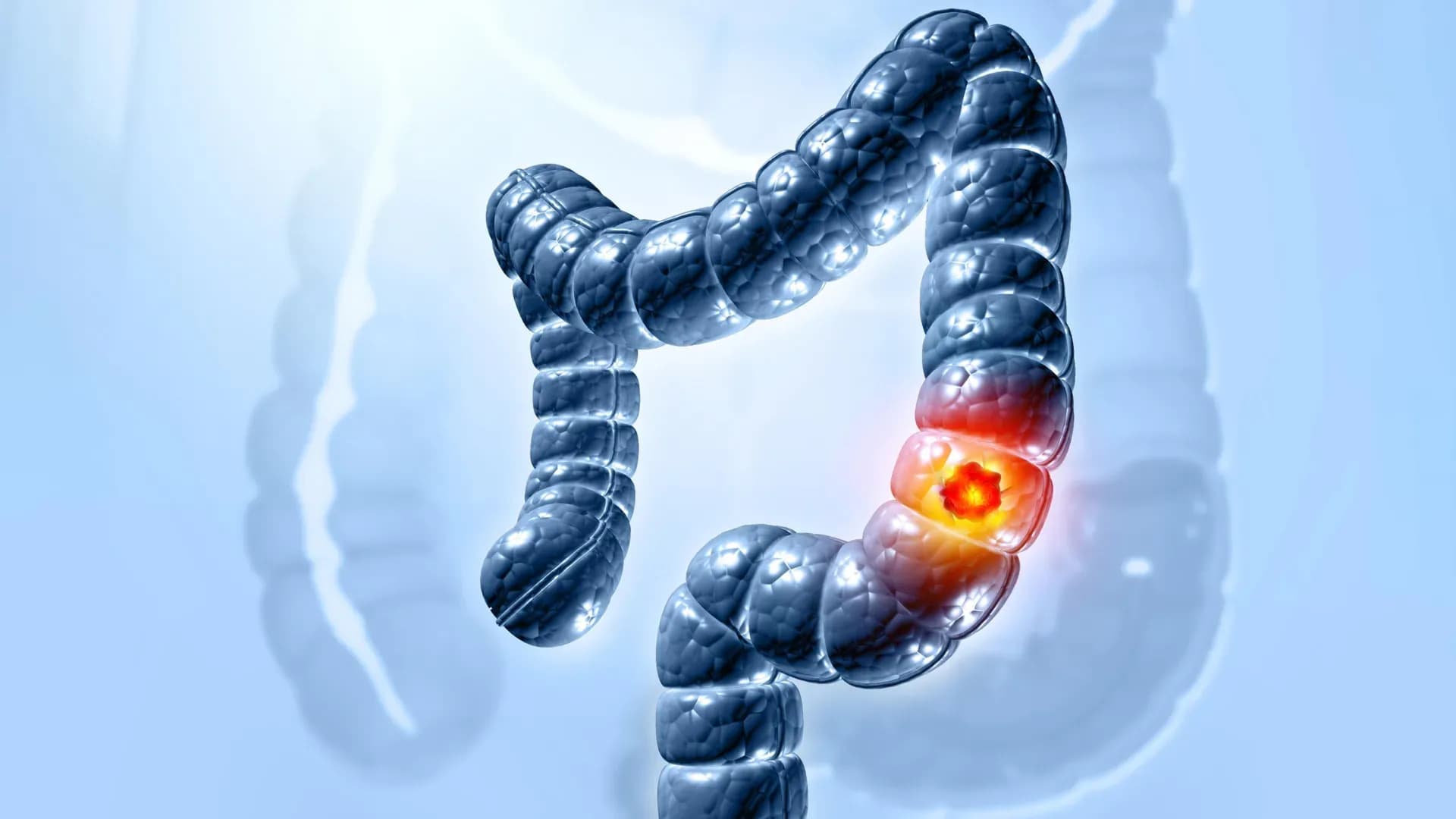
Mystery Solved: How a Common Gut Bacterium Hijacks Colon Cells to Trigger Cancer
Scientists have cracked a 15-year-old mystery revealing how a bacterial toxin enters colon cells and drives colorectal cancer — and they've already found a way to stop it.
Scientists Finally Crack the Code Behind a Cancer-Causing Gut Toxin
For more than 15 years, researchers have been puzzled by a deceptively simple question: how does a toxin produced by a common gut bacterium manage to infiltrate colon cells and set the stage for colorectal cancer? A new landmark study has finally delivered the answer — and with it, a promising new strategy to stop the damage before it starts.
The findings, published in the journal Nature, come from a multi-institutional team led by scientists at the Johns Hopkins Kimmel Cancer Center Bloomberg~Kimmel Institute for Cancer Immunotherapy and the Johns Hopkins University School of Medicine. The research was supported in part by the National Institutes of Health.
The Bacterium Behind the Threat
The bacterium at the center of this discovery is Bacteroides fragilis, a microorganism present in the gut of up to 20% of otherwise healthy individuals. While most strains are harmless, certain variants produce a toxin — known as BFT — that can trigger chronic inflammation in the colon and fuel tumor development.
Previous research from the lab of senior author Dr. Cynthia Sears had already shown that BFT causes damage by severing E-cadherin, a critical protein responsible for maintaining the colon's protective cellular barrier. However, one important gap remained: BFT did not appear to bind directly to E-cadherin, which meant something else had to be opening the door first.
"Understanding how bacterial toxins work can open doors to new approaches for detection and therapy for associated diseases, including diarrhea, colorectal cancer and bloodstream infections," said Sears, Bloomberg~Kimmel Professor of Cancer Immunotherapy and professor of medicine at Johns Hopkins.
CRISPR Screening Uncovers the Hidden Entry Point
To identify the missing molecular link, Maxwell White, an M.D./Ph.D. candidate in the Sears laboratory, spearheaded a genome-wide CRISPR screening effort in collaboration with the laboratory of Matthew Waldor at Harvard Medical School.
The team methodically switched off individual genes in colon epithelial cells to determine which ones BFT relied upon to function. One candidate rose unmistakably above the rest: a protein called claudin-4.
When claudin-4 was removed from the equation, BFT could no longer attach to colon cells — and E-cadherin remained completely unharmed.
"Once we were able to do the screen, claudin-4 was a clear, resounding top hit," said White. "That was an exciting moment."
An Unexpected Discovery
The result caught the research team off guard. Many scientists had anticipated the receptor would belong to a class of signaling proteins known as G-coupled protein receptors. Claudin-4, however, is a completely different type of protein — and a review of existing literature revealed no other toxin that operates in this particular way. Most protease toxins bind directly to the molecules they attack rather than first latching onto a separate receptor.
Confirming the Molecular Bond
To validate the interaction, the Johns Hopkins team joined forces with structural biologists F. Xavier Gomis-Rüth and Ulrich Eckhard at the Molecular Biology Institute of Barcelona. Using advanced biophysical techniques, White and his Barcelona collaborators demonstrated that BFT and claudin-4 form a tightly bound, one-to-one molecular complex under laboratory conditions — providing the first direct physical evidence of how the toxin gains its initial foothold.
Additional confirmation came through a collaboration with the laboratory of Min Dong at Harvard Medical School, where researchers examined the toxin's behavior in live mouse models.
A Molecular Decoy Stops the Toxin in Its Tracks
Armed with this knowledge, the team engineered a creative countermeasure: a soluble version of claudin-4 designed to act as a decoy. By displaying the same surface features that BFT normally recognizes on colon cells, this decoy molecule intercepted the toxin before it could reach its intended target.
The strategy worked. In animal models, the decoy protein successfully shielded mice from BFT-induced colon damage.
"This approach could be iterated upon with small molecules or other biologics that have better pharmacological properties," said White, noting that the team is actively exploring which therapeutic formats may prove most effective.
What Comes Next
Despite these advances, one challenge remains. Researchers have not yet produced a precise structural image showing exactly how BFT and claudin-4 physically fit together at the atomic level. Current artificial intelligence modeling tools, including AlphaFold, were unable to fully resolve the interaction.
Nevertheless, the discovery represents a significant leap forward in understanding how Bacteroides fragilis contributes to colorectal cancer — one of the most common and deadly cancers worldwide. By pinpointing claudin-4 as a critical vulnerability, scientists now have a concrete molecular target to pursue in the development of new treatments aimed at preventing inflammation and tumor growth in the colon.
"We've made several attempts over time to identify the receptor, so this is an exciting moment," said Sears. The road from laboratory breakthrough to clinical therapy is rarely short, but this discovery has laid a clear and compelling foundation for what could become a new class of cancer-prevention strategies.